
Table of Contents
Run your fingers through your hair in the shower and count what comes away. Most people shed somewhere between 50 and 100 strands a day, and wash days concentrate that shedding into one alarming clump in the drain. That number is normal. What isn’t normal is watching your parting widen over six months, or noticing that the hair at your temples has quietly become finer and shorter than the rest.
Hair growth, thinning, and scalp care are usually talked about as three separate topics. They aren’t. The scalp is the soil, the follicle is the plant, and the hair you can see is just last season’s growth. Treat the visible hair and ignore the scalp, and you’re polishing leaves while the roots struggle.
Thinning Is a Follicle Problem, Not a Hair Strand Problem
Androgenetic alopecia, the most common form of hair loss in both men and women, doesn’t make hairs fall out faster. It makes each new hair smaller. The follicle spends less time in its growth phase and produces a thinner, shorter shaft with every cycle. Dermatologists call this miniaturisation. By the time a patch looks visibly thin, you’ve often lost 50% or more of the fibres in that area.
That timeline matters because it sets expectations. Nothing you apply topically will re-grow a follicle that has fully scarred over. What treatments can do is interrupt miniaturisation and give partially shrunk follicles a chance to thicken back up. The earlier you start, the more follicles are still in the fight.

The Growth Cycle in Plain Numbers
Each follicle runs its own independent cycle, which is why you don’t go bald overnight and why regrowth looks patchy at first.
- Anagen (growth phase): two to seven years. Roughly 85–90% of your scalp hairs are here at any moment, growing about 1cm per month.
- Catagen (transition): around 10 days. The follicle detaches from its blood supply and stops growing.
- Telogen (rest): about three months. The hair sits in the follicle, then sheds.
A shock like illness, surgery, a crash diet, or childbirth can push a large share of follicles into telogen at once. Three months later, you get a dramatic shed. That lag is why people rarely connect the hair fall to the trigger.
What a Healthy Scalp Actually Looks Like
A healthy scalp is not squeaky clean, and it isn’t flake-free by force. It’s comfortable, mostly pale, and doesn’t itch through the day.
Flaking is often buildup, not dandruff
Small white flakes that appear two days after washing, especially near the hairline and crown, are frequently residue from conditioner, dry shampoo, or heavy oils rather than a fungal issue. Genuine dandruff tends to come with yellowish scale and itching that gets worse in the days after washing. The two need different responses: one needs better rinsing and lighter products, the other usually needs an antifungal active.
Redness, itching, and tenderness
Persistent itch with visible redness along the hairline suggests inflammation, which is a hostile environment for growing hair. Seborrhoeic dermatitis, psoriasis, and contact reactions to fragrance or sulphates all look similar to the untrained eye. If your scalp stings when you apply a product, that product isn’t working for you, regardless of what the label promises.
Getting wash frequency right is the single easiest fix, and it varies far more than most people assume. Our guide to how often you should wash your hair by hair type breaks down what daily, every-other-day, and weekly washing actually do to oil levels and scalp comfort.
Building a Scalp Routine That Supports Growth
You don’t need twelve products. You need a routine that keeps the follicle environment clean, calm, and well-supplied with blood.
- Wash when the scalp feels oily, not on a fixed schedule. For most people that’s every two to three days. Oily scalps can go daily; coily and textured hair often needs a week or more.
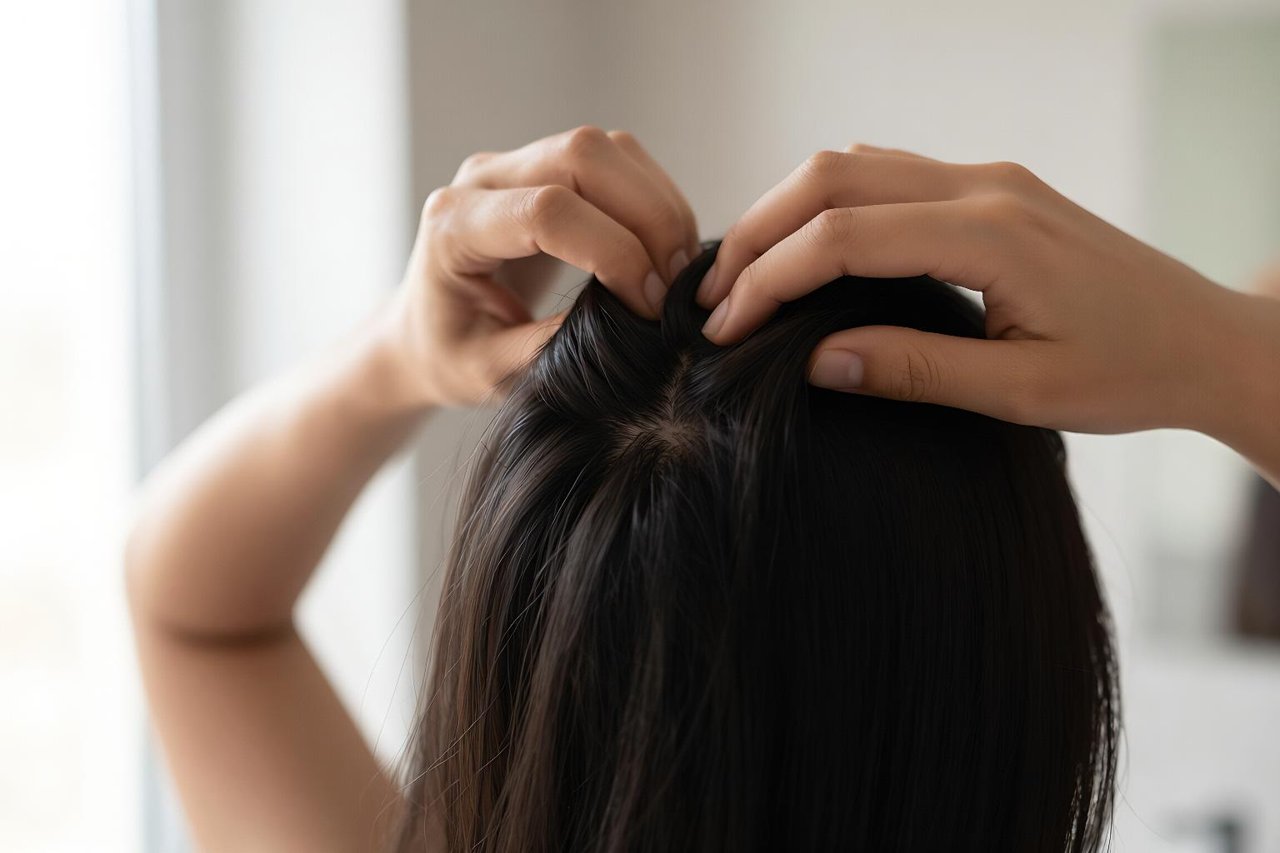
- Massage for two minutes, most days. Fingertips, gentle circular pressure, no nails. A small 2016 study found standardized scalp massage increased hair thickness after 24 weeks. It’s free and it feels good.
- Exfoliate once a week at most. A salicylic acid or glycolic scalp serum clears dead skin and product film. More often than weekly tends to irritate.
- Rinse conditioner out properly. Keep it from the mid-lengths down and give the crown and hairline a final cool rinse.
- Don’t sleep on a damp scalp. Trapped moisture plus warm bedding is a good setup for irritation.
Oil treatments can help dry, brittle lengths, but they’re not automatically good for the scalp. If you use one, match the type to your goal — refined, virgin, and fractionated coconut oil for hair behave quite differently on skin, and only some suit a scalp-prone application.
Ingredients That Have Evidence Behind Them
Most scalp serums are marketing. A handful of actives have real trial data.
Minoxidil (2% or 5%) remains the best-studied topical for androgenetic hair loss. It extends the growth phase and widens the follicle. Expect visible change at four to six months, and expect a shed in weeks two to six as old hairs clear out. Stopping reverses the gains within a year.
Rosemary oil performed comparably to 2% minoxidil in a small 2015 trial over six months, which is promising but far from definitive. It’s a reasonable option for people who can’t tolerate minoxidil, though it must be diluted.
Caffeine shows measurable effects on follicle function in lab and small clinical work, and it’s a common supporting ingredient in leave-in scalp products.
Ketoconazole shampoo (1–2%) treats the fungal component of dandruff and has modest independent evidence for hair density at higher strengths.
Choosing between products is mostly about concentration, vehicle, and whether the formula suits your scalp. Our step-by-step guide on how to find the best hair growth serum walks through how to read an ingredient list without getting sold by the bottle design. If you want a shortlist, these hair growth serums that actually work are worth starting with.
Stop Damaging What You’re Trying to Grow
Traction and heat are the two most common self-inflicted causes of thinning. Tight ponytails, braids, and buns pulled in the same spot every day cause traction alopecia, which is reversible early and permanent late. Flat irons at 230°C cause bubbles inside the hair shaft that no serum can repair.
Chemical straightening deserves its own warning, especially on already fragile hair. If you’re considering it, read up on which hair straightening treatments work without wrecking your hair before you book anything, and never apply one to a scalp that’s irritated or a head of hair that’s already shedding.
Blood Tests Worth Asking For
Diffuse thinning in women is frequently a bloodwork story. Ask your doctor about ferritin (aim for above 40–50 ng/mL, not just “in range”), vitamin D, thyroid function, and, if cycles are irregular, PCOS screening. Postpartum shedding resolves on its own around months six to twelve. Perimenopausal hair change is usually slower and more diffuse, and it often arrives alongside skin changes — the same drop in oestrogen is behind both, which is why caring for skin during menopause and scalp care overlap more than people expect.
Twelve Weeks Is the Shortest Honest Test
Hair grows about a centimetre a month, so any intervention needs at least three months before you can judge it. Photograph your parting and hairline on day one, in the same spot, same lighting, hair parted the same way. Take the next set at eight weeks and the third at sixteen. Memory is a terrible judge of your own hair — you look at it daily and notice nothing.
While you wait, control the things that respond fast: scalp comfort, shedding in the shower, breakage at the ends. Track how many hairs collect in the drain on wash days. That single number, counted honestly over three washes, tells you more about whether something is working than any before-and-after photo filter.
And keep the order of operations straight. Fix irritation and inflammation first, feed the follicle second, protect the shaft third. A calm scalp with a mediocre serum will outperform an irritated scalp with an expensive one every time.


