
Table of Contents
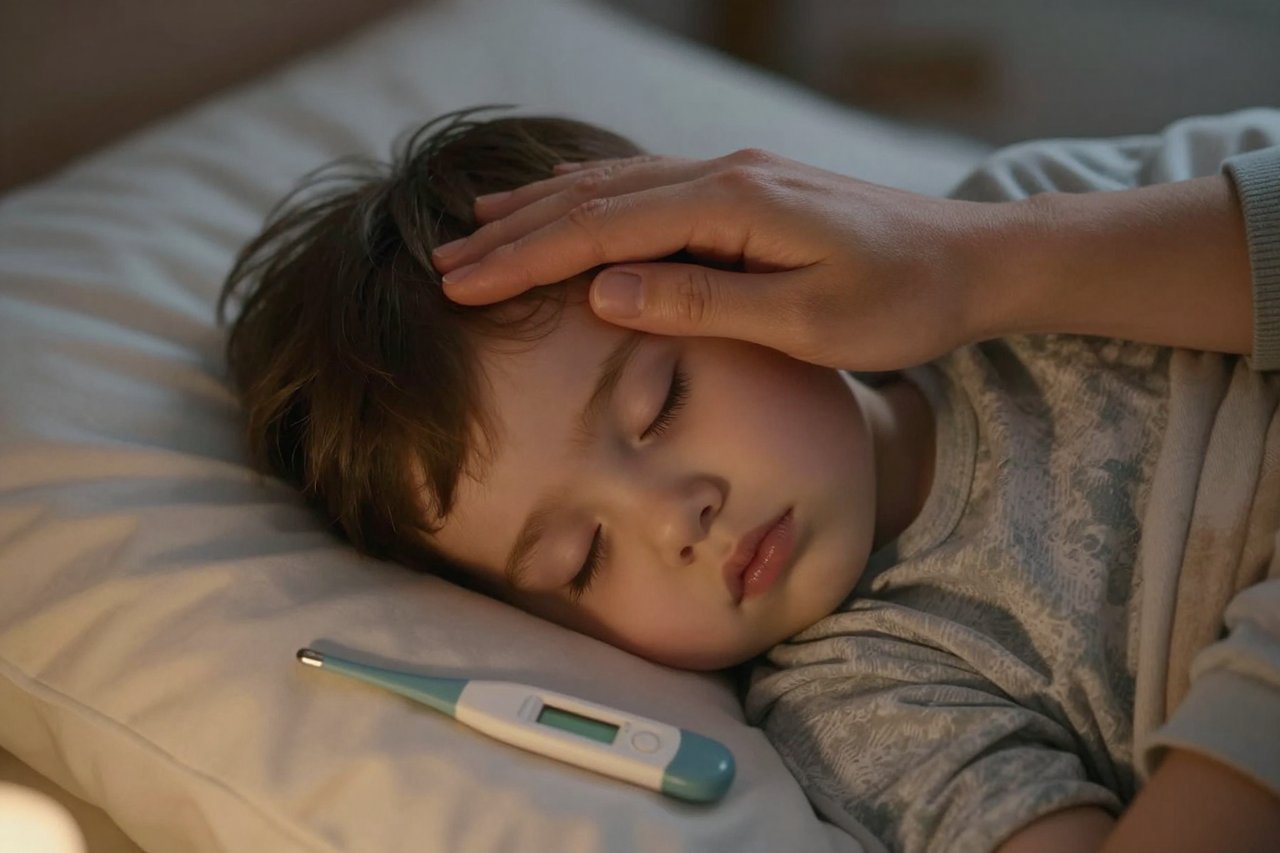
It’s 2:40am and your two-year-old is standing up in the cot, hot to the touch and breathing faster than seems right. You’ve got a thermometer that takes ninety seconds and a head full of half-remembered advice from a nurse, a grandparent, and the internet. Every parent lands in that moment eventually, and most of us land there several times a year.
Children’s diseases are not one thing. They’re a sprawling mix of the trivial and the genuinely frightening, and learning to tell the two apart is one of the more useful skills a parent develops. What follows is a practical walk through the illnesses you’re most likely to meet, the warning signs worth acting on, and the parts of childhood health that have shifted recently.
The three categories worth knowing
Clinicians tend to split childhood illness into rough groups, and the split is helpful because each group behaves differently.
- Everyday infections — colds, coughs, ear infections, chest infections, stomach bugs, hand-foot-and-mouth. Frequent, usually self-limiting, and responsible for most of the school days you’ll lose.
- Vaccine-preventable diseases — measles, whooping cough, mumps, rubella, polio, hepatitis B. Rare where coverage is high, but they resurface quickly whenever it slips.
- Long-term conditions — asthma, eczema, type 1 diabetes, food allergy, epilepsy. These don’t resolve in a week, and managing them becomes part of family routine.
Most parental worry gets spent on the first group, which is slightly backwards. The second and third carry far more long-term weight.

Colds, coughs and the winter carousel
Children under five average roughly six to ten respiratory infections a year. Some hit twelve. Kids in daycare tend to sit at the top of that range for the first eighteen months and then it eases off, largely because they’ve met the viruses already.
Hand-foot-and-mouth is worth understanding properly because it alarms parents more than it should. It’s caused by coxsackieviruses, incubates for three to six days, and produces blisters on the palms and soles alongside ulcers inside the mouth. Children shed the virus in saliva and in stool, and they keep shedding it in stool for weeks after the spots fade. That’s why it tears through nurseries and why handwashing after nappy changes matters more than disinfecting toys.
Chickenpox has a much longer fuse: ten to twenty-one days from exposure to rash, and children are contagious roughly 48 hours before the first spots appear. That’s the awkward bit. By the time you know they have it, they’ve already been at nursery spreading it.
Respiratory syncytial virus deserves a mention because it looks like a cold in older children and behaves very differently in babies under one, where it’s the leading cause of infant hospitalisation in many countries. Wheezing, grunting, ribs sucking in under the chest, and a baby who stops feeding properly are the cues to act on.
The fever number matters less than the child
Parents fixate on the reading. Clinicians mostly don’t. A temperature of 38°C (100.4°F) counts as a fever, but a child at 39°C who is drinking, arguing about the television, and producing wet nappies is generally less worrying than one at 38.5°C who is pale, floppy and not quite with you.
There is one hard exception. Any fever in a baby under three months is a same-day medical matter, regardless of how well they seem. Their immune systems are too inexperienced for a wait-and-see approach.
Other signs that override the thermometer reading:
- A rash that doesn’t fade when you press a glass against it
- Fast or laboured breathing, or a blue tinge around the lips
- Neck stiffness, a bulging soft spot, or a headache that won’t settle
- Very little urine — fewer than half the usual wet nappies in a day
- Drowsiness that feels different from normal tiredness, or a child who’s hard to rouse
Vaccines: the part of children’s diseases that keeps moving
Immunisation is the most effective thing most families ever do for their children’s health, and it’s also the area where official guidance changes most often. Staying current is harder than it sounds, because advice that was right three years ago may not be right today.
In the United States, for example, advisers have revised their recommendations on the timing of the infant hepatitis B birth dose, and parents who read about the updated hepatitis B vaccination recommendations for infants often want to know whether the change affects their own newborn’s schedule. Separately, scientific committees have been examining the safety of aluminium adjuvants used in childhood vaccines, a review that has generated plenty of anxious headlines and rather less clear-cut evidence.
There’s also been intense scrutiny of the FDA’s review of COVID-19 vaccine safety data in children and the tighter review process that followed. Whatever your reading of these developments, the practical takeaway is the same: have the conversation with your child’s paediatrician rather than relying on a summary you saw on social media, and ask specifically what applies to your child’s age and health history.
When a routine problem isn’t routine
Some children’s diseases hide behind ordinary symptoms. A toddler who coughs at every meal, who takes an hour to finish half a portion, or who regularly gags on textures isn’t simply fussy. Feeding and swallowing difficulties can persist for years and affect growth, speech and dental development if nobody names them.
Specialist assessment changes outcomes dramatically. There are children who spend early childhood on restrictive diets and feeding tubes and then, with the right therapy, end up eating birthday cake with their classmates — one case of a child who thrived despite a chronic swallowing disorder shows how much a coordinated care team can shift. If mealtimes are consistently stressful, that’s the referral to push for.
Environmental risks that don’t look like illness at first
Not every threat to children’s health arrives as a fever. Growing evidence points at ordinary household plastics — food containers, soft toys, flooring, packaging — and the endocrine-disrupting chemicals that leach from them. Research suggests that childhood exposure to plastics may be contributing to obesity, infertility and asthma, which is a lot to attach to a lunchbox.
Practical reductions don’t require a total lifestyle overhaul. Don’t microwave food in plastic containers. Swap plastic water bottles for stainless steel. Choose wooden or fabric toys for the ones that go in mouths. None of this is dramatic, and none of it is a guarantee, but the exposure reductions are real.
What to have ready before you need it
Sick days go better when the boring preparation happened in advance. Worth keeping in the house: a working thermometer (and a spare battery), children’s paracetamol or ibuprofen with the dosing chart still in the box, oral rehydration solution, a few easy-to-eat foods like crackers and bananas, and a note of your GP’s out-of-hours number saved somewhere other than your browsing history.
Dose by weight, not age, and use the syringe that came with the bottle rather than a kitchen spoon. Never give aspirin to a child under 16 because of the risk of Reye’s syndrome. Keep a simple written record of temperatures, fluids and wet nappies, since any doctor you speak to will ask about all three, and at 3am you will not remember.
The other thing worth preparing is a plan for who does what. One parent handles the medical calls, the other handles the older sibling and the pharmacy run. That division sounds trivial until the third night of no sleep, when nobody can think clearly enough to divide anything.


