
Table of Contents
Sometime around 59 BC, a Roman official had a notice posted in the Forum listing the day’s business: decrees, court cases, grain prices, the odd temple dedication. Scribes copied it out, couriers carried the copies to the provinces, and the whole thing ran for centuries under the name Acta Diurna, the “daily acts.” No printing, no newsprint, no masthead. But the shape of the idea was already there: regular, dated, public, and slightly dull.
Handwriting, Papyrus and the First News Habit
Rome’s handwritten sheets worked because the empire had two things newspapers still depend on: literacy in the right places and a distribution network. The scribes who produced them were part of a craft with its own long evolution, and the tools that made Acta Diurna possible trace back through papyrus, wax tablets and parchment to the invention of writing itself, which began with accounting rather than literature. News, it turns out, was always a commercial product.
After Rome fell, the regular public notice mostly disappeared. Information moved through the church, merchant guilds and royal messengers. It was fast enough for kings and slow enough that rumours had years to mature.
Paper, Ink and a Machine That Changed the Math
Two inventions reset the odds. Paper arrived in Europe through the Islamic world, reaching Italy by the thirteenth century and replacing costly parchment. Then, around 1450, Johannes Gutenberg built a press with movable metal type in Mainz. By 1500 there were presses in more than 250 European towns.

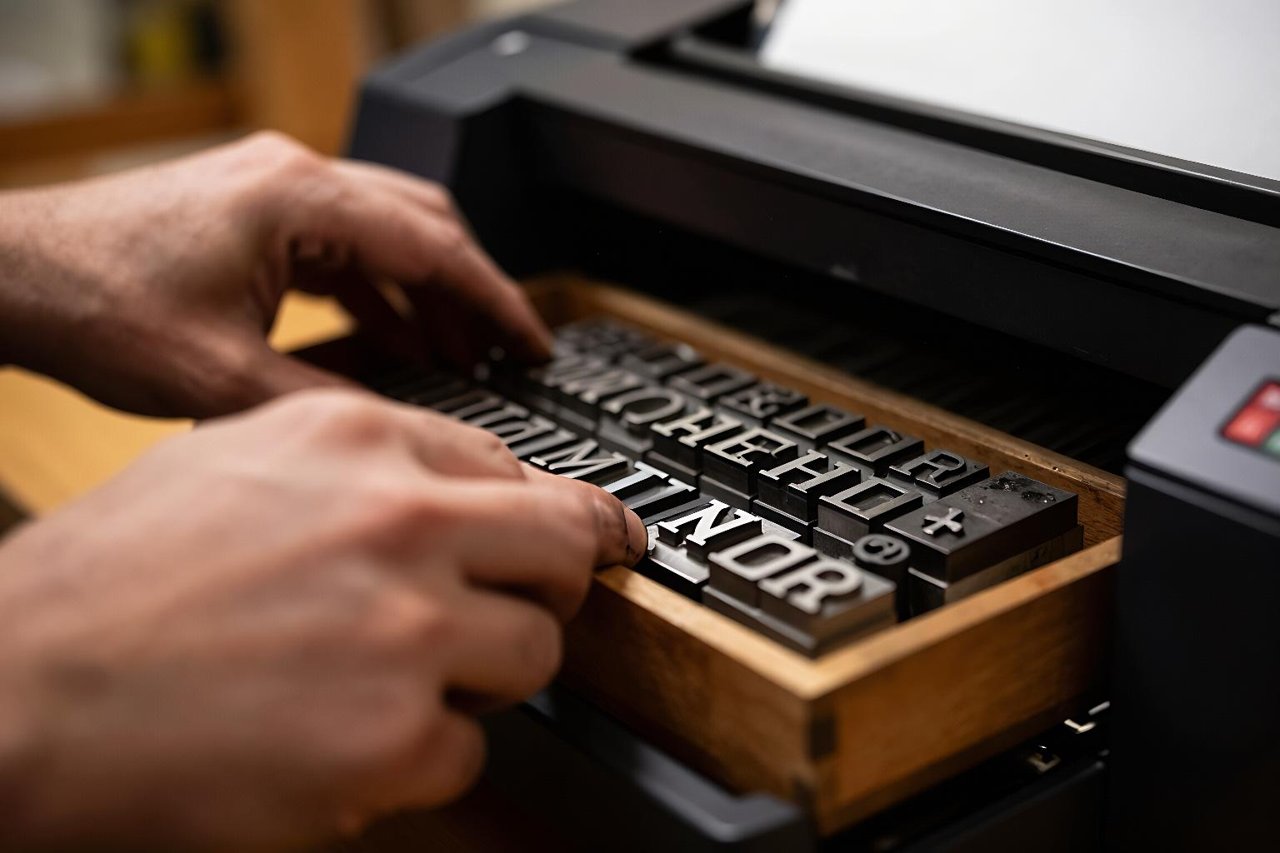
The first output was Bibles, indulgences and pamphlets. News followed quickly: single-sheet broadsides about battles, comets, monstrous births and executions. Printers learned something useful about these one-offs. People would pay for recent information, and they would pay more if it was strange. The mechanics behind that shift are covered at length in the history of printing, but for newspapers the key point is speed. A press could produce a thousand copies of the same page in a day. Handwriting could not.
1605: A Strasbourg Printer Places a Bet
The first publication generally accepted as a newspaper appeared in Strasbourg in 1605. Johann Carolus, a printer who had been producing handwritten newsletters for subscribers, bought a press and started printing the same material as the Relation aller Fürnemmen und gedenckwürdigen Historien. He then asked the city council for protection against other printers copying his work, which makes him an early petitioner for something like news copyright.
Within a few years the format had spread across German-speaking Europe, with the Avisa Relation oder Zeitung appearing in Wolfenbüttel in 1609. England got its first weekly news publication in 1622, and the word “newspaper” only settled into English in the 1660s. By then the template was fixed: a title, a date, a place of publication, and short reports filed from elsewhere.
Coffee Houses, Post Roads and Frightened Governments
Seventeenth-century newspapers depended on the mail. Postmasters knew what was moving and when, which is why so many early editors were also postmasters. In London, papers were read aloud and argued over in coffee houses, where a single copy might pass through twenty pairs of hands in a morning.
Governments noticed. Licensing systems meant printers needed permission, and losing it meant losing everything.
- 1665: The Oxford Gazette appears while the court flees plague-stricken London; it becomes the London Gazette and is still published today.
- 1695: England lets its Licensing Act lapse, and the number of London titles jumps from a handful to dozens within a generation.
- 1735: Printer John Peter Zenger is tried for seditious libel in New York and acquitted, establishing that truth is a defence.
- 1763: Issue 45 of John Wilkes’s North Briton triggers a constitutional fight over general warrants and reporting on parliament.
Every one of these fights was about the same question: who gets to describe what happened, and can the people being described stop it?
The Penny Press Invents the Mass Audience
For two centuries, newspapers were expensive and aimed at merchants and politicians. A typical copy cost six cents in 1830s New York, roughly a worker’s hourly wage. Then, on 3 September 1833, a printer named Benjamin Day launched the New York Sun at one cent a copy and sold it on the street rather than by subscription.
Day filled it with police court reports, suicides, ship arrivals and jokes. Within months it was outselling the six-cent papers combined. Rivals followed, including James Gordon Bennett’s New York Herald in 1835, which added finance and scandal in equal measure. The Sun also demonstrated how thin the line could be: in 1835 it ran a six-part series claiming astronomers had found winged life on the moon. Circulation climbed hard before the hoax was admitted.
Three technologies then compressed the news cycle again. Steam-powered presses, first used by The Times of London in 1814, multiplied output. The electric telegraph, switched on between Washington and Baltimore in 1844, separated news from transport for the first time. Reuters, founded in 1851, used homing pigeons between Brussels and Aachen to jump the gaps in the telegraph line. And railways did the distribution, hauling bundles of papers to towns that had never had a daily, a logistics story that runs through the history of transportation.
Yellow Papers and the Fight for the Front Page
Joseph Pulitzer bought the New York World in 1883 and turned it into a machine for crusades, stunts and Sunday colour comics. William Randolph Hearst bought the New York Journal in 1895 and went to war with him over the same readers. The result, nicknamed the yellow press after a comic strip character, pushed circulations into the hundreds of thousands and standards into the gutter.
Nellie Bly circled the globe in 72 days for the World in 1889, filing dispatches along the way. Halftone reproduction put real photographs on the page. Hearst’s papers banged the drum for war with Spain in 1898, though the famous telegram about furnishing the pictures and the war is almost certainly a later invention. Pulitzer, stung by the criticism, later funded the Columbia journalism school and the prizes that carry his name.
War Reporting, Radio and the Slow Leak
Two world wars made newspapers essential and made them obedient. Censorship offices controlled cables, and correspondents learned to write around the gaps. Radio arrived in the 1920s and television in the 1950s, taking the breaking-news habit without taking the classified ads.
Some stories still belonged to print because they took months. The Washington Post spent two years on Watergate from 1972. The New York Times and others published the Pentagon Papers in 1971 after a Supreme Court ruling. Wars, by contrast, could now be over before an evening edition landed, as the shortest wars in history make clear, which is exactly why live reporting moved to broadcast.
Afternoon papers began dying in the 1960s as readers got home later. American daily circulation peaked in the early 1970s and has fallen, with a few interruptions, ever since.
Craigslist, 2008 and the Decade That Broke the Model
The industry’s real vulnerability was never the front page. It was the classified section, which carried job ads, car ads, flats and lonely hearts, and which funded most of the foreign bureaux. Free online listings took that revenue first, then the recession finished the job.
American newspaper advertising brought in about $49 billion in 2006. Ten years later it was under $17 billion, a collapse of roughly two thirds in a decade. Newsroom employment in the United States fell from around 71,000 in 2008 to under 40,000 within a decade. The Rocky Mountain News closed in February 2009 after almost 150 years. The Seattle Post-Intelligencer stopped printing the same year. Hundreds of local titles followed them into the dark.
What Survives, and What It Costs
Print is not finished everywhere. Japan’s Yomiuri Shimbun still sells around seven million copies a day, the largest in the world, though it too is shrinking. In India, Hindi-language papers like Dainik Bhaskar have added readers as literacy and incomes rose, and newspaper circulation in the country has grown while the rest of the world contracts.
Elsewhere the survivors have changed shape. National titles such as the New York Times, the Guardian and Die Zeit have rebuilt themselves around digital subscriptions. Nonprofit newsrooms have taken over coverage of city halls and statehouses. Roughly a fifth of American adults now get news from a paid subscription of some kind.
The gap is local. In hundreds of American counties, and in swathes of Britain where more than 250 local titles have closed since 2005, no reporter attends the council meeting, the zoning hearing or the magistrates’ court. Researchers call the result a news desert, and its effects show up in borrowing costs, election turnout and the simple cost of not knowing what your council is doing. Anyone who wants to understand how a community actually works can still check a masthead, a printed date and a byline, and then go and watch the meeting themselves. That habit is older than Gutenberg, and no algorithm has replaced it.


