
Table of Contents
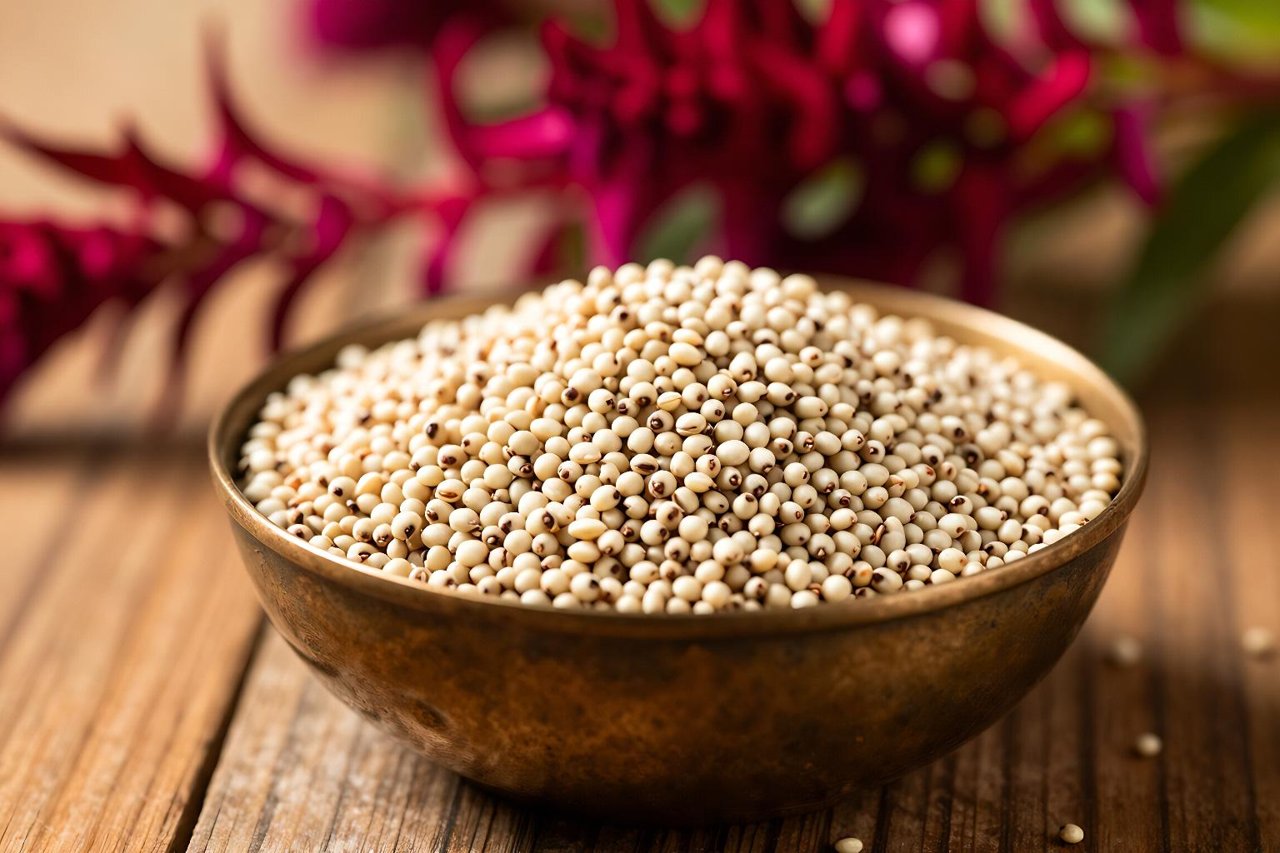
A single amaranth seed is about a millimetre across. It takes roughly a thousand of them to make a gram, which means the small plastic scoop at the health food shop holds something like twenty thousand potential plants. And yet this speck of a seed has been cultivated longer than most of the world’s major crops, fed empires, survived a colonial ban, and is now quietly reappearing on supermarket shelves alongside quinoa and buckwheat.
If you have seen amaranth in a recipe and wondered what to do with it, or you are simply curious about a grain with red plumes taller than a person, this introduction covers the basics: what it is, where it comes from, what it tastes like, and how to cook it without ending up with a pot of glue.
Not Quite a Grain, and That Matters
Amaranth is technically a pseudocereal. That means the plant is not a grass, so the seed it produces behaves like a grain in the kitchen without being related to wheat, rice or barley. It belongs to the Amaranthus genus, a sprawling family of roughly 60 to 70 species that includes a number of common garden weeds as well as the cultivated types grown for seed and leaves.
Three species do most of the heavy lifting for eaters: Amaranthus hypochondriacus, A. cruentus and A. caudatus, the last of which is known as kiwicha in the Andes. All of them are naturally gluten-free, which is one reason the seed has found a new audience among people avoiding wheat.

Eight Thousand Years of Amaranth
Archaeological evidence puts amaranth cultivation in Mesoamerica at somewhere between 6,000 and 8,000 years ago. For the Aztecs it was a staple on par with maize and beans, known as huauhtli and collected as tribute from conquered regions. The seeds were popped, mixed with honey or agave syrup and formed into shapes for ceremonies, a practice that gave us the modern Mexican sweet called alegría.
That ceremonial role is probably why the Spanish authorities tried to stamp it out in the sixteenth century. Penalties for growing amaranth were severe, and fields were burned. The crop survived anyway, tucked into hillside plots and home gardens, and it never really left India, Nepal or West Africa, where it has been grown as a leafy vegetable and a famine food for centuries.
What Is Actually Inside the Seed
Nutrition is where amaranth earns a lot of its press. Dry seeds are roughly 13 to 14 per cent protein, which is high for a grain-like food, and that protein is unusually well balanced. Amaranth is rich in lysine, the amino acid that wheat, rice and maize are short of, which is why it works so well in a blend.
A cup of cooked amaranth (about 246 grams) delivers roughly 250 calories, 9 grams of protein and 5 grams of fibre. It also brings a meaningful dose of iron, magnesium, manganese and phosphorus, plus a little calcium. The fat content sits around 7 per cent in the dry seed, and a portion of that is squalene, a compound you will otherwise find in shark liver oil and expensive cosmetics.
Worth knowing: amaranth is not a low-calorie food. That same cup carries about as much energy as a cup of cooked rice plus a small snack, so portion size still counts even when the nutrient density is impressive.
What Amaranth Tastes Like, and How to Cook It
The flavour is earthy and faintly grassy, with a peppery edge that reminds some people of beetroot greens. Cooked, the seeds turn soft and slightly gelatinous, because amaranth starch behaves a bit like cornstarch. That texture is either the best or worst thing about it, depending on how you use it.
The basic pot method
Rinse a cup of dry seed under cold water, then combine it with 2.5 to 3 cups of water or stock in a saucepan. Bring it to a boil, drop the heat to a simmer, cover and cook for about 20 minutes. Stir every few minutes, because the settling starch will scorch on the base of the pan if you leave it. You will end up with roughly three cups of cooked grain, and it will be thick.
Toast or pop it first
Toasting the dry seeds in a skillet for two or three minutes before adding liquid deepens the flavour considerably. Popping takes a different technique: get a dry pan properly hot, add a quarter cup of seeds, and shake constantly. They pop in 10 to 20 seconds, sound like tiny fireworks and jump out of the pan if you are not careful. Puffed amaranth is excellent stirred into yoghurt or folded through a granola mix.
Buying, Storing and the Different Forms
Amaranth shows up in a handful of guises, and they behave differently enough to be worth knowing apart.
- Whole seed: the most versatile form. Cook it as porridge, use it in place of rice in a grain salad, or add it to soups for body.
- Puffed seed: already popped and ready to eat. Useful for sprinkling, but it goes stale quickly once opened.
- Flour: ground amaranth has no gluten, so it needs a binder. Swap it in for no more than 20 to 25 per cent of the flour in a recipe or the crumb will turn out dense.
- Flakes: rolled amaranth, cooked like porridge oats in about five minutes.
Store whole seed in an airtight jar away from light and heat; it keeps around six months in the pantry and up to a year in the freezer. Flour is a different story, because the fat content means it can turn rancid within a couple of months. Buy it in small quantities or grind your own as needed.
A Few Honest Cautions
Amaranth contains saponins in the seed coat, though at lower levels than quinoa. Rinsing handles most of it, and the amounts involved are unlikely to matter to most people.
More relevant is the oxalate content. Amaranth sits in the moderate range, which is worth noting for anyone with a history of calcium oxalate kidney stones. The leaves carry more oxalates than the seeds. Cooking reduces them but does not remove them entirely. For most healthy eaters, two or three servings a week is a sensible rhythm rather than making it the only grain in the cupboard.
Practical Ways to Get Started
You do not need a dedicated cookbook. Some easy entry points:
- Cook it into a savoury porridge with garlic, cumin and a poached egg on top.
- Swap a third of the rice in a pilaf, which gives a nuttier flavour and more protein.
- Stir a spoonful of cooked grain into a thick soup to add silkiness without cream.
- Blend puffed amaranth with oats, nuts and honey, then press and bake for a chewy flapjack.
- Add a tablespoon of the flour to a pancake batter for colour and a subtle malt note.
The Plant Behind the Packet
It is worth remembering that amaranth is a garden plant before it is a retail product. It is a C4 species, which means it photosynthesises efficiently in heat and full sun, and it tolerates drought better than maize. A single plant can shed tens of thousands of seeds, which explains both its reputation as a vigorous self-seeder and its usefulness as a cover crop on poor ground.
The leaves are edible too, and arguably more widely eaten worldwide than the seeds. In the Caribbean it is callaloo, in Bengal it is lalshak, in Kashmir it is haak, and it turns up in soups and stir-fries across Nigeria and Kenya. You can harvest young leaves six to eight weeks after sowing and still let the plant go on to produce seed, though the seed harvest will be smaller. If you have a sunny patch and a packet of grain from the shop, you have almost everything you need to grow your own.


