
Table of Contents
Quinoa has been cultivated in the Andean highlands for roughly 5,000 years. Long before it appeared on supermarket shelves with a premium price tag, it was a working staple for Inca and Aymara communities who grew it at 4,000 metres, where frost and thin air kill most crops. That toughness is worth remembering, because a seed that survives those conditions tends to be dense with things your body can use.
Here is what is actually inside a bag of dry quinoa, which cooking method produces the best texture, and the small habits that separate fluffy quinoa from the sad, wet version most people give up on after two attempts.
What Quinoa Actually Is
Quinoa is not a cereal grain. It is the seed of a goosefoot plant, a close relative of spinach and beetroot, which is why its nutrition profile looks nothing like rice or wheat. Three types dominate the shelves: white, which cooks lightest and fluffiest; red, which holds its bite and suits salads; and black, earthier and slightly chewier. Tricolour bags are a blend, and they cook unevenly if you rush them.
A cup of cooked quinoa, about 185g, delivers roughly 222 calories, 8g of protein, 39g of carbohydrate and 5g of fibre. Those headline numbers get more interesting the closer you look.

The Nutritional Benefits of Quinoa
A complete protein, which is rare in the plant world
Most plant foods are low in lysine, an essential amino acid. Quinoa carries useful amounts of it, alongside all nine essential amino acids in a balance close enough that nutrition researchers describe it as a complete protein. At 4.4g per 100g cooked it is not a protein powerhouse the way lentils or tofu are, but as a side dish that contributes something rather than plain starch, it earns its place.
Fibre that keeps you full past mid-morning
Around 5g of fibre per cooked cup, mostly insoluble, slows the emptying of your stomach and steadies the glucose response. That combination of protein plus fibre is also why quinoa shows up in so many fat-loss meal plans: if you are following a structured approach to losing weight fast and permanently, a portion of quinoa alongside vegetables and a lean protein does more for satiety than the same calories of white rice.
Minerals that many diets run short on
A 100g serving of cooked quinoa supplies roughly 64mg of magnesium, 152mg of phosphorus, 42 micrograms of folate and 1.5mg of iron. The iron is non-haem, so it absorbs poorly on its own; squeeze lemon over the bowl or add cherry tomatoes and you noticeably improve uptake. Quinoa is also one of the better grain-like sources of manganese, which matters for bone formation and antioxidant defence.
Low glycaemic index and naturally gluten-free
Quinoa sits at a glycaemic index of about 53, firmly in the low range, so it raises blood sugar gently compared with white rice at 73. It contains no gluten at all. If you have coeliac disease, check the packaging anyway, since quinoa is often milled and packed in facilities that also handle wheat.
Rinse It Before You Cook It
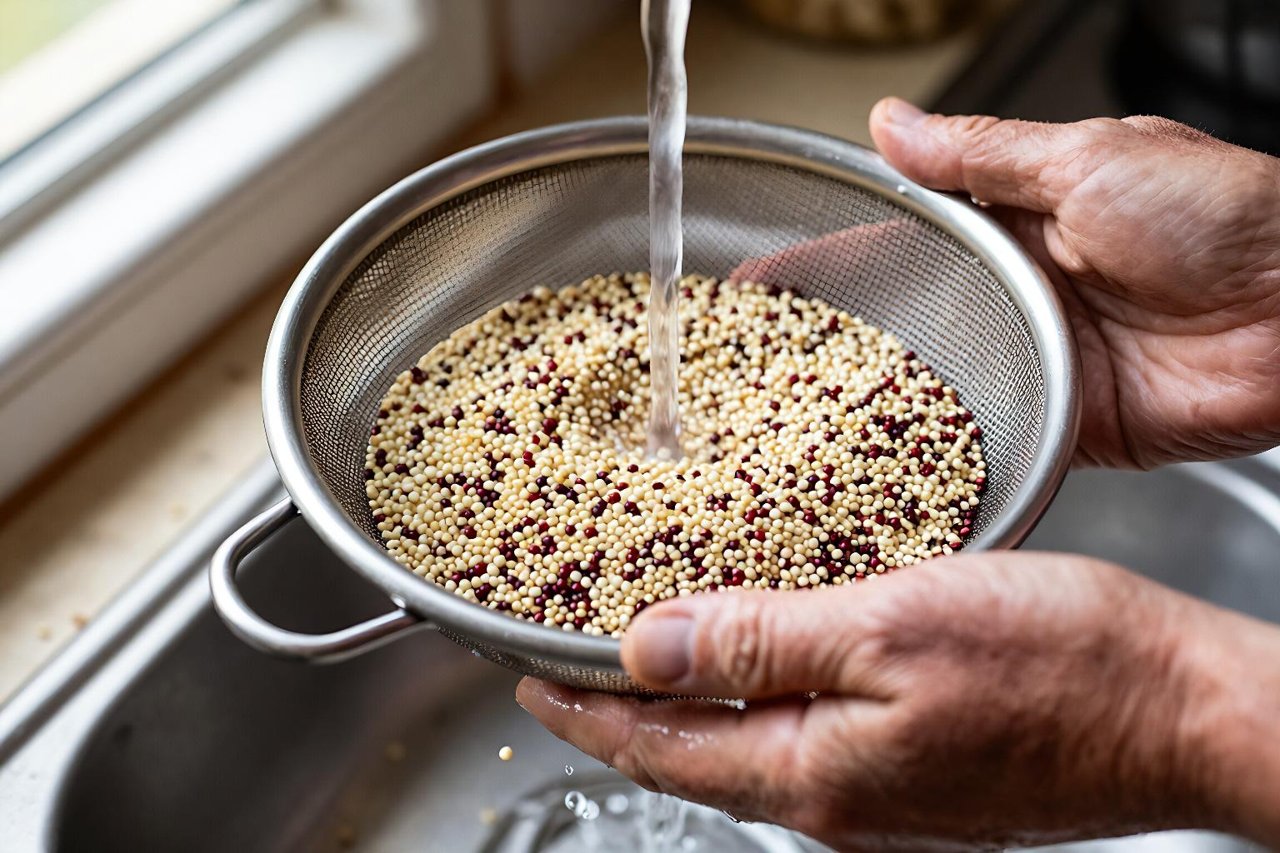
Quinoa seeds carry a natural coating of saponins, bitter compounds that foam up like soap when wet and exist to deter birds and insects. Most commercial quinoa is pre-washed, and modern sweet varieties contain far less than the bitter types grown decades ago. Even so, 30 seconds under cold running water in a fine-mesh sieve, rubbing the seeds with your fingers, removes any lingering bitterness and costs you almost nothing.
Four Quinoa Cooking Methods Worth Knowing
The ratio of water to seed matters more than the technique. Too much liquid and you get porridge; too little and the centre stays chalky.
1. The absorption method
Rinse one cup of quinoa, tip it into a saucepan with 1¾ cups of water and a pinch of salt, and bring it to a boil. Drop the heat to low, cover, and leave it alone for 15 minutes. Then take the pan off the heat and let it sit, still covered, for another five to ten minutes. Fluff with a fork, not a spoon, which crushes the grains. This is the default for a reason.
2. Toast it first, pilaf style
Drain the rinsed quinoa thoroughly, then dry-toast it in a hot pan with a teaspoon of olive oil for two to three minutes, until it smells nutty and starts popping like tiny popcorn. Add your liquid and cook as above. The grains stay separate and take on a deeper, almost toasted-bread flavour that holds up against strong dressings.
3. Rice cooker
Same 1:1.75 ratio, white rice setting, no babysitting. It works because the cooker’s own resting phase matches the off-heat rest that the stovetop method relies on. Red quinoa needs closer to a 1:2 ratio and a second cycle if your machine runs cool.
4. Pasta-style boiling
Boil quinoa in a large pot of generously salted water for 12 to 14 minutes, then drain through a sieve. You lose a little water-soluble goodness, but you gain perfectly separate grains and total control over texture, since you can taste as you go. It is the most forgiving method for a first attempt.
- White quinoa, absorption: 1 cup seed to 1¾ cups water, 15 minutes plus 5 off the heat
- Red or black quinoa: 1 cup seed to 2 cups water, 18 to 20 minutes
- Rice cooker: 1:1.75 on the white rice setting
- Pasta-style: 12 to 14 minutes in salted boiling water, then drain
- Yield: 1 dry cup makes roughly 3 cooked cups, which is four generous servings
Making Quinoa Taste Like Something
Plain quinoa is bland because it mostly is starch and water. It needs three things: fat, acid and salt. Dress it while still warm so the grains absorb the flavour instead of just wearing it. A reliable ratio is three tablespoons of olive oil, one of lemon juice or vinegar, and a good pinch of salt per cooked cup, plus something aromatic, whether that is cumin toasted in the pan, a crushed garlic clove, or finely chopped spring onion.
Warm quinoa also takes well to roasted vegetables, crumbled feta, pomegranate seeds or toasted almonds, all of which bring texture against the soft grain. Cold quinoa straight from the fridge tastes flat because chilled fat solidifies on the surface; let it come to room temperature for ten minutes and dress it again.
Cooking Ahead and Keeping It Fresh
Quinoa is one of the better batch-cooking staples. Spread hot quinoa on a tray and let it cool for 15 minutes before boxing it, otherwise trapped steam turns it gluey. It keeps five days in the fridge and freezes well in one-cup portions for up to three months; thaw overnight and refresh in a dry pan for a minute.
Dry quinoa stores in an airtight jar away from light for around six months, though the fats in the seed can go rancid over time. If you buy in bulk, keep the bag in the fridge and it will hold for a year or more.
A Weeknight Quinoa Bowl That Works Without a Recipe
Build it in layers. Start with a cup of cooked quinoa as the base. Add a generous handful of something raw and crunchy, such as shredded cabbage, grated carrot or spinach. Pile on a portion of protein: grilled chicken, roasted chickpeas, a soft-boiled egg, or cubes of firm tofu seared in soy sauce. Spoon over a dressing with real acidity, then finish with something salty or creamy, whether that is feta, olives, toasted seeds or a swirl of tahini loosened with lemon and water.
The reason this formula works is that it keeps the grain in a supporting role, roughly a quarter of the bowl by volume, rather than making it the whole meal. Cook a batch on Sunday, store it loose and cool, and dress it twice, once warm and once cold just before eating. That second dressing is usually the difference between quinoa that gets finished and quinoa that sits in a container until Friday.


