
Table of Contents
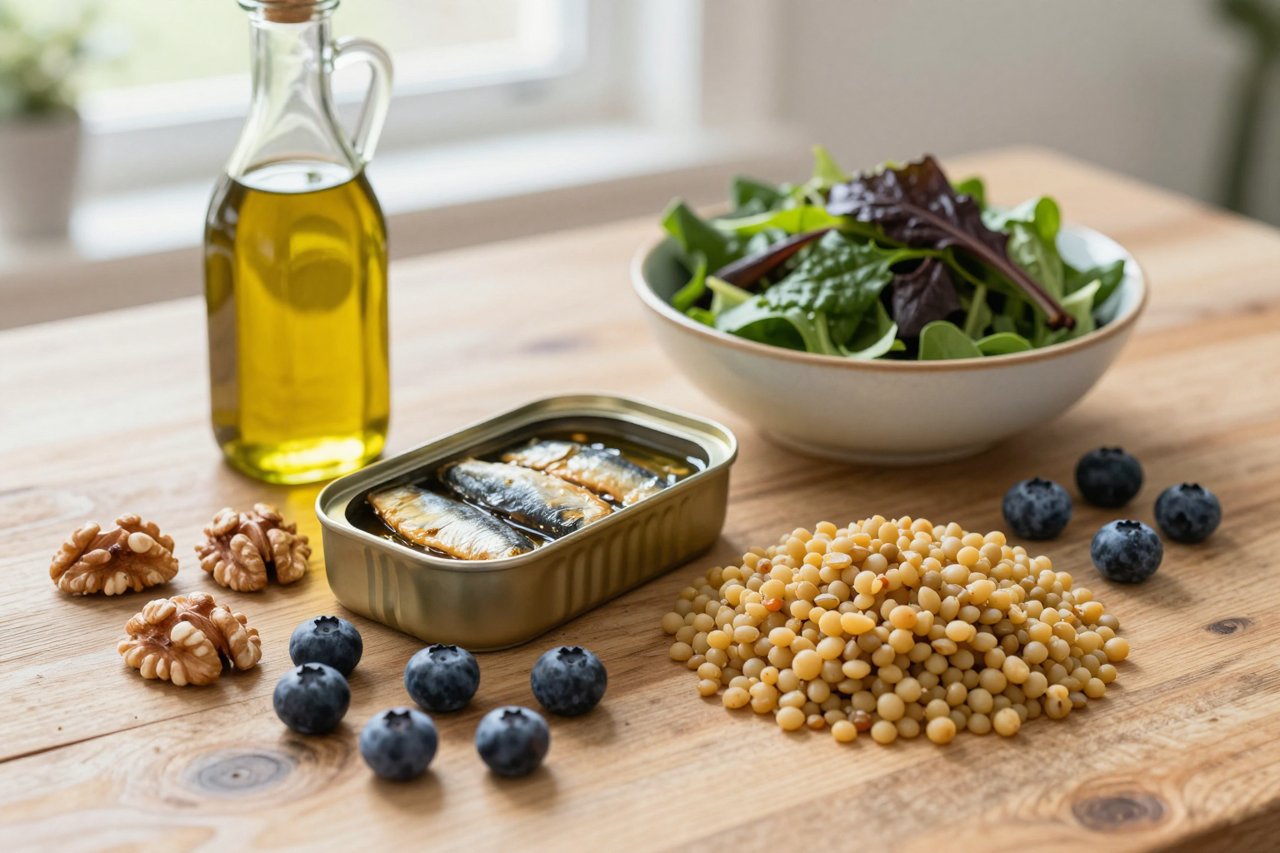
Search for anti-aging foods and you’ll get a list. Blueberries, walnuts, olive oil, sardines, turmeric, dark chocolate, green tea. All fine suggestions. None of them answer the question that actually matters: which approach do I adopt, and what does it cost me in money, time and things I’d rather not give up?
The main options on the table aren’t mutually exclusive, and that’s part of the confusion. Each gets sold as if it were the answer on its own. Here’s an honest comparison, including where each one falls short.
The four approaches you’re really choosing between
Strip away the marketing and almost every anti-aging eating strategy lands in one of four buckets:
- Whole-diet patterns like Mediterranean, Okinawan or MIND. You change the plate, not the individual ingredients.
- Targeted “superfoods” with known polyphenols or omega-3s, added to what you already eat.
- Supplements and powders: collagen, NMN, resveratrol, omega-3 capsules, vitamin D.
- Timing strategies: 16:8, 5:2, or straightforward calorie restriction.
Each has a different price tag and a different strength of evidence. That’s the comparison worth making.

Option one: the Mediterranean-style plate
This is the option with the deepest evidence base. The PREDIMED trial, which followed around 7,500 people in Spain for roughly five years, found that a Mediterranean diet with added olive oil or nuts cut major cardiovascular events by about 30% compared with a low-fat control diet. Other research has linked the same pattern to longer telomeres, the protective caps on chromosomes that shorten as we age.
What you’re buying is a system: vegetables, legumes, whole grains, fish twice a week, olive oil as the main fat, nuts, modest dairy, and very little processed meat. Nothing on that list is exotic, which is both the appeal and the difficulty.
Where it wins
- The strongest long-term human data of any approach here
- No pills, no apps, no hunger
- Improves blood pressure, cholesterol and cognition at the same time
- Adapts to most cuisines with small tweaks
Where it costs you
- It requires cooking, or paying someone else to cook properly
- The payoff is measured in years, not weeks
- “Mediterranean” is vague enough that almost any product can claim it
If you want the practical version rather than the theory, this seven-step guide to actually eating anti-aging foods walks through the changes in order, starting with the ones that matter most.
Option two: chasing specific superfoods
Blueberries, pomegranate, matcha, turmeric with black pepper, wild salmon, dark chocolate above 70%. The logic is that particular compounds do particular things: anthocyanins reduce oxidative stress, sulforaphane from broccoli supports the body’s own antioxidant defences, omega-3s calm inflammation.
Some of that holds up in trials. Blueberry studies have shown modest improvements in blood vessel function. Salmon genuinely changes inflammatory markers at two or three servings a week. The problem isn’t the science, it’s the scale.
The honest trade-off
Adding a berry smoothie to a diet built on white bread and processed meat does very little. The studies behind these foods typically test them inside an already decent diet, and often at portions larger than a casual handful. “Superfood” also has no legal or regulatory meaning, which is why the label shows up on everything from cereal bars to crisps.
Used well, though, single swaps are the easiest entry point into better eating. There’s a fuller breakdown of which foods earn their reputation in this look at the real anti-aging foods, including the ones that get far more hype than evidence.
Option three: supplements and powders
Low effort, high marketing. The main categories are collagen for skin and joints, NMN and NR as NAD+ precursors, resveratrol, omega-3, vitamin D, berberine and spermidine.
Where they genuinely earn their place
Vitamin D through a northern winter. B12 for vegans. Omega-3 for anyone who never eats fish. Iron or magnesium when bloodwork says you’re short. These are gap-fillers, and for those specific gaps they work well.
Where the evidence thins out
Resveratrol is the classic mismatch. The doses used in much of the research are equivalent to drinking hundreds of glasses of red wine a day, and human results have been inconsistent. NMN does raise NAD+ levels in blood, but whether that translates into healthier or longer human lives is still an open question. Collagen has small trials showing modest improvements in skin elasticity, generally at 2.5 to 10 grams daily, with effects that fade when you stop.
The bigger issue is opportunity cost. A supplement shelf costing £40 a month could buy a lot of fish, vegetables and olive oil, and the food delivers benefits the capsule doesn’t. There’s a clear-eyed comparison of supplements against other longevity levers in the five main options for living longer, compared honestly.
Option four: fasting and calorie restriction
16:8, 5:2, alternate-day fasting, or simply eating 15% less than you’d like to.
The case is genuinely interesting. Animal studies show improved insulin sensitivity and increased autophagy, the cellular clean-up process that declines with age. Human trials have found improvements in blood pressure, fasting glucose and triglycerides, sometimes independent of weight loss. It costs nothing and requires no shopping decisions.
The catch is sustainability and safety. Long-term human data on fasting is thin compared with the Mediterranean diet. Combining a short eating window with low protein intake and no resistance training is a reliable way to lose muscle, which is the opposite of what you want after 50. It doesn’t suit people on diabetes medication, pregnant women, teenagers, or anyone with a history of disordered eating.
There’s also a social bill. Skipping dinner with friends every week gets old fast. If you want a structure that accounts for real life rather than an idealised one, this seven-step blueprint for living longer is worth reading before you pick a fasting protocol.
Putting the trade-offs side by side
- Best evidence per pound spent: the Mediterranean-style plate. Slow, unglamorous, well proven.
- Fastest to start: superfood swaps. One change, one shopping trip.
- Lowest effort, highest monthly cost, weakest average evidence: supplements.
- Free but hardest to sustain: fasting and calorie restriction.
Notice how none of them wins on every measure. That’s the point. The right choice depends on whether your bottleneck is time, money, cooking skill or appetite.
A hybrid that survives real life
Most people do best by taking the top of one column and the top of another. Build the plate first, because that’s where the evidence is strongest and where the other approaches get their foundation. Then add two or three targeted foods you’ll actually eat consistently, whether that’s sardines, frozen berries or a daily handful of walnuts. Use supplements only for gaps you’ve identified, ideally with a blood test rather than a podcast.
On timing, a 12-hour overnight gap is a reasonable default for most people. It’s easy to keep, it fits family dinners, and if you later want to tighten it to 14 or 16 hours, you can.
Don’t overlook the brain in all this. The same foods that protect your arteries and heart tend to protect cognition, and the habits around them, including sleep and movement, matter just as much. These science-backed strategies for sharpening your brain at any age overlap heavily with the dietary advice above.
Where to start on Monday
Pick one meal and rebuild it around plants and olive oil rather than trying to overhaul everything. Buy frozen berries instead of fresh ones, since they’re cheaper and just as good nutritionally. Keep tinned sardines in the cupboard for the days when cooking isn’t happening. Get your vitamin D level checked before spending money on a bottle. Give yourself a 12-hour overnight window and see how it feels.
Whichever option you pick, judge it on one question: can you still be doing this in December, not just in January? The anti-aging foods that work are rarely the ones with the best marketing. They’re the ones that quietly fit into a Tuesday.


