
Table of Contents
Knowing which foods fight aging is one thing. Getting them onto your plate every day is another. That is why so many people buy bags of spinach and salmon fillets on Sunday, then come home stressed on Wednesday and order takeout.
If you have already read the evidence on which foods genuinely slow the aging process, you might be asking the more practical question: how do I make this work in real life? This guide is that answer. No master shopping list of forty exotic ingredients. No smoothie that tastes like grass. Just a repeatable framework you can start tonight and follow for the rest of the week.
Step 1: Build every plate with the 3-2-1 rule
Anti-aging eating gets complicated when you think in isolated ingredients. Instead, think of a plate as three groups. Aim for 3 parts vegetables or fruit, 2 parts quality protein or healthy fat, and 1 part slow carbs. That ratio automatically pushes you toward fiber, polyphenols, and omega-3s, while leaving less room for processed carbs and refined oils.
A realistic breakfast: a three-egg omelet cooked in olive oil, filled with half a cup of sautéed spinach and mushrooms, served with half an avocado and a small handful of raspberries. No toast needed, but if you want toast, make it sourdough or rye and count it as your one slow-carb portion.

Lunch might be a large salad topped with grilled chicken, a few cherry tomatoes, peppers, olives, chickpeas, and a walnut-oil dressing. Dinner: a fillet of salmon with roasted broccoli and a quarter cup of quinoa. This is not a heavy diet. It is simply a way of proportioning food so that every meal nudges your body away from inflammation.
Step 2: Use a rotating weekly meal skeleton
Deciding what to eat each day drains willpower. Remove that by assigning a loose theme to each weeknight. This works far better than planning seven fully different meals because you can buy in bulk and prep once.
- Monday: oily fish (salmon, mackerel, or sardines) with dark green vegetables.
- Tuesday: legumes (lentils, chickpeas, or black beans) in a soup, curry, or bowl.
- Wednesday: grass-fed beef or bison stir-fry with peppers and onions.
- Thursday: eggs or pastured chicken with cruciferous vegetables like cauliflower or Brussels sprouts.
- Friday: Mediterranean-style meal with olives, tomatoes, and white fish or tofu.
- Weekend: leftover-foraging or a flexible meal using whatever produce is about to go bad.
This skeleton multiplies your options. A Tuesday lentil curry can become lentil salad the next day. A Wednesday stir-fry can be thrown over a bed of arugula for lunch. The goal is consistency, not gourmet perfection.
Step 3: Go high, go wide with produce
Many lists of anti-aging foods repeat the same popular berries and leafy greens. You want those, but you also want pigments you have never heard of. The compounds that give plants bright purple, deep red, and yellow colors are the ones that protect your cells. This is why the real longevity-promoting diets include colorful foods from every part of the supermarket.
Set a simple target: each week, buy at least one vegetable or fruit from each color group. Red (tomatoes, red bell peppers, pomegranate). Orange (carrots, sweet potatoes, butternut squash). Yellow (pineapple, yellow beets). Green (spinach, broccoli, herbs). Purple or blue (blueberries, blackberries, red cabbage, purple sweet potatoes). White or brown (cauliflower, mushrooms, garlic, onions).
When you eat like this, you are not just adding antioxidants. You are cultivating a diverse gut microbiome, and that microbial community does more for your energy and immune defenses than almost any supplement can. The practical payoff is noticeable within two to three weeks: fewer sugar cravings and more stable digestion.
Step 4: Pair anti-aging foods for maximum absorption
You can eat all the antioxidant-rich ingredients in the world, but if you do not pair them properly, you may absorb very little. Fat-soluble vitamins A, D, E, and K need dietary fat. That means a spinach salad with low-fat dressing is nearly useless compared to the same salad drizzled with olive oil or topped with avocado.
Take lycopene in tomatoes. Cooked tomatoes release more lycopene, but you still need a fatty partner to absorb it. So use olive oil in your tomato sauce. Add a handful of walnuts to your oatmeal. Always serve broccoli with a little cheese, tahini, or a pat of butter. These combinations are not just indulgent; they are biologically necessary.
The same logic applies to plant-based iron. Lentils and spinach are rich in iron, but in a form your body struggles to use. Add vitamin C, and absorption increases several times over. Squeeze lemon juice over lentil soup. Toss sliced strawberries into a kale salad. That one habit makes a huge difference for women especially, who need more iron and often lack it.
Your window for building bone-strength and brain health is now, and it is influenced by how well you pair minerals with their helpers. The right combinations keep skin elastic, too, as science-backed approaches to youthful skin often point out. Vitamin C is also essential for collagen formation, so every meal with citrus or peppers counts double.
Step 5: Design your kitchen to make hunger smarter
Willpower is overrated. When you have not eaten in five hours and you are tired, you will reach for whatever is easiest. So rearrange your kitchen so that the anti-aging foods are the path of least resistance.
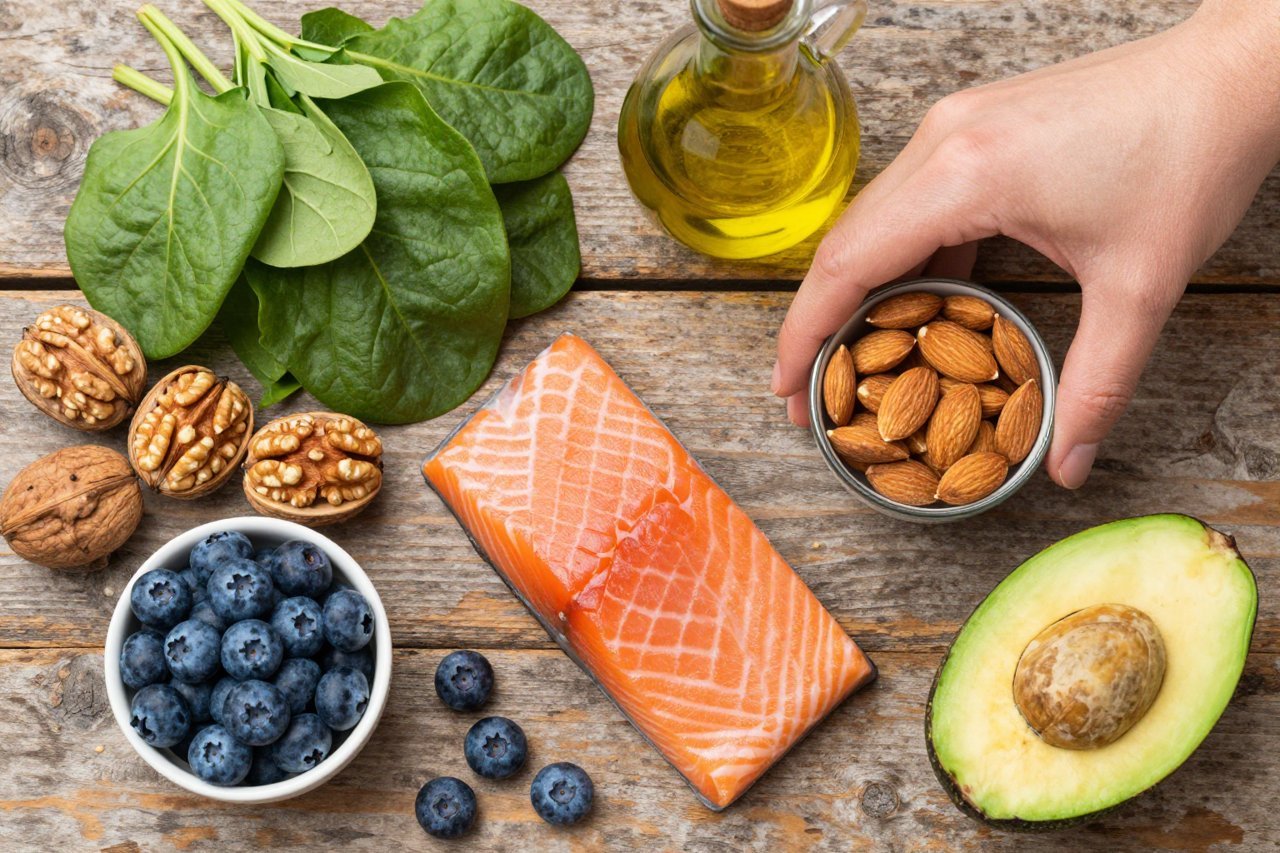
Keep a bowl of washed cherry tomatoes, snap peas, and radishes at eye level in the fridge. Put almonds and walnuts in a glass jar on the counter, not shoved behind the blender. Make your one shelf in the pantry the designated anti-aging zone: tinned sardines, olive oil, balsamic vinegar, rolled oats, and beans.
Take fifteen minutes on Sunday to chop onion, bell peppers, and sweet potato. Store them in separate glass containers. On busy evenings, you can throw a grain-free anti-aging bowl together in under ten minutes: sauté onion and peppers in olive oil, add greens, crack an egg or drain a can of sardines on top, finish with lemon and seeds.
This kind of setup nudges you toward healthy choices even on chaotic days, which is exactly how you avoid the trap of needing a complicated recipe. It is also a powerful longevity strategy if you combine it with other habits like consistent movement and stress management.
Step 6: Have a plan for your personal danger zones
Everyone has a time of day when their anti-aging food discipline collapses. For one person it is 4 p.m., for another it is 10 p.m. after the kids are in bed. Instead of hoping you will suddenly acquire superhuman restraint, create a specific rehearsal.
If your danger zone is a sweet evening craving, buy dark chocolate with at least 85 percent cacao. Break it into pre-portioned squares and store them in a hard-to-open jar. Better yet, keep a bowl of frozen cherries or grapes in the freezer. They take time to eat, which slows you down and satisfies the urge for something sweet without an insulin spike.
If your danger zone is the drive-through, pack a small survival snack box in your car: a bag of walnuts, a packet of unsweetened nut butter, and a single-serve pouch of olives. When you are stuck in traffic and reaching for fast food, you have a better option that takes no extra time.
Remember that these anti-aging habits are also working on your brain, not just your skin and waistline. Emerging research suggests that the same foods that protect your heart keep neurons firing properly. If you want to improve memory and protect your cognitive health at the same time, this kind of food environment directly supports that goal.
Step 7: Judge success by how you feel, not just how you look
Many people give up on an anti-aging foods lifestyle because they expect to see a younger face in the mirror after four days. That kind of visual change takes weeks or months. But other changes arrive much sooner.
Start tracking three markers from day one:
- Morning energy: do you wake up without needing two cups of coffee?
- Skin tone: is the red, puffy look around your eyes or chin starting to fade?
- Mental clarity: can you recall names and remember where you put your keys?
These signals are more sensitive than a tape measure and they respond to the anti-inflammatory compounds in berries, fish, and spinach more quickly than you might expect. Keep a simple note in your phone. After the first seven days, review it and notice exactly which foods made you feel the strongest. That is your personal list, and you will be far more motivated to stick with it than following a generic list from a magazine.
If you want a structured walking route toward stronger memory, think of this step as part of a wider memory improvement strategy. The foods you now eat are laying a chemical foundation, and the habit of checking in with your mind adds a behavioral layer. Both matter.
Soon, you will not think of anti-aging foods as a special diet. You will just think of them as groceries. That is exactly when the system becomes permanent, and your body will keep paying you back in clearer skin, more energy, and a sharper mind for years to come.


