
Table of Contents
Walk into almost any supermarket and the produce section is the loudest part of the store: pyramids of oranges, clamshells of salad leaves, peppers stacked in four colours. It’s also where a lot of good intentions quietly die. Only about one in ten adults manages the recommended amount of fruit and vegetables, and the reason is rarely ignorance. Cost, storage, time, and the fact that a bag of spinach can turn to slime within 48 hours of coming home all play a part.
What follows is the practical version. How much you actually need, what’s worth paying a premium for, how to store produce so it survives the week, and the small changes that get more of it onto your plate without turning dinner into a project.
How Much Fruit and Veg Do You Actually Need?
The five-a-day figure traces back to a World Health Organization recommendation of at least 400g of fruit and vegetables a day, potatoes and other starchy roots excluded. One portion works out at roughly 80g, which in real terms looks like:
- one medium apple, banana, orange or pear
- three heaped tablespoons of cooked vegetables
- a cereal bowl of mixed salad
- two satsumas, or a small handful of grapes
- three heaped tablespoons of beans, lentils or chickpeas (these count once a day, no matter how many portions you eat)
Fruit juice counts, but only 150ml and only once. Potatoes, yams and cassava sit in the carbohydrate camp rather than the vegetable one, which surprises plenty of people who count their chips.

Five is a floor, not a finish line
Eighty grams is the minimum that keeps deficiency at bay, not the amount that optimises anything. Large cohort studies consistently show the risk of heart disease and stroke falling as intake climbs toward eight or ten portions a day, with the benefit flattening somewhere around there. The realistic takeaway isn’t to chase ten. It’s that moving from two portions to four does considerably more for you than moving from six to eight.
Fresh, Frozen, or Canned? The Honest Answer
Frozen vegetables get a bad reputation they haven’t earned. They’re usually picked at full ripeness and blanched within hours, which locks in vitamin C and folate at levels that can match or beat fresh produce that has spent a week in transit and another four days in your fridge drawer. If the choice is between fresh broccoli you’ll forget about and frozen broccoli you’ll actually cook, frozen wins on every measure that matters.
Canned is a similar story. Tinned tomatoes are one of the few cases where processing genuinely improves the nutrition, because heat breaks down cell walls and makes lycopene easier for your body to absorb. Check the label for added salt and sugar, and rinse canned beans before using them.
Buying Well Without Spending a Fortune
There’s a reason cabbage, carrots, onions, bananas and frozen peas appear on every budget shopping list. They’re cheap per portion, keep for ages, and don’t demand a plan. Seasonal produce is the other lever worth pulling. Strawberries in June cost a fraction of what they cost in December, and they taste nothing like them.
Organic is a personal call, and the price gap can be steep. If you’d rather be selective than all-or-nothing, it helps to know how organic fruit and vegetables compare with conventional ones before deciding where the extra money is genuinely worth spending.
Storage Rules That Stop You Throwing Money Away
Roughly a third of the food bought in the UK is thrown away, and fresh produce is the single biggest category. Most of that waste is a storage problem rather than a discipline problem.
Keep these out of the fridge
Tomatoes lose flavour and turn mealy below about 12°C. Potatoes, onions, garlic and winter squash prefer a cool, dark cupboard. Basil blackens in the cold, so treat it like a bunch of flowers on the counter. Bananas go brown faster in the fridge, though the flesh inside stays perfectly fine.
Fridge, but with a bit of care
Berries should stay unwashed until the moment you eat them, since moisture is what triggers mould. Carrots and celery last noticeably longer standing upright in a container with an inch of water. Leafy greens do better wrapped in a slightly damp paper towel inside a bag, rather than crammed loose into the drawer.
Watch the ethylene
Apples, bananas and avocados release ethylene gas, which speeds up ripening in everything nearby. Keep them away from leafy greens, broccoli and cucumbers unless you’re deliberately trying to ripen something. Onions and potatoes stored together make both sprout faster.
Small Habit Changes That Add Up
Nobody needs a twelve-step produce protocol. These are the moves that tend to stick because they take less than a minute:
- Grate a carrot and a courgette into mince, chilli or bolognese. Nobody notices.
- Stir two handfuls of frozen spinach into pasta sauce in the last two minutes of cooking.
- Keep a bowl of fruit where you walk past it, not hidden in the fridge drawer.
- Add frozen peas to almost anything. Three minutes, no chopping, no waste.
- Swap half the rice for roasted cauliflower, or half the pasta for courgette ribbons.
- Build a snack plate instead of opening a packet: cucumber, cherry tomatoes, hummus, a few olives. There are plenty more ideas in this guide to healthy snacks that keep you full.
- Blend a handful of spinach into a smoothie. The colour changes; the taste barely does.
- Roast a whole tray on Sunday and reheat it through the week.
Colour Is a Rough Guide to What You’re Getting
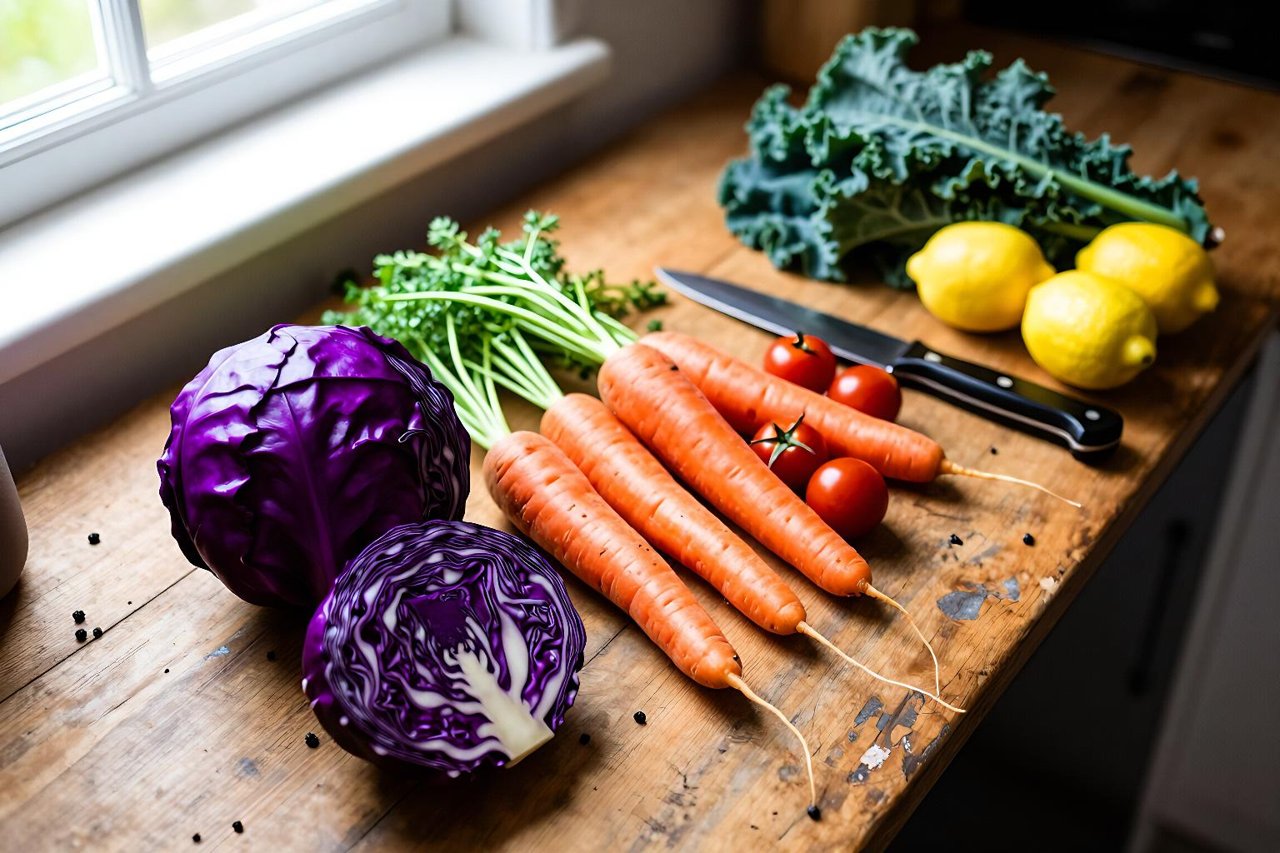
Different pigments travel with different plant compounds, which is the logic behind the eat-a-rainbow advice. Red produce such as tomatoes and watermelon brings lycopene. Orange carrots, sweet potato and butternut squash supply beta-carotene. Greens like spinach, broccoli and peas carry folate and lutein. The purple and blue group, from red cabbage to blueberries, delivers anthocyanins, while onions, garlic and cauliflower contribute allicin and quercetin.
Many of those compounds are anti-inflammatory, which is a large part of why produce-heavy eating patterns keep turning up in research on the anti-inflammatory diet and which foods to build it around. It’s also why no single item deserves a crown. Blueberries are genuinely good, but what superfoods are and aren’t is worth understanding before you pay a premium for a powder.
What Your Gut and Your Blood Pressure Get Out of It
Fibre is the quiet workhorse. Most adults manage around 15g a day against a target of 25 to 30g, and fruit and vegetables are the least painful way to close that gap. Fibre feeds the bacteria in your colon, which is why it keeps showing up in any serious look at foods for gut health and the changes that actually move the needle.
Potassium matters too. One medium banana delivers roughly 420mg, around 12% of an adult’s daily need, and higher potassium intakes are linked with lower blood pressure. Vitamin C is easy to overlook as well: 100g of red bell pepper holds about 150mg, close to three times what an orange provides.
Cooking Methods That Make Vegetables Worth Eating
Roast at 220°C and give the vegetables room. Dry them first, spread them in a single layer, and don’t crowd the tray, because steam is the enemy of browning. A drizzle of olive oil is doing more than adding flavour. Vitamins A, D, E and K are fat-soluble, and carotenoids from carrots and tomatoes absorb far better with fat present.
Steam broccoli for three or four minutes rather than boiling it for ten. Finish roasted veg with lemon juice or a splash of vinegar and a decent pinch of salt; acid wakes up flavours that salt alone can’t reach. Char is flavour, and a blistered green bean tastes nothing like a grey boiled one.
If you change one thing this week, make it the tray of vegetables you roast on Sunday afternoon. That’s the real difference between having vegetables in the house and having dinner ready.


