
Table of Contents
A cat does not need a garden to be happy, but some breeds cope with four walls far better than others. A Bengal climbing the curtains by week two is not a bad cat. It is a cat whose breed was never going to suit a one-bedroom flat with a single windowsill.
What follows is a shortlist of breeds that genuinely settle into indoor life: the ones that nap through the afternoon, use vertical space sensibly, and do not spend every evening demanding a hunt. There is also an honest section on popular breeds that usually struggle inside, because picking the wrong one is the mistake people make most often.
Why some breeds handle indoor life and others don’t
Indoor living asks a lot of a cat. It removes the hunting, the patrolling and the forty-metre sprints, then replaces them with a hallway and a sofa. Breeds that developed as laid-back companions take that trade happily. Breeds built for heat, height and constant movement treat your kitchen as a problem to be solved.
Three traits matter most: activity level, tolerance for being alone, and how badly they need to be doing something. A breed described in club language as “curious, athletic and easily bored” is a polite way of saying it will empty your bookshelves by Thursday.

If this is your first cat, the same logic applies as with cat breeds that won’t test your patience: a calm temperament beats a pretty face every single time.
The best indoor cat breeds
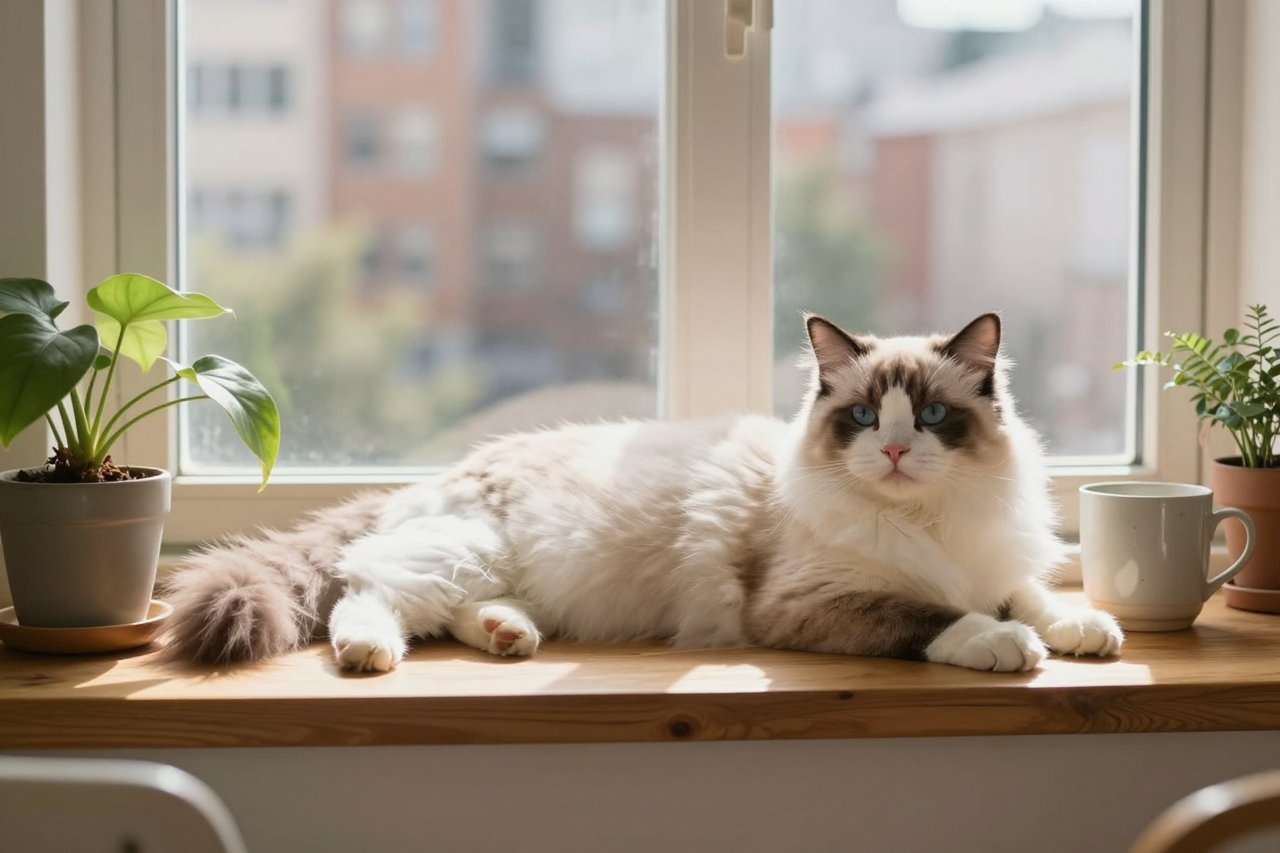
Ragdoll
The closest thing to a cat designed for living inside. Ragdolls go limp when lifted, follow you from room to room at a gentle pace, and rarely bother with the top of the wardrobe. Adults land between 4.5 and 9 kg, so they take up real sofa space. The trade-off is company. Ragdolls get genuinely gloomy when left alone all day and do best in pairs or with someone around. Brush two or three times a week and the grooming job is done.
British Shorthair
Round, dense-coated and almost aggressively relaxed. A British Shorthair will greet you, eat, then find a chair and stay there until dinner. They like routine, handle a normal working day without drama, and are one of the most reliable picks for flat living. They are not clingy lap cats, and many dislike being picked up. Expect 4 to 8 kg, a weekly comb, and a tendency to become a perfect sphere if you leave food down all day.
Russian Blue
Quiet, tidy and reserved with visitors, deeply loyal to one or two people. Russian Blues play in short bursts and then disappear for hours. Their double coat sheds less than most, which matters if you own black trousers. They are sensitive to noise, so a calm flat suits them and a loud house with three small children does not.
Birman
The Birman sits in the middle of everything: sociable without being needy, playful without wrecking the place, long-haired without a daily grooming marathon. Many will supervise your work from a desk corner and then entertain themselves while you get on with it. Brush twice a week, keep the white paws reasonably clean, and there is very little fuss.
Scottish Fold
Sweet-natured, adaptable and famously fond of a windowsill. One honest caveat: the folded ear comes from a cartilage mutation linked to a painful joint condition called osteochondrodysplasia. Reputable breeders screen for it and will show you the paperwork. Buy carefully and you get a placid, people-friendly indoor cat. Buy cheaply and you inherit a lifetime of vet bills.
Persian
Built for cushions. Persians have very low activity needs and are content with a quiet room, a warm spot and company at a distance. The flat face brings real work: tear staining needs wiping daily, and some struggle in hot weather. Grooming is a genuine 10 to 15 minutes a day, not a weekly session, so be honest with yourself about whether you will actually do it.
Maine Coon
The biggest of the domestic breeds, often 5 to 8 kg with some males past 10. They are gentle, dog-like and surprisingly good indoors, provided you give them height and something to push around. A Maine Coon in a studio with no shelves is a frustrated Maine Coon. Expect heavy grooming, larger food bills and a cat that drinks from the tap.
Breeds that usually struggle inside
Some of these get sold as “great with families” and then spend their lives bouncing off the walls. They need outdoor access, a large catio, or an owner who genuinely enjoys 45 minutes of structured play every day.
- Bengal. High energy, high intelligence, loves water and heights. Brilliant if you have space and time; a demolition crew if you do not.
- Abyssinian. Endlessly curious and athletic. Wants to be involved in every single thing you do, all day.
- Savannah. Very tall, very active, and often territorial. Rarely a sensible choice for a small indoor flat.
- Siamese. Fine indoors if you are home a lot, because they talk constantly and hate being ignored. Two of them is usually better than one.
Matching a breed to your actual home
Before you fall for a face, run through this list honestly:
- Hours alone. Over eight a day, choose a placid pair over a single needy cat. The same maths applies to dogs for people who work full time, and cats are no different.
- Floor space. Small flats work for most breeds on this list, but they need height. Shelves, a tall cat tree and a window perch add territory without adding square footage. If you are still weighing up species, our guide to small dog breeds that genuinely thrive in apartments covers the other side of that question.
- Grooming tolerance. Persians and Maine Coons need daily or near-daily brushing. Birmans and Russian Blues need very little.
- Noise and chaos. Russian Blues and Birmans cope badly with a loud household. British Shorthairs barely notice.
- Budget. Big breeds eat more, insure for more, and need bigger carriers, litter trays and scratching posts.
Making a small indoor space work
Build upward, not outward
Cats measure territory in vertical metres. A tall, stable cat tree near a window does more for a bored cat than an extra room would. Two or three wall shelves at different heights create a route around the room, which is exactly what an indoor cat is missing.
Get the boring logistics right
One litter tray per cat, plus one. Keep trays away from food and water, and away from noisy appliances. Cats hate eating next to a washing machine mid-spin. Place water in at least two spots, ideally not beside the food bowl, because many cats prefer to drink away from where they eat.
Feed the hunting instinct
A bowl of kibble removes the only real job a cat has. Puzzle feeders, food scattered in a snuffle mat, or a few small meals a day all give that brain something to do. Ten minutes with a wand toy before bed, ending with a small treat, mimics the hunt-eat-groom-sleep cycle and buys you a quieter night.
Give them something to watch
A window perch at the front of the house is cheap entertainment. Add a bird feeder outside if you can. For cats that need more, a secure catio or a harness and lead turns a flat into a much bigger world. Introduce the harness slowly, at home, over a couple of weeks, and never rush the first trip outside.
Get those pieces in place and most of the breeds above will live happily in 60 square metres. Skip them, and even the most easygoing British Shorthair will start eyeing your curtains.


