
Table of Contents
The roar reaches you before the horizon does. On the Colorado River, deep inside the Grand Canyon, the water goes quiet for a strange half-second, then the sound of Lava Falls rolls back up the canyon walls like a freight train. Guides stand up in their boats to scout the line. Everyone else checks a helmet strap one more time.
Whitewater rafting is one of the few adventures that scales from a lazy family float to Class V chaos without changing the basic kit list. What changes is the river you choose. Some of the best places for whitewater rafting demand a lottery permit and two weeks of annual leave. Others are a two-hour detour off a coastal highway. Both count.
The Grand Canyon, Arizona
Nothing else quite compares, and part of that is simply scale. The Colorado runs 226 miles through Grand Canyon National Park between Lee’s Ferry and Diamond Creek, and a full run takes 16 to 18 days. If that’s more holiday than you have, the 88-mile Lee’s Ferry to Phantom Ranch stretch packs the biggest water into about four days.
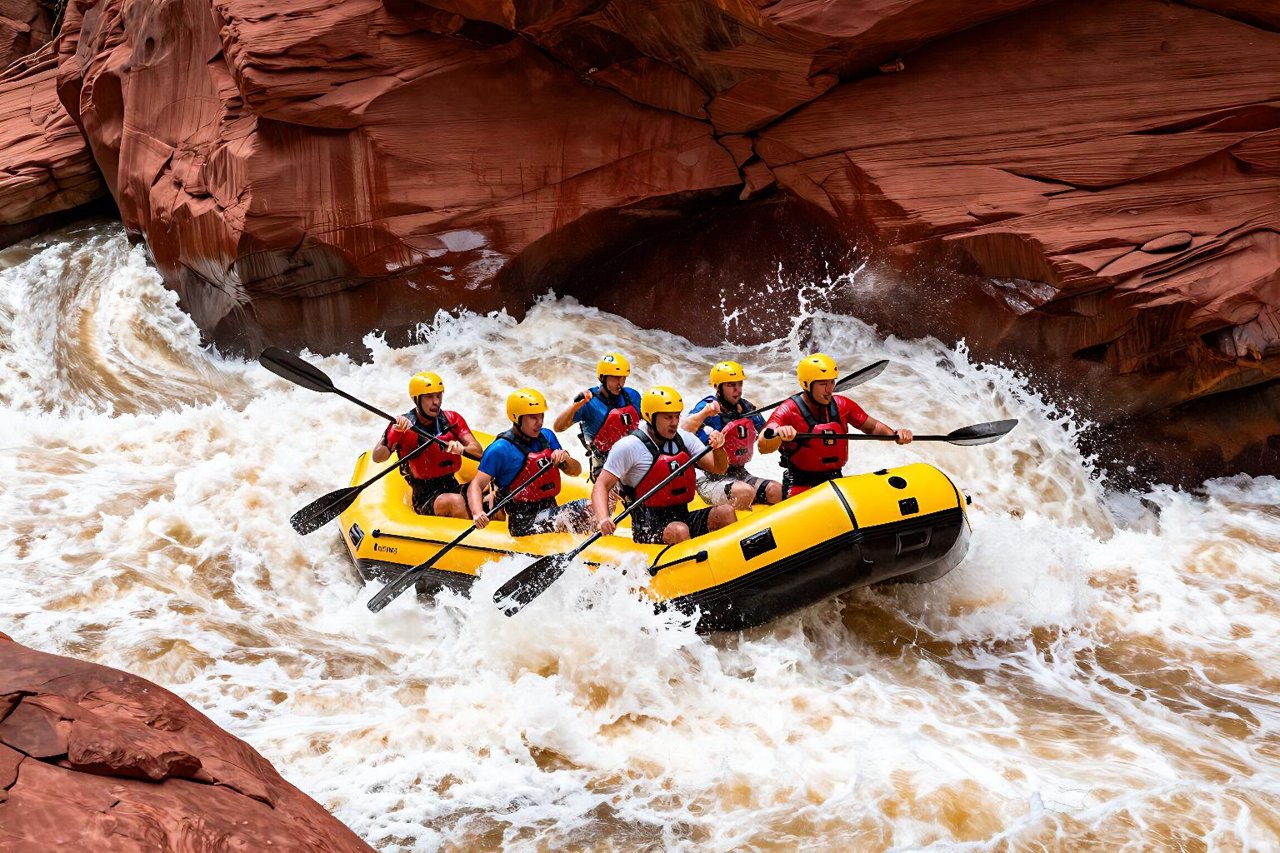
Expect Class III and IV most of the way, with Lava Falls (Rapid 24) jumping to IV+ or V depending on flow. Private permits run on a lottery, and with tens of thousands of applicants chasing a few hundred launches each year, most people end up booking with a commercial outfitter instead. For a lot of travellers, this river is the reason they start working through the country’s best national parks to visit in the US at all.

The rapids are only half of it. Side canyons hide waterfalls and slot walls, the rock at the bottom of the Inner Gorge is closing in on two billion years old, and river camp has its own rhythm: unload the dry bags, set up the cot, eat too much dinner, sleep under more stars than you knew existed.
The Rogue River, Oregon
Oregon’s Rogue is a 40-mile Wild and Scenic run through forest that smells of fir and hot dust, with Class III water and a couple of genuine attention-grabbers. Rainie Falls is a Class IV chute or an optional portage. Blossom Bar, a boulder garden that has flipped plenty of confident rafters, is the one guides brief twice.
Three days is the sweet spot, and you can do it in lodges rather than tents. Paradise Lodge and Morrison’s have been feeding and housing river runners for decades, which makes this a good first multi-day trip for anyone nervous about sleeping on the ground. If you’re linking river days with coastal stops and redwood detours, this Northern California Oregon road trip covers a lot of the same ground.
The Main Salmon, Idaho
Idaho has more whitewater miles than any other state in the lower 48, and the Main Salmon is the friendliest way in. Five or six days, roughly 80 miles, Class III and IV rapids that are punchy rather than brutal, plus sandy beaches and hot springs that bubble up right at the waterline.
The Middle Fork of the Salmon is the step up: 100 miles, Class IV, put-in at Boundary Creek at 6,000 feet, and a permit system nearly as competitive as the Grand Canyon’s. Late May and June bring the snowmelt surge. July and August flows are gentler and better suited to families with younger kids.
The Gauley River, West Virginia
For five weekends after Labor Day, the Summersville Dam opens and the Gauley turns into about 25 named rapids spread across 28 miles of Class IV and V water. Locals call it Gauley Season. It’s the closest thing the eastern United States has to a rafting pilgrimage.
Pillow Rock, Iron Ring, Sweet’s Falls and the five-part sequence known as Pure Screaming Hell arrive in quick succession. This is not a first-timer’s river. Outfitters run strict swim tests, and you’ll rehearse paddle commands on flat water before the first big drop whether you think you need to or not.
Köprülü Canyon, Antalya, Turkey
Not every great rafting river needs a wilderness expedition. The Köprülü Canyon, about 90 minutes from Antalya, runs 14 kilometres of Class II and III water beneath Roman bridges and pine cliffs. A trip takes a couple of hours, tea stop included.
Spring snowmelt from the Taurus Mountains keeps it lively from April through June, when the water is cold and fast. It’s cheap, family-friendly and easy to combine with the coast, which is why so many people fold it into a wider list of things to do in Antalya. Bring trainers you don’t mind destroying.
The Shubenacadie River, Nova Scotia
Bay of Fundy tides can reach 16 metres, and when that volume funnels up the Shubenacadie estuary near Maitland it creates a tidal bore: a wall of water pushing upstream that guides chase in rigid inflatables. You ride standing waves up to three metres high, spin around, and do it again on the ebb.
The water is warm and brown with silt, the mud is part of the deal, and the whole outing lasts about two hours. It’s one of the strangest whitewater trips on the planet and an easy add-on to things to do in Nova Scotia if you’re already driving the Bay of Fundy coast.
The Zambezi below Victoria Falls
Twenty-three kilometres of Class V, starting with the boil called Rapid Number One and finishing with the churning mess of Oblivion. Commercial trips leave from both the Zambian and Zimbabwean sides, and low water from roughly August to December produces the biggest, most technical rapids of the year.
You’ll carry boats around parts of the gorge, so a reasonable level of fitness matters. The payoff is the odd sensation of rafting through a canyon that a million litres a second has just dropped into.
Matching the river to your group
- First-timers and families: Köprülü Canyon in Turkey, the Shubenacadie tidal bore, Colorado’s Browns Canyon stretch, or the upper Colorado near Kremmling, all Class II to III.
- Fit beginners wanting real rapids: the Main Salmon, the Rogue, and the Grand Canyon’s four-day section, where the guide does most of the thinking.
- Experienced paddlers: the Middle Fork of the Salmon, Gauley Season releases, and the Zambezi, where a flip is a genuinely long swim.
Timing beats almost everything else
Snowmelt drives the Rockies and the Turkish Taurus, so May and June usually deliver the biggest flows and the coldest water. The Gauley is a September river. The Zambezi is at its best in low water. Oregon and Idaho calm down in July and August, which is exactly when families arrive.
Late summer is prime season across much of the American West, and if you’re planning around dam releases, school holidays and campground availability, this guide to the best places to visit in August in the USA is a reasonable starting point before you lock dates.
Reading the ratings before you book
Class I is flat moving water. Class II throws small, easy features at you. Class III needs real manoeuvring and will soak everyone. Class IV means big, sustained drops where the line matters. Class V has serious consequences if you miss it, and Class VI is effectively unrunnable commercially.
The number alone can mislead. A Class IV at 800 cubic feet per second is a different river from the same Class IV at 4,000. Ask the outfitter what the current flow is, how it compares to a typical season, and what the guide-to-guest ratio will be on your boat. Six guests per guide is comfortable. Ten is a different experience.
Book early for the marquee seasons: Gauley weekends and Grand Canyon launches sell out months ahead, and lodge-based trips on the Rogue go first. Everything else can usually be arranged within a few weeks. Whatever you pick, the trip tends to work out best when the rating suits the least confident paddler in your group, because that’s the person who sets the mood for the whole boat.


