
Table of Contents
Two peppercorns can look identical in a jar and taste like different spices. One is sharp and resinous, the other almost fruity, with a slow warmth that settles at the back of the throat. That gap is the reason it pays to know a few black pepper varieties by name rather than grabbing whatever sits next to the salt.
Pepper has been the most traded spice in the world for centuries, and the modern supply chain is vast. Vietnam grows close to 40% of the global crop, Brazil and Indonesia follow, and India still produces the peppercorns that chefs request by name. Quality, aroma and price swing wildly across that range.
One berry, three colours
Every true peppercorn comes from Piper nigrum, a climbing vine that starts fruiting after three or four years and stays productive for two decades. What separates black, white and green pepper is entirely a matter of handling after harvest.
- Black pepper: unripe berries, briefly blanched and then dried until the skin shrivels and darkens. The whole fruit stays intact, so black pepper keeps the most aroma of the three.
- White pepper: fully ripe berries soaked in water for a week or so until the outer skin softens and slips off, then dried. The result is hotter and more direct, with far less perfume.
- Green pepper: unripe berries preserved before they darken, either freeze-dried (crisp, herbal, bright) or brined and packed in vinegar (softer, almost pickled).
The heat in all of them comes from piperine, which makes up roughly 4% to 6% of a dried berry’s weight. White pepper tastes hotter not because it contains more piperine, but because there are fewer aromatic compounds masking it.

The black pepper varieties worth seeking out
Tellicherry (India)
Named after the port town of Thalassery in Kerala, Tellicherry is a grade rather than a separate plant. Growers leave the berries on the vine longer so they swell, then pick and grade by size; the top tier passes through a 4.75mm screen. Larger berries mean more aromatic oils per peppercorn, and the difference is obvious in the mouth: less raw bite, more citrus peel, dried fruit and a long, clean finish. It is the one to grind over a finished plate.
Malabar and other Indian grades
Standard Malabar pepper runs smaller (around 4mm to 4.5mm) with a more uniform, straightforward heat. It’s the workhorse of the Indian kitchen and a sensible choice for garam masala, pepper rasam and pickles, where pepper is a background structure rather than a headline note.
Lampong (Indonesia)
Grown in Lampung province on Sumatra, Lampong peppercorns are dark, dense and aggressive. Earthy, slightly smoky, with a blunt punch of heat that holds up in long cooking. If you want pepper to announce itself in a braise or a dry rub, this is the bag to reach for.
Sarawak (Malaysia)
Pepper from Malaysian Borneo is milder and more floral, with a citrus lift and noticeably less burn. Sarawak also produces an outstanding white pepper, which is why it turns up in delicate broths and in Chinese cooking where a harsh bite would flatten everything else.
Vietnamese and Brazilian berries
Vietnam’s crop dominates the supermarket shelf and the quality is genuinely good at the top end: clean, reliable heat at a low price. Brazilian pepper (often sold as Bragantina) is bulkier and more neutral, common in pre-ground blends and seasoning mixes. Neither will embarrass you, but neither will surprise you either.
Peppercorns that aren’t quite pepper
Long pepper (Piper longum) is a close relative with a cone-shaped spike, more sweetness and a heat that builds slowly. It’s still used in Indian pickles and in some North African spice mixes. Cubeb (Piper cubeba) tastes peppery with a hit of clove and allspice, and appears in Indonesian and Moroccan cooking. Madagascar’s wild voatsiperifery is woody and floral, closer to a spice cabinet in miniature than to everyday pepper.
Two impostors deserve a mention. Pink peppercorns are dried berries from a South American shrub in the cashew family, mild and fruity, and worth avoiding if you have a tree-nut allergy. Sichuan pepper is a citrus relative altogether, prized for the buzzing, numbing sensation from a compound called sanshool rather than for heat.
How to actually cook with it
Freshness beats pedigree every time. Pre-ground pepper loses most of its bright top notes within about four months, while whole berries in an airtight tin, kept dark and cool, hold up for two or three years. A cheap grinder and a jar of whole peppercorns will outperform an expensive ground blend sitting in a cupboard since last summer.
- Toast whole berries in a dry pan for 30 to 60 seconds before grinding. The oils wake up and the aroma doubles.
- Bloom ground pepper in butter or oil for a few seconds at moderate heat. Piperine is fat-soluble, and the flavour carries through a sauce far better this way.
- Split the seasoning. Add two-thirds of the pepper early so it integrates, then finish with the rest off the heat for aroma.
- Grind coarser than feels natural for steak and roasted vegetables; go fine for white sauces and broths, where visible specks are unwelcome.
- Be generous with salt. Under-salted pepper tastes harsh and dusty, and most home cooks are stingier with both than they think.
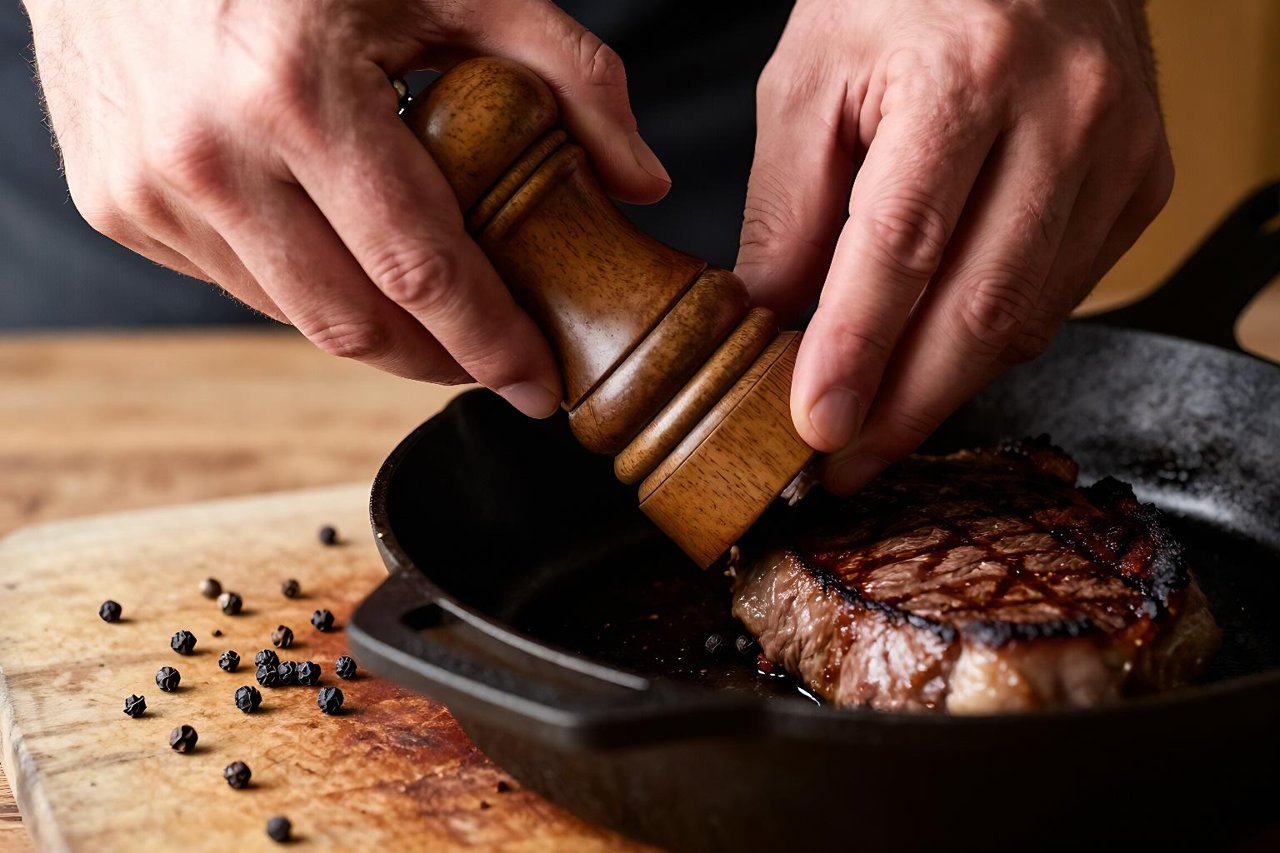
Classic dishes show the split between varieties clearly. Steak au poivre wants a coarse, aromatic Tellicherry cracked by hand and bloomed in the pan with cognac and cream. Cacio e pepe depends on finely ground pepper toasted in the skillet before the pasta goes in, so the bite softens into something rounder. Hot and sour soup and mapo tofu lean on white pepper for heat without dark flecks. Kerala-style pepper chicken uses a heap of Malabar pepper with curry leaves, and it is not a shy dish.
Building a two-jar pantry
You don’t need eight varieties. Start with one high-volume cooking pepper and one aromatic finishing pepper, and the rest of the collection can grow as you notice the difference.
For the cooking jar, buy 250g of Lampong or a good Vietnamese black pepper and use it without ceremony: braises, marinades, spice blends, the pot of beans. For the finishing jar, buy a smaller quantity of Tellicherry TGSEB and keep it for the table, for salads, for anything where the pepper is one of three or four ingredients and has nowhere to hide. A third small jar of Sarawak white pepper rounds out the set for soups, stir-fries and anything where black flecks would be wrong.
Buy whole, buy small, and write the purchase date on the tin. When a peppercorn crushes to dust instead of cracking, it’s telling you something.


