
Table of Contents
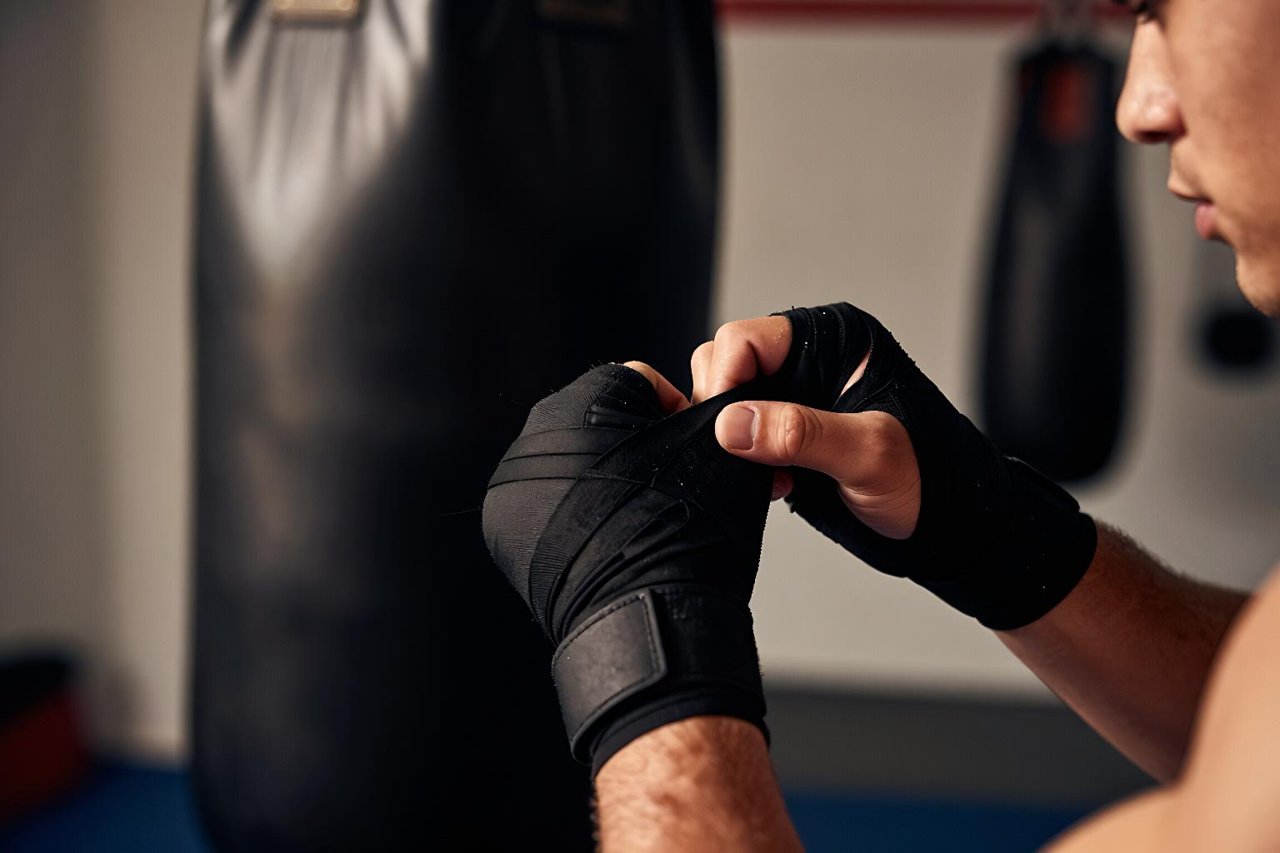
The first time you wrap your hands, you’ll probably get it wrong. The loop goes around the thumb, not over it, and the velcro should sit flat against your wrist rather than digging into the bone. Small thing. But it tells you what boxing is: a sport built almost entirely out of small things done correctly, thousands of times, until they stop feeling small.
That’s the honest version of boxing training for beginners. Nothing about it is complicated. Almost all of it is hard. You’ll learn maybe six punches in your first three months, and you’ll spend far more time on your feet and your guard than on anything that looks impressive on television.
Here’s what the process actually looks like, from your first session to the point where you can hold your own in the ring.
Your First Two Weeks Are Boring on Purpose
A decent coach won’t teach you a hook on day one. You’ll stand in front of a mirror in an orthodox stance (left foot forward if you’re right-handed) and get corrected on it roughly every ninety seconds.

Stance and guard come before anything else
Feet a little wider than your shoulders. Lead foot pointing at twelve o’clock, rear foot at about four. Knees soft, weight balanced across the middle of both feet rather than sunk onto the back leg. Hands up, elbows tucked, chin down behind the lead shoulder.
It feels wrong for about three weeks. Then one afternoon you’ll be standing in a supermarket queue and notice your feet have drifted into the stance without you deciding to do it.
The jab is the whole sport in miniature
Your lead hand extends straight out, rotates a quarter turn at the shoulder, and returns to your face along the same path it left. That’s the entire technique. You’ll throw it four hundred times in one session and maybe forty will feel right.
The jab measures distance, sets up everything else, and interrupts whatever the other person is planning. Boxers who never develop a real jab tend to stall out at the same level, no matter how hard they can hit.
Gear You Actually Need, and What to Skip
You can start with less than you think. Most clubs lend gloves for your first few sessions while you work out whether you’re coming back.
- Gloves: 12oz for bag and pad work, 16oz for sparring. If you’re only buying one pair, buy the 16oz.
- Hand wraps: 180-inch wraps, two pairs, so one can dry out while you use the other.
- Mouthguard: only needed once sparring starts, but get a properly fitted one rather than the cheapest boil-and-bite you can find.
- Skipping rope: a $10 rope is fine. You’ll use it more than any other piece of kit you own.
- Shoes: flat-soled trainers. Thick-heeled running shoes make your footwork feel mushy and slow.
Skip the weighted gloves, the branded headgear, and the home gym setup. None of it makes you better at boxing. Turning up twice a week does.
How Often Should a Beginner Train?
Two technical sessions plus one conditioning session per week is a realistic starting point for most people with a job. Three days a week for six months beats six days a week for six weeks, and it isn’t close.
Soreness across the shoulders and upper back is normal for the first fortnight, because you’re holding your hands up for three minutes at a time for possibly the first time in your life. Knuckle or wrist pain is not normal. It usually means you’re wrapping badly or landing on the wrong knuckles, and it’s worth fixing before it becomes a habit.
Conditioning That Doesn’t Wreck You
Boxing conditioning is interval work rather than long slow distance. The base unit of everything is a three-minute round with sixty seconds of rest: bag work, pad work, shadowboxing, skipping. Get comfortable with that rhythm and the sport starts to feel less like drowning.
Roadwork still has a place, but for a beginner two easy 20 to 30-minute runs a week is plenty. What boxing actually rewards is your ability to recover between bursts of effort, not a huge aerobic engine on its own. If you can talk in short sentences while you run, you’re going fast enough.
Where Boxing Sits Among the Striking Arts
If you haven’t committed yet, it helps to know what you’re signing up for. Boxing is the deepest specialisation in punching that exists. No kicks, no knees, no clinching beyond a few seconds. Everything is built around the hands, head movement, and angles.
That focus is the appeal and also the limitation. Muay Thai and boxing ask for very different things from your body, and the same split applies if you’re deciding between boxing and kickboxing as a first discipline. If you’re still mapping the whole landscape, this breakdown of the best martial arts for beginners and where to actually start is worth ten minutes before you spend money on a membership.
Practising Between Sessions
Shadowboxing is the cheapest skill work in any sport. Ten minutes a day in front of a mirror, no equipment, and you’ll notice the difference within a month. Watch your rear hand. Almost everyone drops it the instant they throw with the lead.
If you’re piecing together martial arts training at home without a gym nearby, the same rules apply: short daily reps, one thing at a time, and film yourself once a week so you can see what your coach would see.
Five Mistakes Nearly Every Beginner Makes
Dropping the rear hand to throw. You’ll telegraph every punch and eat a counter for it. Keep the glove glued to your jaw until the shot is already moving.
Leaning in instead of stepping in. Reaching for the bag pulls you off balance. Move your feet, then punch.
Holding your breath. Beginners tense up and stop exhaling. Breathe out sharply on each shot, quietly on the return.
Emptying the tank on the bag. Thirty seconds of maximum effort followed by two and a half minutes of survival is not training. Work at 70 per cent and stay there.
Treating footwork as an afterthought. Every punch starts from the floor. If your feet are slow, your hands are slow.
Your First Sparring Session
Most gyms won’t put you opposite another human being for three to six months, and the good ones will keep it technical for a long while after that: one partner, light contact, coach watching, nothing to prove.
You will still gas out in ninety seconds. Your guard will drop to your chest. You’ll forget every combination you’ve ever drilled and throw the same weak jab over and over. Everyone does. The point of that first session isn’t to win anything, it’s to find out what your technique looks like when someone is moving towards you. If you’re weighing up combat sports more broadly, it’s a similar story to what the first six months of MMA training actually look like.
How You Know You’re Getting Better
Progress in boxing is quiet, and it rarely happens when you’re looking for it. But there are markers worth watching for.
Your jab starts landing without a visible wind-up. You can get through three rounds on the bag without your shoulders burning. You skip for three minutes without tripping over the rope. You notice your rear heel lifting on the cross without being told. You begin to see punches coming a half-second earlier than you used to, which is the closest thing this sport has to a superpower.
None of that arrives in a straight line. You’ll have weeks where everything feels like it’s getting worse, and those are usually the weeks where the actual changes are being laid down. The people who get good at boxing aren’t the ones with the fastest hands. They’re the ones who keep turning up on the Tuesday nights when nothing about it feels like it’s working.


