
Table of Contents
Type a famous name into Instagram’s search bar and you get a pile of near-identical results: the verified account, four fan pages with slight handle variations, a “daily” update account that mostly reposts screenshots of the same photo, and somewhere near the bottom, a photo agency feed with watermarks. All of it counts as celebrity Instagram content. None of it is the same product.
So it’s worth asking which source actually earns its place in your feed. Each option has a genuine strength and a matching weakness, and the weakness tends to show up later, after you’ve already trusted it.
Option one: following the celebrity’s own account
The direct follow is the obvious starting point, and for a specific kind of news it can’t be beaten. An engagement, a pregnancy, a tour announcement, a public statement written without a publicist’s fingerprints on it: you get it from the source, at the moment it lands. If a post disappears twenty minutes later, you were there for it.
What you actually get
Events, brand campaigns, red carpet arrivals, the occasional unfiltered Story at 2am. Confirmation of things that were only rumoured elsewhere. And the grid itself, which functions as a curated career document rather than a diary.

Where it falls short
Almost every polished post has passed through a publicist, a sponsor and a social manager before you see it. That’s the trade-off examined in the real cost of a flawless celebrity feed, and it explains why accounts with forty million followers can feel weirdly airless. Stories expire in 24 hours. Close Friends lists quietly exclude the public. And if you follow more than a few hundred accounts, Instagram’s ranking means you’re seeing a fraction of what they post, chosen by an algorithm that has its own priorities.
Option two: fan accounts and update pages
Fan accounts do the labour celebrities won’t. They clip, archive, translate, timestamp and cross-reference. When a singer posts a Story at midnight and deletes it by one, someone with a screen recorder caught it. For pacing and volume, nothing else competes.
The cost is context. A repost strips the caption, the sequence and the timing that gave the original meaning. Fan pages also carry their own editorial slant, from mild bias to full stan-war combativeness, and plenty of them sell promo slots between posts. Handles get hit with takedowns and resurface under new names, which means your saved sources keep vanishing.
Learning to spot the difference between a genuine leak and a recycled rumour is its own skill. Reading a celebrity Instagram feed properly takes about seven steps and, frankly, more patience than most people bring to a scroll.
Option three: paparazzi agencies and photo wires
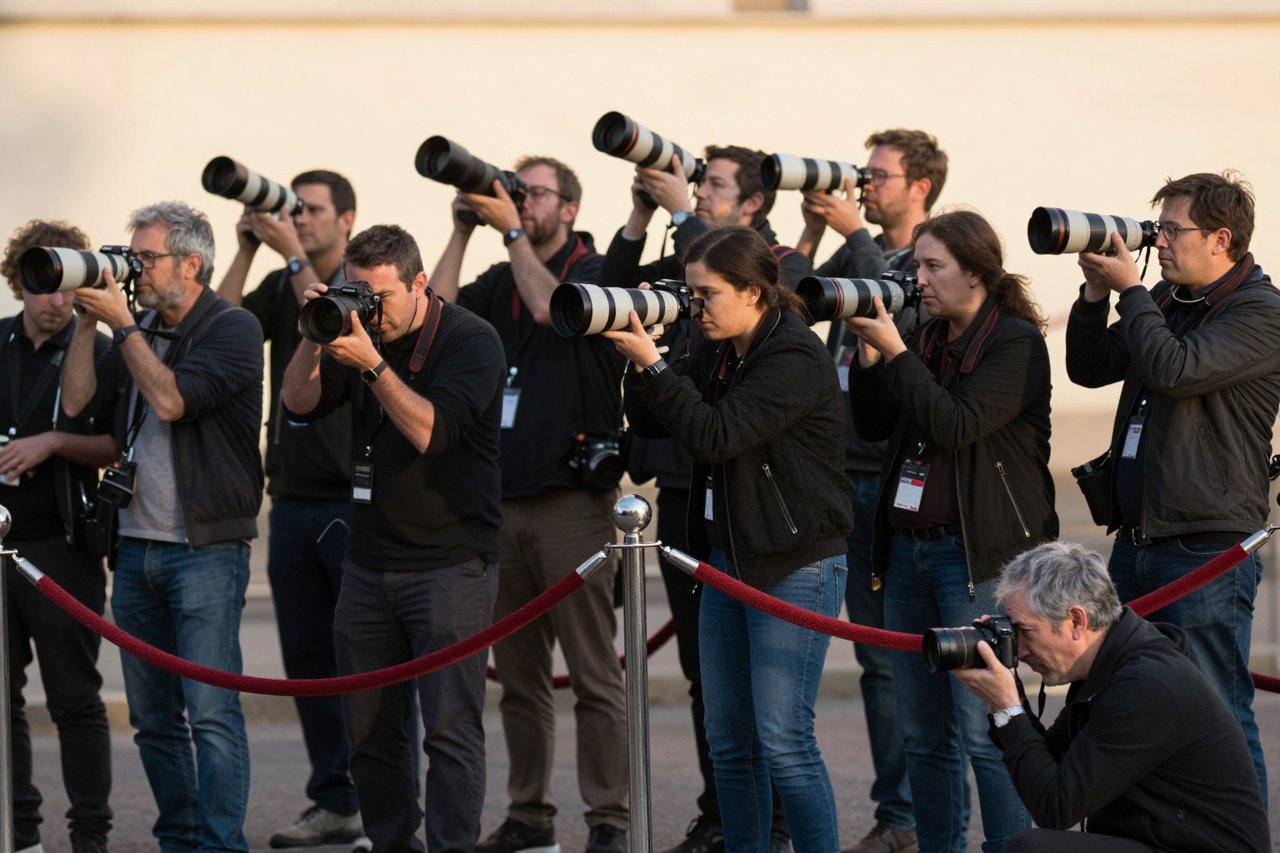
Backgrid, MEGA, Splash and their peers sell images to outlets, and their own feeds publish the raw material: gym exits, coffee runs, airport walks, the school pickup. You see clothing without styling, faces without ring lighting, and bodies at angles nobody chose.
Two problems. First, it’s a business, so the framing is transactional, and some of those “candid” shots are anything but. Second, agencies post what sells, which concentrates on a handful of celebrities and a narrow set of moments. Paparazzi photos, Instagram posts and red carpet images tell three different versions of the same person, and only one of them is trying to sell you something specific.
Option four: gossip newsletters and aggregator accounts
Blind-item accounts, newsletter writers and tabloid Instagram pages give you the narrative layer: who’s feuding, what a caption was responding to, why that particular post appeared at that moment. They’re fast, funny and genuinely useful for understanding a story that looks random in isolation.
Accuracy is the weak point. Tip-based accounts trade in plausible rumour and rarely issue corrections with the same enthusiasm as the original claim. The lag is real too. By the time a newsletter contextualises a post, you’ve already seen it three times.
Option five: analytics trackers
Tools like Social Blade and the various engagement-rate dashboards won’t show you photos. They show you follower graphs, posting cadence and engagement dips. That’s surprisingly valuable when a celebrity’s sponsored post reads oddly, or when you want to check whether a growth spike looks organic.
The trade-off is that numbers without interpretation are noise. A drop in likes means nothing on its own. You need the surrounding story, which takes you back to options one through four.
How the main options stack up
- Speed: fan accounts win outright, often posting within minutes. Official accounts are next, followed by gossip pages.
- Reliability: official accounts and agencies, in that order. Fan pages and newsletters need verification.
- Context: newsletters and long-form blogs beat everything. A single image rarely explains itself.
- Reality check: paparazzi wires. Unflattering, unposed, and useful precisely because of that.
- Noise level: fan pages and blind items are the loudest, with promo slots, spam replies and comment wars attached.
- Permanence: nothing on Instagram is permanent. Screenshots and archived blogs are the only real record.
The detail every comparison table leaves out
Celebrity Instagram doesn’t just show you outfits and holidays. It shows you a supply chain. A dress worn on a Tuesday might be a paid placement, a stylist’s loan, or something bought outright, and the caption will rarely tell you which. Tracing where celebrity outfits actually originate is a more honest exercise than admiring the finished grid, because it forces you to notice the machinery behind the image.
The same applies to faces, homes, holidays and friendships. Every option above shows you the output. Only some show you the process, and the ones that do tend to be less glamorous and far more interesting.
The hidden cost of following all of it
Stack five sources and you don’t get a fuller picture. You get repetition, and repetition feels like confirmation even when it isn’t. The same photo arrives four times with four different framings, and by the fourth you’ve stopped questioning whether the original caption was sarcastic.
Attention is the part nobody budgets for. A single curated account plus one reliable aggregator will usually keep you better informed than a dozen overlapping fan pages, and it leaves room to actually look at what you’re seeing rather than scrolling past it.
Pick one source for speed, one for context, and ignore the rest for a month. Most people find they miss nothing except the arguing. What they gain is the small, underrated pleasure of seeing a photograph once, properly, before the internet tells them how to feel about it.


