
Table of Contents
The Champions League anthem does something strange to people. Grown adults get goosebumps. Players who look bored in league games suddenly sprint like their lives depend on it. There is no other club competition quite like it. And now, starting this season, it looks completely different.
Gone is the old group stage with its predictable scheduling. In its place is a 36-team league phase that has already created chaos, shock results, and a nightly flood of goals across the continent. If you haven’t been paying attention, now is the time to start. This is the Champions League, but not as you remember it.
A New Format That Throws Everyone Into the Same Pot
For decades, the Champions League split 32 teams into eight groups of four. You played six matches, and the top two advanced. Simple, comfortable, occasionally boring. UEFA tore up that script in 2024 and replaced it with a single 36-team league.
Every club now plays eight different opponents, four at home and four away. No one gets a group of three minnows anymore. Instead, the draw pairs each team with two opponents from four different seeding pots, selected by computer software and finessed by hand to avoid geopolitical clashes or same-country meetings in the early rounds.

The result is a league table where every matchday shifts the picture. After eight games, the top eight teams in the table go straight into the round of 16. Teams finishing 9th through 24th enter a new play-off round, where finishing 9th or 10th is a major advantage: you play the team in a lower seed and get the second leg at home. The bottom 12 are eliminated entirely, with no consolation trip to the Europa League. Win or go home, no safety net.
It is not just a fresher format. It is also a fairer one for fans of mid-tier clubs. Under the old system, a decent team could stumble into a group with three soft opponents and finish second without a serious test. Now every fixture matters, right down to the final matchday.
Why the Swiss System Feels So Different
The new model is often called the “Swiss system,” borrowed from chess. Instead of dividing clubs into boxes, it lets results shape the fixture list. Beat a strong team early? Your next challenge becomes even tougher. Lose to a weaker side? You might get a more forgiving opponent next time. The table rearranges itself after every round, which means we get an ever-changing set of matchups across the season.
In the past, the draw was done once and the group stage had a fixed trajectory. Now every matchday feels like a fresh event, and teams have to adapt constantly. A club that starts poorly can climb back with a late run, but only if it treats every match with equal urgency.
European Nights vs. Domestic Grind
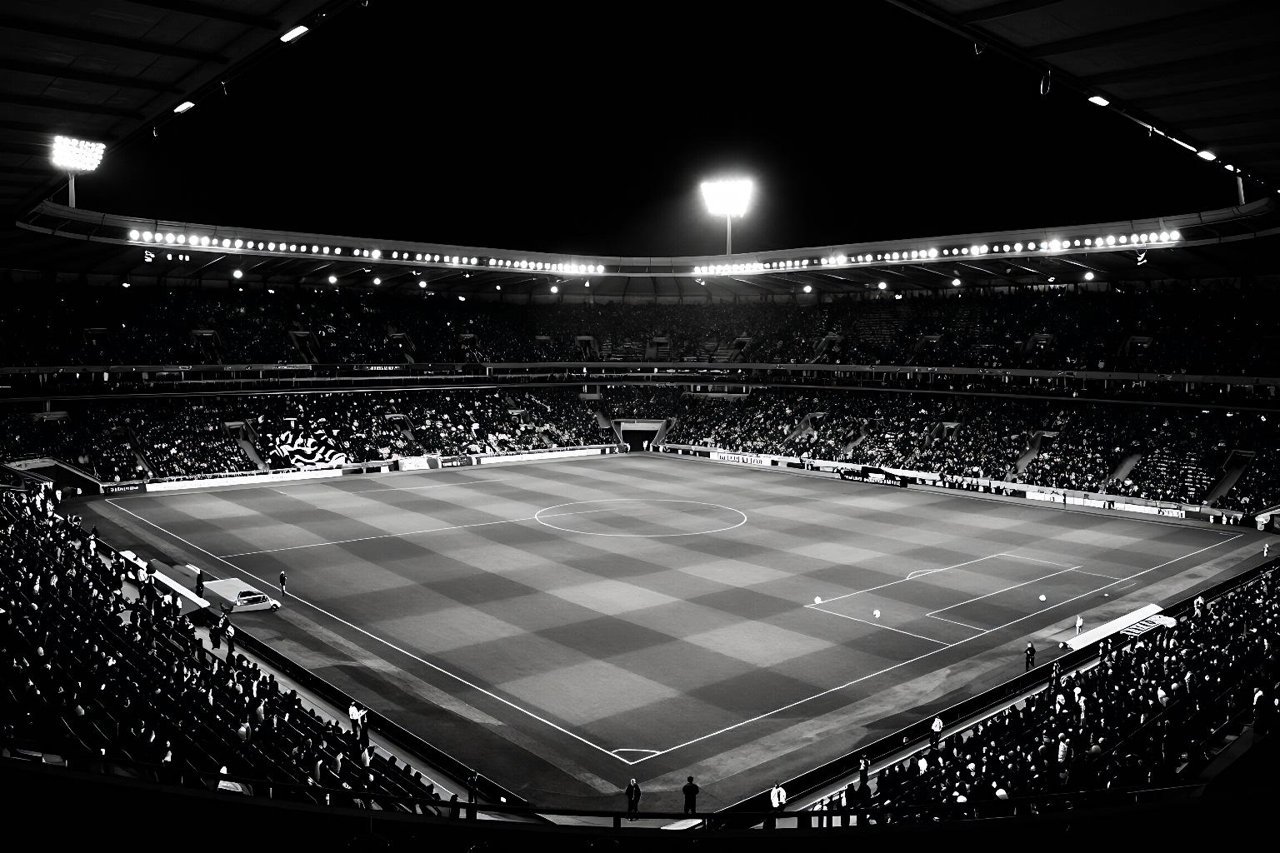
There is a reason even the most fervent domestic league fans get a little distracted under the floodlights on Tuesday and Wednesday. The Champions League compresses a whole season’s worth of intensity into a single evening. One mistake, one missed penalty, one dubious VAR call can end a campaign before the snow melts.
Domestic leagues, by contrast, reward consistency. Over 38 rounds of national action, the best team usually rises to the top, but the margin for error is enormous compared with knockout football. The battle to finish in the top four of the Premier League table is often its own dramatic race, precisely because those Champions League spots can come down to one goal on the final day. That domestic pressure is real, but with the European matches it gets amplified even further.
The new league phase makes this contrast even sharper. You can drop two matches in a row at home and still be fine. Or you can win four straight, slip up once, and suddenly face the possibility of a play-off round against a team that already beat you in autumn. There is no hiding place.
The Nights That Lingered Long After Midnight
Ask a football fan to name their favourite Champions League memory and they will not start with a statistic. They will start with a shiver. Liverpool trailing Barcelona 3-0 from the first leg at Camp Nou, then winning 4-0 at Anfield with a corner that was never really a corner. Tottenham, two goals down after 45 minutes against Ajax in Amsterdam, then the Djankovic finish that sent them to the final in 2019. Real Madrid somehow squeezing past Manchester City after being outplayed for 180 minutes, courtesy of a last-gasp header from Rodrygo. Moments like these become folklore.
The new format gives us more of those moments, simply because there are more high-stakes matches. With 144 league-phase fixtures instead of 96 group matches, the sheer volume of football has increased, and the unpredictability is baked in. If you want to keep up with every twist, live coverage matters, but it is only half the story. Following soccer scores like a pro means understanding context: a team can be trailing but creating all the chances, and the next goal can flip momentum in a heartbeat. That context is what separates a casual viewer from someone who truly reads the game.
Where to Watch the Champions League in 2025
Finding a reliable way to watch has never been easier, though it still requires some homework. Broadcast rights vary wildly by region. In the United States, Paramount holds the main rights. In the UK, TNT Sports shows the lion’s share, with some matches moving to Amazon Prime. Wherever you are, you want a service that doesn’t buffer for the one match you have been waiting months to see.
The landscape of live sports streaming services in 2025 is crowded with options, so it pays to compare quality. A guide like the one we have put together walks you through the best platforms, their pricing, and which competitions each one carries. Before you buy a subscription, check whether your team is playing on a service you already own. There is nothing worse than discovering a surprise blockbuster match is locked behind a paywall you did not know about.
If you live on a tight budget, free options do exist, though they come with reliability caveats. Ads, pop-ups, and unstable streams are common. At the same time, a handful of free streaming sites have improved enough to be worth a look. Just never enter your credit card details on an unofficial site, and always use a reputable ad blocker.
Underdogs Are No Longer Coming Just for the Ride
Some complained that the expanded Champions League would only make the rich richer. The early evidence suggests the opposite. Smaller clubs now get to test themselves against elite opposition more often, and the financial reward for participation is enough to change a club’s entire trajectory.
Just look at what happened in the first season of the new format. A team like Brest from France qualified for Europe for the first time in their history and finished higher than clubs with budgets many times larger. Sporting CP humbled Manchester City on home soil. Young Boys held Aston Villa to a draw, while Shakhtar Donetsk took points off Dortmund and Atalanta in the same week.
The play-off round creates extra jeopardy for clubs that finish 17th to 24th. Instead of thinking “we can rest players for the next league game,” managers suddenly face do-or-die two-legged ties in February. That time of year is usually reserved for the start of the domestic knockout cups, which means squad rotation becomes a genuine headache.
It All Boils Down to the League Table
From a purely mathematical perspective, the new league phase has one huge advantage: every matchday produces a table that has meaning right up until the final whistle. No team can coast. Because there are eight matches and 44 teams that qualify for the knockout phases out of 36, even a perfect record guarantees nothing beyond a more favourable route. The equation is simple: finish in the top eight or prepare for a dangerous play-off.
The trick is understanding what the table says and what remains unsaid. Goal difference is often the difference between a seeded spot and an unseeded one, which makes teams push forward even when they are already winning. A 3-0 lead is no longer safe when the champions of last year might be chasing a better seeding position. Coaches have to decide whether to protect a result or chase a margin that could define their path to the final.
Consider a realistic scenario from this season’s final matchday. With half a minute left, Manchester City score a fourth goal against a mid-table side. That goal lifts them above Aston Villa by a single goal in the overall league table, giving City an extra week of rest and a weaker opponent in the play-off round. That is the kind of dramatic shift the new format regularly produces.
The Weight of Every Kick
All of this adds up to a competition that rewards bravery, depth, and resilience over caution. In the old group stage, a team could mathematically secure top spot by matchday four and rest everyone for the last two games, turning Europe’s grandest stage into a glorified friendly for their stars. That luxury no longer exists.
Every one of the eight league-phase fixtures now feels like a cup final. The pressure does not relent. Managers who rotate are punished, players who ease off get eliminated, and fans who step away for an afternoon might miss a result that changes their club’s entire season.
The Champions League has always been where careers are defined and dynasties are crowned. This season, it has done something even more audacious. It has made the entire tournament feel alive, unpredictable, and contested from the very first whistle.
Set your alarms for the next matchday. The road to Munich winds through new territory, and no one yet knows who will navigate it best.


