
Table of Contents
The first time you stand on a deck as the ship’s horn sounds, something shifts. That low, deep resonance isn’t just a warning for the dock workers—it’s a call. It announces that you’re officially off the grid, at the mercy of wind and water in the best way possible. This is the cruising power that keeps travel enthusiasts checking cruise prices at 2 a.m. It’s not just about the destination. It’s about a hundred small moments woven together into something big.
The Underrated Superpower: Unpack Once, Explore Endlessly
Here’s the thing: cruising has a practical edge that land travel can’t match. You wake up in a new city (or village, or island) without once wrestling a suitcase onto a train rack. Your cabin becomes your base. Your bed stays the same, but the view through the porthole changes today from a Greek harbour to a Norwegian fjord. That’s the kind of power that saves hours of your life on a two-week vacation.
Consider this: a typical Caribbean itinerary might hit four ports in seven days. For a land-based traveler, that would involve four separate hotels, four restaurants, three airports, and a mountain of itinerary planning. The cruise ship compresses that chaos. You get the variety of a road trip with the reliability of a moving hotel.
Why Cruising Has a Grip on So Many Travelers
There’s a reason repeat cruisers exist. They’ll tell you that the sea air does something to your sleep—that cabin darkness and the gentle hum of engines put you out cold by 10 p.m. And they’re not wrong.

But it’s also the people. A ship is a floating village of about 3,000 travelers who all share one weird habit: they love waking up somewhere new. You’ll find yourself chatting with a retired couple from Yorkshire at breakfast about otters, then later sharing a late-night dessert with a digital nomad who’s writing a novel on their laptop in the lounge. That connection—that effortless social atmosphere—is a quiet form of power.
Then there’s the sheer variety. Maybe you want the intimate feel of a boutique vessel with just 100 staterooms. If that’s you, it’s worth learning how small ship cruises deliver a more personal voyage. On those ships, the crew learns your name by day two, and you might spot whales from the lounge while everyone else is on a tour. That’s a different kind of luxury—one that’s about space and calm rather than chandeliers.
Alternatively, you might crave the old-world rhythm of meandering along a river. Riverboat cruises have their own magic, different from ocean crossings: the banks glide past like a living diorama, and you dock right in the heart of town.
The Power of Choice: From Compact Vessels to Floating Palaces
The cruising world has split into two distinct camps, and that’s a good thing. On one end, you have the mega-ships—floating amusement parks with waterslides, zip lines, and more restaurants than a small town. These ships are engineering marvels. The sheer scale can feel overwhelming, but it also means you never run out of things to do on a sea day.
On the other end are the ultra-luxury lines, where the emphasis is on space, service, and fine dining. If you’re curious about how the top end lives, our guide to luxury cruises breaks down what actually justifies a five-figure fare. And then there are the newcomers like Ritz-Carlton’s first cruise ship, which carries just over 290 guests in suites with walk-in wardrobes and butler service. That’s a far cry from the 6,000-passenger giants. Each style has its own cruising power, depending on what you want from the journey.
The Literal Power Behind the Romance
So much of the conversation about cruising focuses on the destinations, but there’s something impressive about the machines themselves. A modern cruise ship is about as heavy as 300 blue whales. And moving that much steel across the ocean requires serious power.
The industry is quietly transitioning. Many new ships run on liquefied natural gas, which cuts sulfur emissions and fine particulate matter. Some ships are now fitted with shore power connection systems, so when they’re docked in places like Marseille or Vancouver, they can plug into the city grid and shut off their engines. That’s a different kind of cruising power: the power to sail more responsibly. It’s a slow but genuine shift, and it’s one more reason to feel good about this style of travel.
Where the Power Takes You: Unlocking Hidden Gems
One of the best parts of cruising is the serendipity. You book a Mediterranean cruise for the highlights—Barcelona, maybe Rome—and you discover a smaller port you’d never have considered on a land trip. The ship docks, you hop off, and within 20 minutes you’re wandering through an old town that feels like it’s been frozen for centuries.
For example, a typical Mediterranean route might include Athens. But anchored nearby are the Greek islands, each with its own character: Santorini with the white-washed cliffs, Mykonos with its windmills, Crete with its deep history. If you’re mapping out a dream itinerary, the best places to visit in Greece is a solid starting point. The beauty is that you don’t have to choose just one. The ship moves at night, so you wake up with a new Greek island outside your balcony.
A few practical notes: if you want a less crowded experience, consider a shoulder-season sailing (May or September). The ports are easier to wander, and the sea is calm. Also, don’t over-plan your shore days. Leave at least one port without a booked excursion. The unofficial cruise days—where you just go ashore and let your instincts guide you—are often the ones you’ll remember most.
The Rhythm of the Sea
There’s a certain pattern to a day at sea that’s hard to replicate elsewhere. Morning coffee, a few laps around the deck, a swim, maybe a cooking class, a nap in a lounger, and somehow it’s time for dinner. The absence of “must-see” lists on those days is itself a form of power. It’s an intentional decompression.
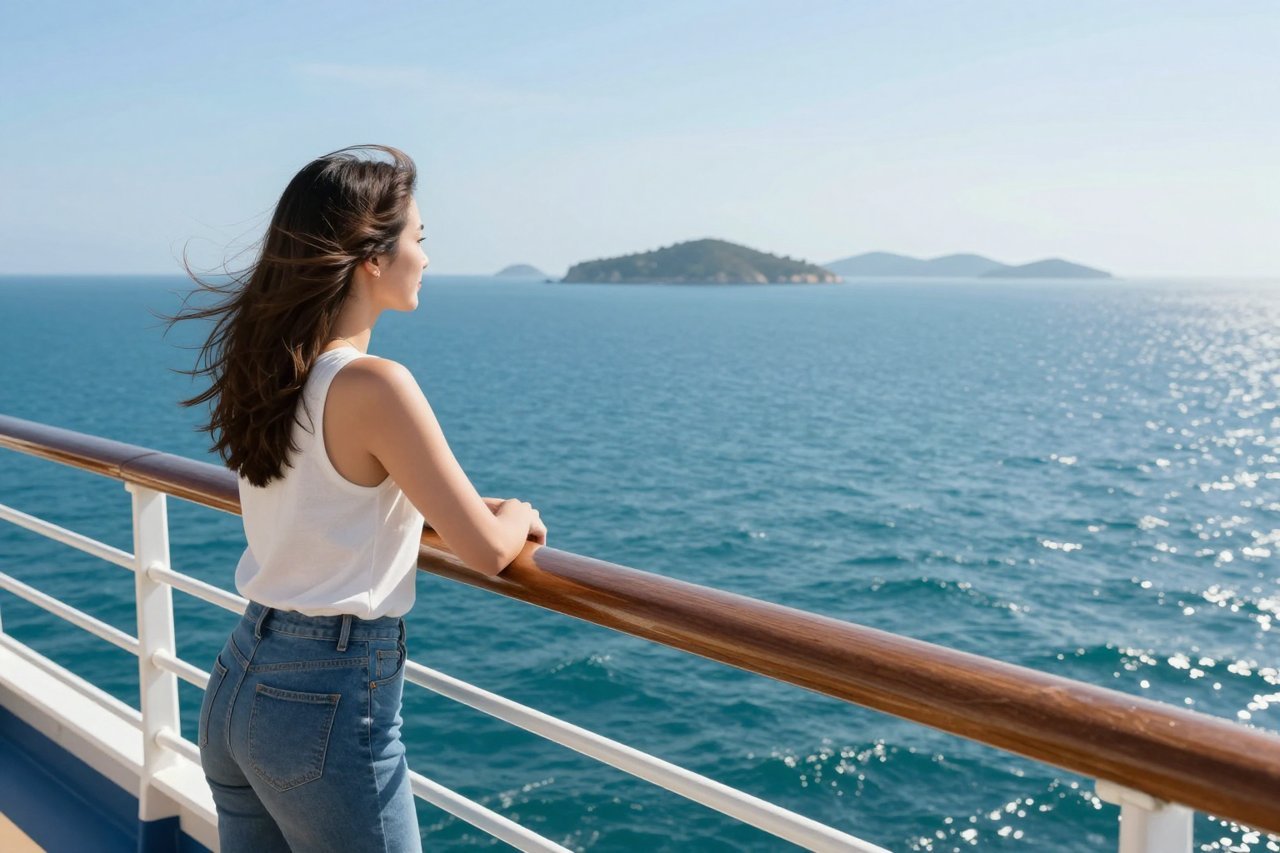
Then there are the moments that no one can photograph properly. The ship slicing through a glassy sea at sunset, the faint outline of a distant island on the horizon, the taste of salt on your lips as you lean over the starboard railing. These aren’t sellable. They’re just yours.
That’s the real cruising power. It’s not about the size of the ship or the number of ports. It’s about the way the voyage makes space for both adventure and stillness. It’s the ability to be unplugged from everyday expectations, to look out at endless blue water and feel like you’ve finally got time to think. Whether it’s a quick weekend sailing to nowhere, a seven-day river loop, or a two-week expedition to remote fjords, the ocean has a way of putting things in perspective.
And that’s a powerful thing worth chasing.


