
Table of Contents
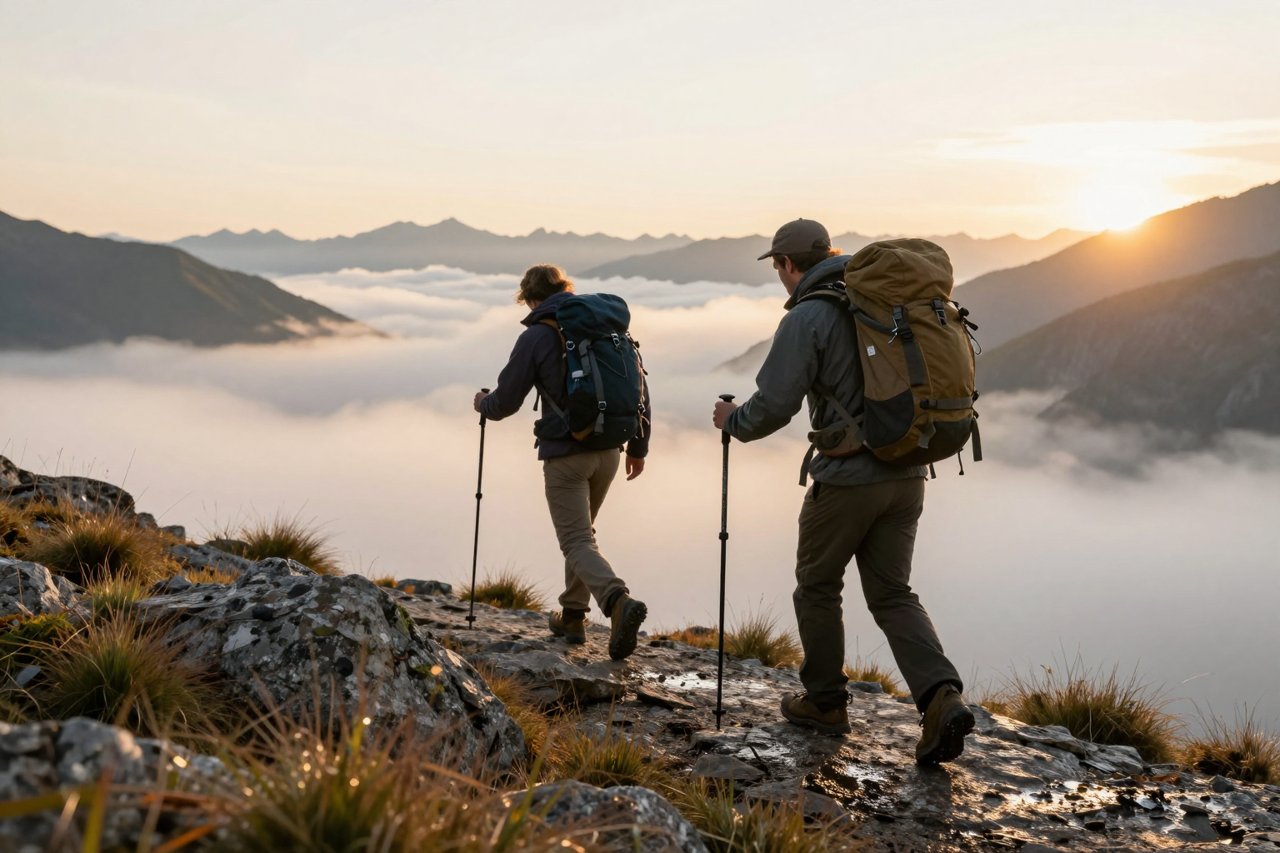
The first hour of a long trek is mostly admin: tightening straps, shifting the hip belt, deciding the poles were worth packing after all. Then the trail finds its rhythm, and somewhere around kilometre eleven the day stops being an itinerary and becomes just a day. That switch is what people are chasing when they plan adventure travel and outdoor activities. Not the summit photo. The two hours before it, when nothing else is asking for your attention.
Getting there takes more planning than a beach week and less than most people fear. Here’s how to pick something you’ll actually finish, pack for it, and keep the logistics from swallowing the trip.
Be Honest About What Your Body Can Do Tomorrow
Most abandoned adventures fail on day one rather than day five. A 15 km day with 900 m of ascent reads as manageable on a screen. Add a 12 kg pack and a 2,800 m starting altitude and it becomes a very different afternoon.
Run a test before you book. Load a pack with 8 to 10 kg, walk 12 km on mixed ground, and time it. If you’re wrecked at the end, you’ve just written your training plan: three sessions a week for eight to ten weeks, one long walk, one hill session, one strength day for calves, glutes and ankles.

The other common mistake is booking a trip that only works if everything goes right. A guided lodge-to-lodge route with luggage transfers isn’t lesser adventure travel. It’s a version that survives a tweaked knee or a day of horizontal rain, which is roughly a 50/50 bet on any mountain itinerary.
Match the Landscape to the Season
Mountains keep strict hours
Alpine hiking in the northern hemisphere runs from late June to mid-September, and that window narrows fast above 2,500 m. Book huts early. Plenty of Italian and Swiss rifugi are full for August weekends by February.
Water is more forgiving than you’d think
Sea kayaking, canyoning and rafting have far longer seasons, and cold-water kit has got genuinely good. A 5 mm wetsuit and a decent dry top turn ‘freezing’ into ‘bracing’. Check the water temperature rather than the air temperature.
Light behaves differently up north
June in the Arctic is an odd, brilliant thing: 24-hour daylight, empty trails at 11pm, weather that flips four times before lunch. Our guide to exploring the outdoors of Northern Norway covers the practical side of that, from ferry timetables to why you still pack a warm hat in July.
Guided Days Aren’t a Copout
Some terrain rewards a local. Cappadocia is the obvious one. The valleys look walkable until you’re four turns deep into a maze of soft tuff with no idea where the trail markers went. A guided day gets you into the hidden rock churches and out to the viewpoint before the balloon crowds arrive. Here’s what to expect from Cappadocia’s day tours, including how the half-day and full-day options actually differ.
A rough rule: hire someone for technical ground, for cultural sites where the context is the whole point, and for anything with a permit lottery. Go alone on well-marked long-distance paths, coastal routes, and anything within a couple of hours of a road.
Sometimes the Best Day Out Isn’t a Hike
Outdoor activities don’t have to mean walking uphill with a pack. Some of the most memorable days are hot springs reached on foot, a via ferrata that’s 80% ladder, a night paddle with bioluminescence, or a mountain bike descent on a rented hardtail. If you want variety more than altitude, this roundup of unique adventures for every mood is a decent place to start mixing things up.
The Kit That Earns Its Weight
You will not need the twelve-item gadget list from a gear review site. You will need these:
- Boots broken in over 40+ km, not five. Blisters end more hikes than weather does.
- A blister kit with Leukotape and liner socks. Tiny, cheap, trip-saving.
- Three layers, not five. Base layer, fleece or light puffy, shell. You’ll wear the same combination every single day.
- Water treatment. A squeeze filter or tablets rated to 0.1 micron absolute for anything wild.
- A headlamp with a spare battery. Sunset arrives earlier in a valley than you planned.
- One dry bag per person. Rain and river crossings have a way of finding electronics.
- An emergency layer plus a bothy or space blanket. Two hundred grams you’ll hopefully never touch.
Everything else is optional. Rent the technical gear on location rather than flying with it: crampons, ice axes, kayaks, bear canisters, all easier to source at the trailhead than in a suitcase.
What a Week Actually Looks Like
Take a mid-range European trip: five walking days, one rest day, one weather buffer. Distances of 10 to 16 km a day, 600 to 900 m of ascent, two nights in a mountain hut. Budget around €900 to €1,300 per person excluding flights if you mix self-guided days with one guided section.
Compare the Nepali teahouse version: $30 to $45 a day for food and lodging, a $30 to $50 permit, and a flight to Lukla that will probably be delayed. Different trip, similar rhythm. Walk, eat, sleep, repeat, and be surprised by how much you enjoy the simplicity of it.
Budget for the Things Nobody Mentions
Travel insurance is where adventure travellers get caught out. Standard policies often exclude hiking above 3,000 or 4,000 m, any climbing, and all contact water sports. Read the activity schedule rather than the summary, and buy a policy that names your actual activity.
Then there’s the permit layer. The Inca Trail sells out months ahead, Mount Fuji hut beds vanish in minutes, and half the famous American day hikes now run lotteries. Put booking dates in your calendar the way you’d put in a flight.
And carry cash. Mountain huts, village shops, shuttle drivers and park gates are frequently card-free, and the nearest ATM is a bus ride away.
Choose the Destination Around the Activity
Most people pick a country first and squeeze a hike in later. Flipping that order tends to produce a better trip: decide the activity, then find the place that does it well in the month you can actually travel.
If you’re still shortlisting, this guide to the best vacation destinations for every travel style covers the broad strokes well.
For narrowing by region, season and budget, the best countries to visit breakdown is a useful ten-minute read before you commit to anything.
The Skill That Decides Whether You Come Back
Turnaround time. Every route has one, and it’s the hour at which you turn around regardless of how close the summit looks. Set it before you start, tell your partner, and stick to it. A long list of outdoor incidents trace back to someone pushing twenty minutes past that decision.
Pair it with a simple conditions check. If the wind is strong enough to make you lean, if cloud is sitting on the ridge, if the rock is wet and the exposure is real, the route will still be there next year. Turning around is a skill, and it improves with practice like anything else.
Pick something that stretches you slightly, set a turnaround you’ll honour, and leave a spare day in the plan for the one that goes sideways. Those are the trips people are still talking about five years later, boots long since replaced.


