
Table of Contents
Somewhere around the second afternoon of a beach trip, the cracks usually show up. You paid triple for sunscreen at the hotel gift shop. You spent 40 minutes circling for parking. Someone in your group is sunburned so badly they can’t wear a shirt with a collar.
None of that is bad luck. Beach trips go wrong in the same handful of ways over and over, and most of those failures are preventable with an hour of planning before you leave.
Falling for the “beachfront” bait
You’ve seen the listing. “Ocean view.” “Steps from the beach.” “Beachfront.” Sometimes those phrases are literal. Other times, ocean view means a slice of blue visible if you lean off the balcony at a 45-degree angle, and “steps from the beach” quietly counts the 200-step staircase down a cliff.
Before you book, drop the map pin into street view and trace the actual walking route. Ask the host for a photo taken from the balcony that same week, not a professionally shot hero image from 2019. Read reviews from the last 30 days only, and search them for words like walk, noise, construction, and smell. If you’re renting a private place rather than a hotel, the details that separate a great stay from a frustrating one are mostly in the fine print, which is why this guide to booking an apartment from travelers who do it constantly is worth ten minutes of your time.

One more thing about location: a beach that’s gorgeous and empty at 8 a.m. can be shoulder to shoulder by 11. Check where the public access points and parking lots are, because that’s where the crowd arrives from.
Arriving in peak season without knowing it
High season doesn’t just mean higher prices, though it does mean that, often 40 to 60 percent more for the same room. It also means restaurants with hour-long waits, beaches with no free loungers, and boat trips sold out three days ahead.
Timing is regional and specific. August in Italy means packed beaches and half the local shops shuttered for their own holiday. Sargassum seaweed piles up on Cancún and Riviera Maya beaches roughly April through August. Hurricane season runs June to November across the Caribbean and the Gulf. Shift two or three weeks either direction and you often get the same weather with half the crowd.
If your calendar is tight, the smarter move is planning around fewer, better-timed trips rather than squeezing in more short ones. These strategies for traveling more with limited vacation days cover how to stack a trip around a public holiday weekend without burning all your leave.
Treating sunburn as a minor inconvenience
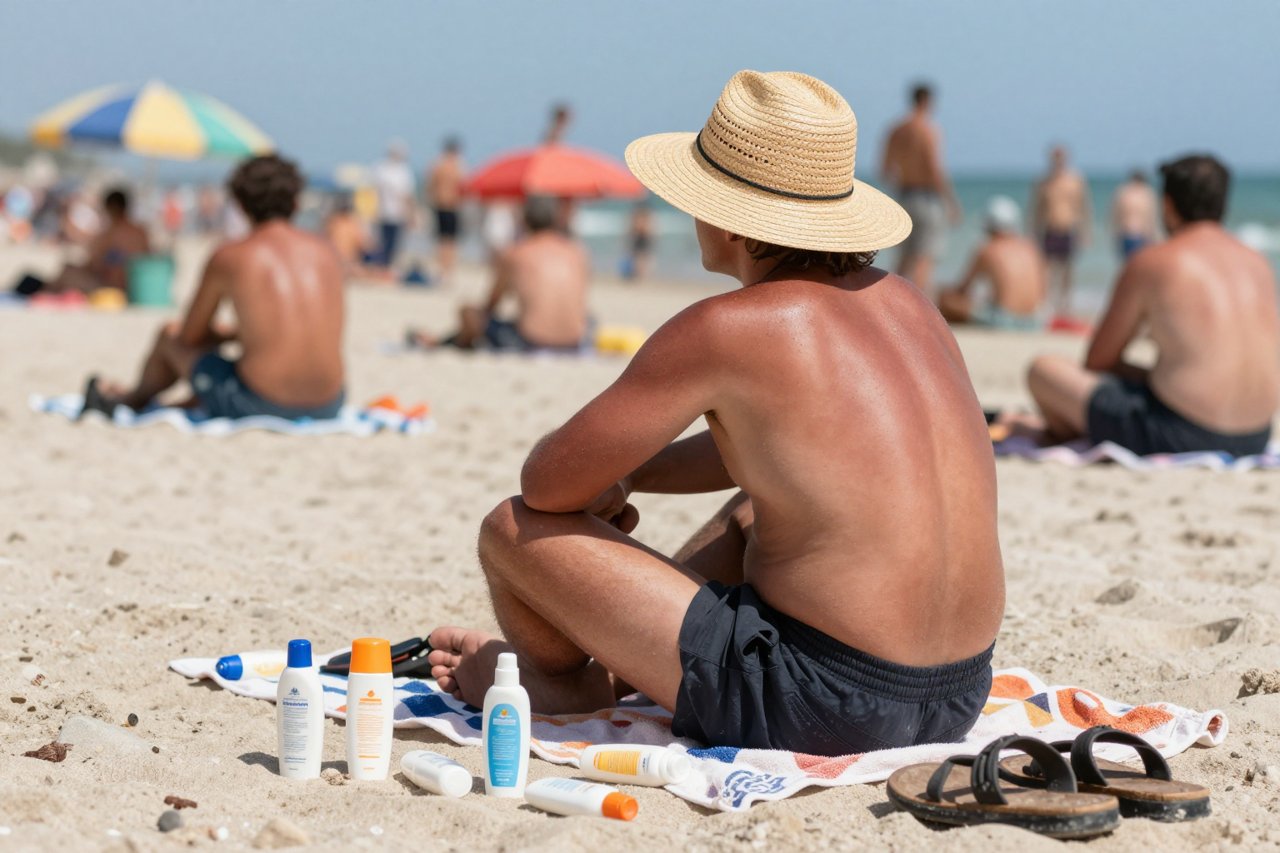
A second-degree sunburn on day one of a five-day trip doesn’t just hurt. It ends the snorkeling, makes sleep miserable, and turns every shower into an event. It also costs you the next two days.
The fix is dull but effective. Use about a full shot glass of sunscreen, roughly an ounce, for a body in a swimsuit, and reapply every two hours. “Water resistant” means 40 or 80 minutes in the water, not all afternoon. The spots people forget are the tops of the feet, the backs of the knees, the ears, and the part in their hair.
Pack a long-sleeve rash guard and a wide-brim hat. They cover the hours when you’d otherwise be reapplying for the fourth time, and they’re cheaper than the resort shop’s sunscreen, which is often marked up to $30 or more a bottle.
Ignoring tides, currents, and flags
Rip currents pull roughly 100 people to their deaths each year in the United States alone, and the instinct to swim straight back to shore is exactly the wrong response. If you get caught, swim parallel to the beach until you’re out of the current, then angle back in.
Learn what the flags mean before you get in the water, and take red seriously. Tides matter too. In some places the difference between high and low is 5 or 6 feet, which changes the entire shape of the beach and cuts off anyone who walked out along a rocky point at noon. Check a tide chart the same way you’d check the weather.
Wildlife and terrain round out the list, and coastal destinations have their own local rules that trip up visitors. These Costa Rica travel mistakes first-timers make cover everything from unmarked surf breaks to crocodiles in rivers that look swimmable, and much of it applies to any tropical coast.
Bleeding money on fees and bad cash habits
Resort ATMs charge $5 to $8 per withdrawal. Airport currency kiosks charge more. Card terminals in tourist zones often offer to charge you in your home currency, which sounds helpful and usually costs 3 to 5 percent on top of the purchase.
Use a bank ATM a few blocks off the beach, decline the conversion offer, and take out larger amounts less often. Carry small bills for taxis, beach vendors, and tips, and split your cash between two bags so one lost wallet doesn’t end the trip. Card holds and resort fees pile up too, which is why it pays to know how to spot hidden travel fees before they hit your card.
Packing badly in both directions
Most people bring three times the clothing they need and none of the small stuff that actually matters. You want the cheap, easily forgotten items, not a fourth pair of shorts.
- Two swimsuits. One dries while you wear the other, and a damp suit sitting on your skin all day is a recipe for discomfort.
- Reef-safe sunscreen, bought at home. Some destinations ban certain filters, and local prices are brutal.
- A dry bag or two. Phone, keys, and cash stay dry on the boat and in the surf.
- Small bills. A stack of fives and ones solves a dozen problems a day.
- A sarong or light towel. Doubles as a beach mat, cover-up, and shade.
- Zip-top bags. For wet swimwear on the flight home.
- After-sun lotion and a basic first-aid kit. Blister plasters, painkillers, rehydration sachets.
Booking zero activities in advance, or booking all of them
The right balance is narrow. Pick the one or two experiences you’d genuinely regret missing, like a specific dive site or a boat trip with a good guide, and reserve those before you fly. Those are the things that sell out, and the good operators fill up first.
Everything else can be decided when you’re there. A schedule with three excursions crammed into four days leaves no room for the lazy afternoon that ends up being the best part of the trip. If bundling flights, transfers, and a couple of activities sounds easier than piecing it together, this first-timer’s guide to vacation packages walks through what’s actually included and where the markups hide.
Eating only inside the resort
Resort food is convenient, predictable, and often two to three times the price of what’s a ten-minute walk away. Ask the staff where they eat on their day off. That question has never once led me somewhere bad.
Be sensible about water and raw food in places where the tap isn’t drinkable. Bottled or filtered water, skip the street-cart ceviche that’s been sitting in a cooler since morning, and be careful with salads washed in tap water. Also check kitchen closing times, because a 9 p.m. arrival at a place that stops serving at 8:30 is a common and hungry mistake.
Skipping the unglamorous logistics
Travel insurance costs roughly 4 to 8 percent of your trip and covers the scenarios that actually wreck trips, like a sprained ankle from a volleyball game or a flight cancelled by weather. Keep prescriptions in their original labeled bottles, carry a photo of your passport somewhere other than the passport itself, and download offline maps before you leave the airport wifi.
Check two things that catch people out: whether your phone plan includes the country you’re visiting, and whether your health insurance covers you abroad. Both are five-minute checks that prevent very expensive surprises.
Breaking local beach rules you didn’t know existed
Taking sand, shells, or coral is illegal in more places than visitors realize. Sardinia fines tourists for removing sand, Hawaii has strict rules about coral and rocks, and customs will confiscate a jar of beach if they find it. Look, don’t pocket.
Beyond that, do a quick read on local norms before you arrive. Some beaches are privately operated lidos where you pay for the umbrella and lounger rather than spreading your own towel. Topless and swimwear rules vary widely by country and even by town. Portable speakers are unwelcome on most public beaches now, and feeding fish or wildlife damages the reef you came to see. Ten minutes of reading up front saves you an awkward, sometimes costly, confrontation on the sand.


