
[ad_1]

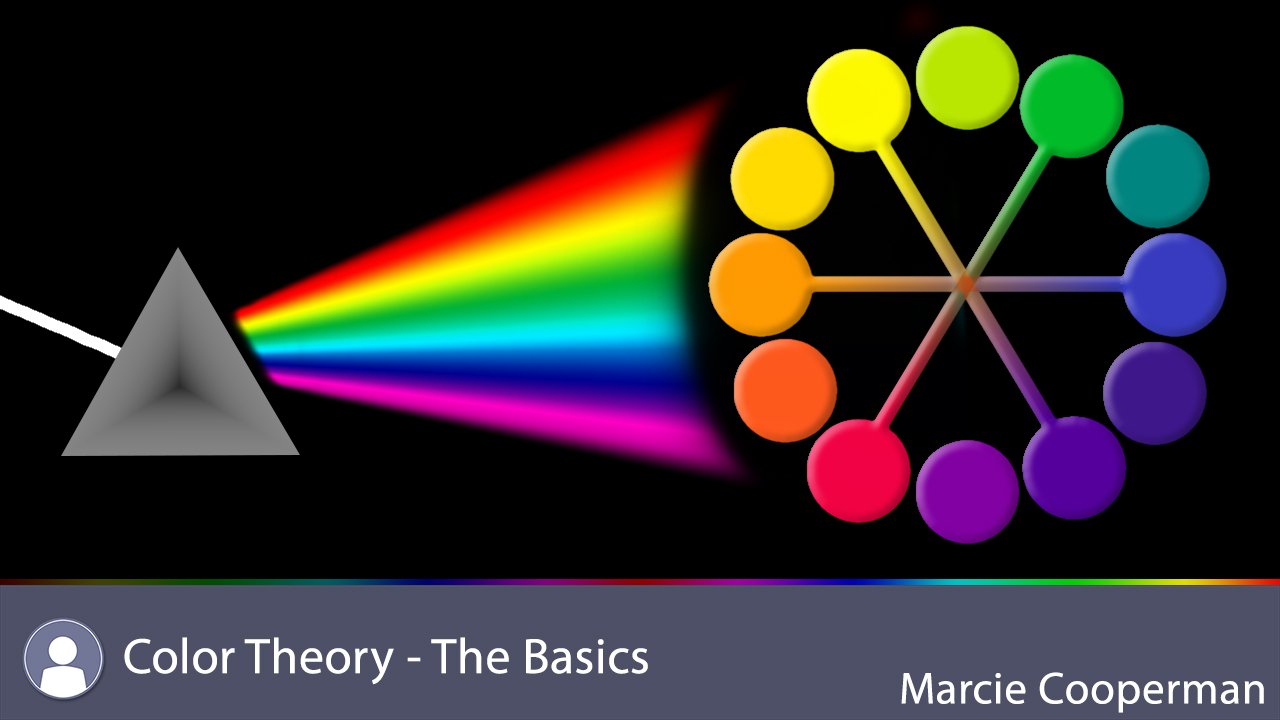
University of Fashion’s lesson on Color Theory (Image credit: University of Fashion)
Every day, we’re surrounded by color—but how often do we stop to ask where it comes from, or why we see it the way we do? Is there a science behind color, and who were the pioneers who first tried to understand it?
This blog explores the founding fathers of color theory, from early scientific discoveries to the systems designers still rely on today. At University of Fashion, our color theory lessons build on this rich history, offering you a gateway into a world where art, science, and perception intersect.
Newton Started It: A Color Theory Saga
Although he didn’t realize it at the time, Isaac Newton laid the foundation for the study of color. You probably know the story: he captured sunlight with a prism, splitting it into seven distinct hues, and then used a second prism to recombine those hues back into white light. With this experiment, Newton proved that color comes from light itself—not from a mixture of light and darkness, as was previously believed.
These seven hues are remembered as ROY-G-BIV: red, orange, yellow, green, blue, indigo, and violet. Newton arranged them in a circle because he believed red and violet were related. This circular model allows us to see how colors relate to one another, including complementary and triadic relationships, which we’ll explore further in the next video.
Michel Chevreul: The Law of Simultaneous Contrast
Michel Chevreul, a French chemist, made another major contribution to color theory. He discovered that colors affect how we perceive one another when placed side by side. In 1839, he published The Law of Simultaneous Contrast, explaining that adjacent colors influence each other. He argued that it’s impossible to see a color in isolation because surrounding colors alter its appearance.
Color Harmony – analogous yellows (Image credit: University of Fashion)
Chevreul made this discovery while studying carpets from the Aubusson workshop in France. He noticed that a pure white yarn appeared yellow when placed next to violet yarn. The effect occurs because the eye seeks balance—white appears slightly yellow to complement the neighboring violet. This demonstrated that color perception is not fixed, but relational.
Albert Munsell: Color Notation
Albert Munsell introduced a more structured way to understand color by identifying its three key components: hue, value, and chroma (which we now often call intensity). He developed a three-dimensional “color tree,” where each hue extends outward from a central axis. At the top sits white (the highest value), at the bottom black (the lowest value), and between them a range of grays.

In 1905, Munsell created a system called Color Notation to precisely measure and describe color. His goal was to standardize color so manufacturers could reproduce it consistently. This system—and others like it—remains essential today, allowing designers to match colors accurately across fabrics, leather, and other materials.
Josef Albers: Law of Simultaneous Contrast
Josef Albers, an influential artist and educator, further developed these ideas in his 1963 book Interaction of Color. Building on Chevreul’s work, Albers emphasized how colors constantly shift depending on their context. His teachings remain central to how we understand color relationships today.

University of Fashion’s lesson on Color Relationships. (Image credit: University of Fashion)
Once you’ve completed our two-part lecture series on color theory and color relationships, you’ll never see color the same way again. What once seemed intuitive will reveal itself as a dynamic interplay of light, perception, and context—transforming how you design, observe, and experience the world around you. So, do you ever dream in color?
[ad_2]
Source link


