
Table of Contents
High blood pressure doesn’t usually announce itself with a knock on the door. It works quietly, pushing against artery walls year after year, raising the risk of heart attack, stroke, and kidney damage. The good news? What you put on your plate can move that number down — often within weeks. And you don’t need a fridge full of exotic ingredients. Just a handful of science-backed foods, eaten with some consistency.
The strategy behind blood-pressure-friendly eating
Sodium is half the story. The other half is potassium. These two minerals work like a seesaw in your body: potassium helps your kidneys flush excess sodium out through urine, and it relaxes blood vessel walls. Most diets are lopsided — too much sodium from packaged foods, too little potassium from fresh plant foods. The DASH diet, which has been studied for decades, simply describes this balance: eat more vegetables, fruit, whole grains, and lean protein; eat less salt, sugar, and saturated fat.
Leafy greens and nitrate-rich vegetables
Greens like spinach, kale, Swiss chard, and arugula are some of the most concentrated sources of dietary nitrate. Your body converts nitrate into nitric oxide, a gas that signals blood vessels to relax and widen. This lowers resistance and allows blood to flow more easily. A single serving of arugula can deliver around 200 mg of nitrate, and beets are even more impressive — there’s a reason athletes drink beet juice before races.
If you want to understand the full range of vegetables that boost this pathway, check out this guide to nitric oxide foods. You’ll find practical serving ideas beyond just salad.

Aiming for two cups of greens a day? That’s not hard once you add a handful to a smoothie or scramble at breakfast.
Berries and citrus: the polyphenol boost
Blueberries, strawberries, and raspberries are often called superfoods — and for once, the marketing isn’t entirely wrong. They’re rich in anthocyanins, the pigments that give them their deep colors. These compounds have been linked to lower blood pressure in observational studies, and controlled trials show improvements in blood vessel function after regular berry consumption.
The term superfood is loose, though. If you’re curious about which other foods really live up to the label, this breakdown of what superfoods actually are is a good place to start. Beyond berries, citrus fruits like oranges and grapefruits bring flavonoids that also support circulation. Half a grapefruit at breakfast or a cup of strawberries for dessert is an easy, sweet habit.
Whole grains and legumes
Oats contain beta-glucan, a type of soluble fiber that helps manage cholesterol — and cholesterol matters here because high blood pressure and high cholesterol often travel together. Barley, quinoa, brown rice, and farro provide magnesium, which supports healthy blood vessel tone. Legumes like lentils and chickpeas are double-duty: they pack protein and potassium while being gentle on blood sugar.
Many of these foods also support liver health and weight regulation. If you’re curious about how a similar way of eating can help fatty liver, have a look at this foods for fatty liver guide. The lists overlap quite a bit.
Healthy fats and oily fish
Extra-virgin olive oil is a cornerstone of the Mediterranean diet, and it’s particularly good for blood pressure, likely due to its polyphenols. Replacing butter or margarine with olive oil in cooking is a small change with a measurable effect.
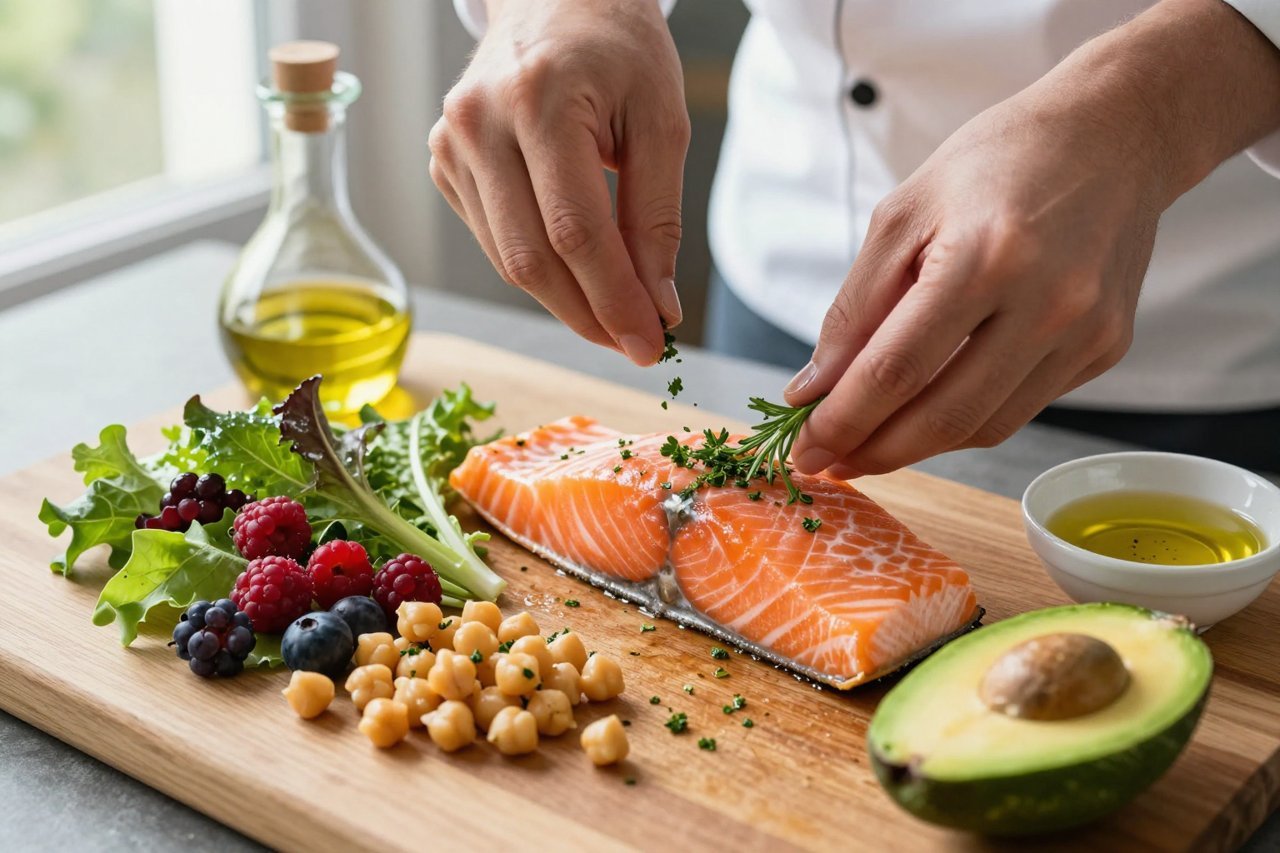
Fish like salmon, mackerel, sardines, and trout are rich in omega-3 fatty acids, which help reduce inflammation and improve the flexibility of blood vessels. The American Heart Association suggests eating fish at least twice a week. Grilled salmon with lemon and a side of wilted greens is a dinner that pulls together many of these ideas.
What to cut back on (not just salt)
Salt gets most of the attention, but sugar may be just as damaging. A diet high in added sugar is linked to increased blood pressure through several pathways, including weight gain and insulin resistance. Sugary drinks are the biggest culprits — a single can of soda contains around 39 grams of sugar.
Processed meats like bacon, deli turkey, and hot dogs are loaded with both sodium and preservatives. They’re convenient, but they work against everything you’ve just read. Large amounts of alcohol can also raise blood pressure acutely.
Here are the big four to watch:
- Salt from packaged foods (breads, soups, sauces, and frozen meals)
- Added sugar in beverages and snacks
- Processed meats
- Excessive caffeine, if you’re sensitive to it
You don’t have to eliminate any of these completely. Cutting back by half already gives your body breathing room.
Quick swaps that actually add up
Instead of salt in a recipe, try smoked paprika, cumin, garlic powder, or lemon zest. You’ll get flavor without the sodium spike.
Swap a sugary drink for sparkling water with a splash of orange juice. Swap a bag of chips for a handful of unsalted almonds and an apple.
These occasional swaps won’t make headlines, but they accumulate into real changes. Over the course of a week, you might cut out 1,000 mg of sodium without noticing.
Putting it together: a day on a blood-pressure-friendly plate
Breakfast: oatmeal cooked with milk or water, topped with sliced strawberries and a tablespoon of chia seeds.
Lunch: a big salad with arugula, chickpeas, cucumber, avocado, and grilled chicken, dressed with olive oil and red wine vinegar.
Dinner: baked salmon with roasted sweet potatoes and sautéed spinach.
Snack: a handful of blueberries or a small orange.
This sample day covers most of the key nutrients: potassium, magnesium, fiber, nitrates, and omega-3s. It’s not a strict plan; it’s a template. For a broader playbook, check out this practical guide to heart-healthy foods, which goes into detail on portion sizes and meal planning.


