
Table of Contents
Your immune system is a complex network of cells, tissues, and organs that work together to defend you against harmful invaders. It doesn’t “turn on” when you feel sick; it’s always moving, always patrolling. That means the nutrients you give it every day matter more than the glass of extra vitamin C you guzzle at the first sneeze. The good news is that you don’t need a pharmacy shelf to support it. You just need a kitchen stocked with the right foods.
Over the next few sections, we’ll look at the nutrients that matter most, the specific foods that are concentrated sources of those nutrients, and how to actually work them into your routine. No magic pills, no detox teas – just practical, realistic advice.
The Five Nutrients Your Immune System Doesn’t Want You to Skip
Vitamin C – The Multi-Tasker
Vitamin C isn’t a cure for the common cold, but studies show it can reduce the duration of colds by about 8% in adults. More importantly, it acts as an antioxidant, protecting your immune cells from oxidative stress. You’ll find it in surprising places. A raw red pepper has 95 mg of vitamin C per 100 grams – more than an orange. Try adding red pepper slices to a salad, or stir-fry them with a bit of olive oil. Kiwis are another great source; two kiwis provide roughly 130 mg of vitamin C, which is more than the daily recommendation of 75 mg for women and 90 mg for men.
Zinc – The Gatekeeper
Zinc is involved in the development and function of immune cells. Your body can’t store zinc for long, so you need a regular intake. Oysters are famously rich, but you don’t need to be fancy. A 100-gram serving of lean beef or pork provides about 4-5 mg. Pumpkin seeds are a perfect vegetarian option – a small handful gives you around 2 mg. Even a simple bowl of lentils with spinach will push you towards the recommended 8-11 mg.

Vitamin D – The Sunshine Vitamin
Vitamin D is more like a hormone than a vitamin. It helps your immune system respond appropriately, without overreacting. Low levels are linked to a higher risk of respiratory infections. The problem? Very few foods contain it naturally. Fatty fish like salmon, mackerel, and sardines are at the top of the list. A 100-gram serving of cooked salmon can give you up to 500-600 IU of vitamin D. Eggs, especially the yolk, have smaller amounts. If you live in a place with long winters, you may need a supplement, but food is a good place to start.
Selenium and Protein – The Underrated Team
Selenium helps you create antioxidant enzymes that protect your cells from damage. Brazil nuts are the superfood you actually need – just one nut delivers more than your full daily requirement, so don’t eat the whole packet. Protein, meanwhile, supplies the amino acids your immune cells need to multiply and produce antibodies. You don’t need a protein shake; a serving of chicken, tofu, or a bowl of beans all count.
The Actual Foods to Boost Immune System (and How to Eat Them)
Garlic and Onions: The Flavour You Can Feel
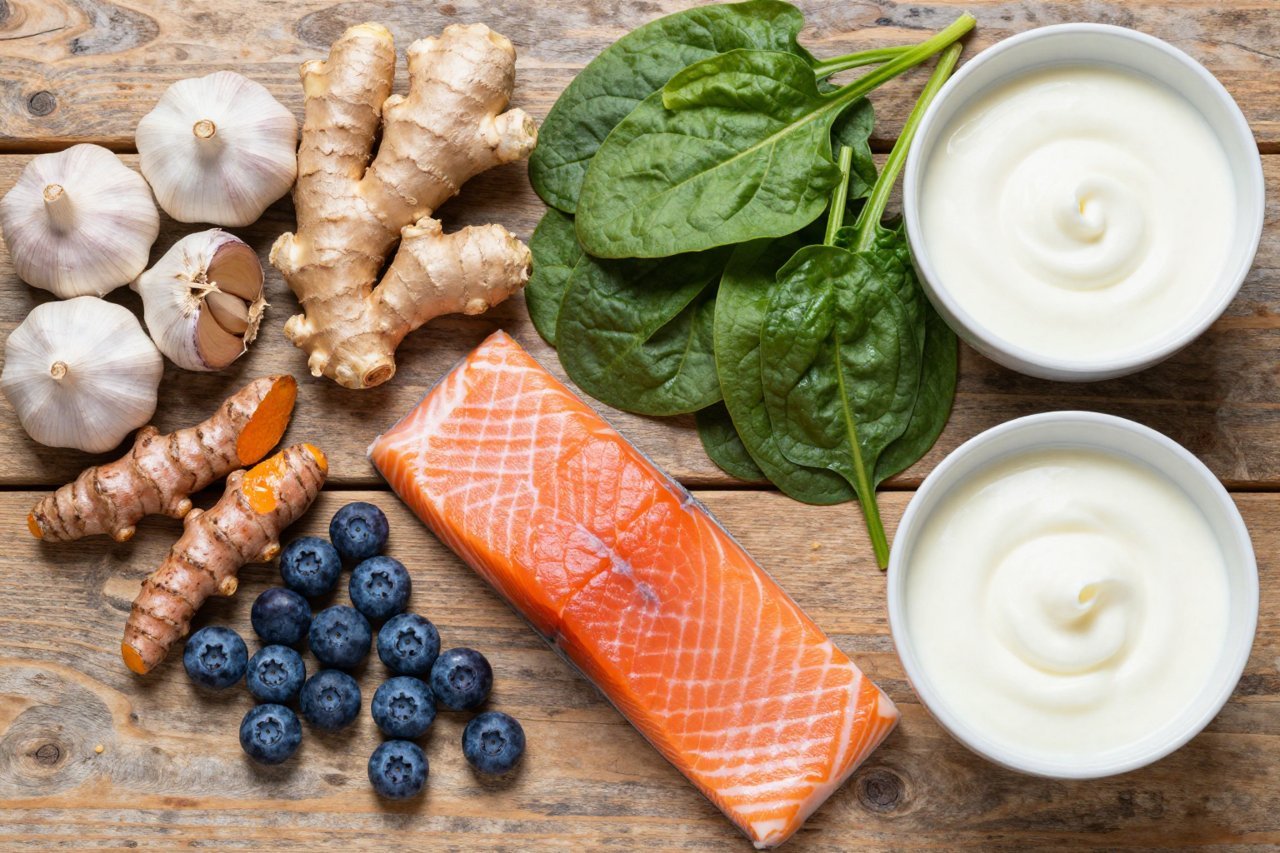
Garlic has been used as a medicine for centuries, and modern science backs it up. The active compound allicin, which forms when you crush or chop garlic, has antimicrobial and anti-inflammatory properties. In one controlled trial, people who took a daily garlic supplement for 12 weeks experienced 63% fewer colds than the placebo group. Onions are a close cousin, rich in quercetin, a compound that helps regulate inflammation. Use them liberally in soups, stir-fries, and marinades. The trick is to crush garlic and let it sit for 10 minutes before cooking; this gives the allicin time to form.
Ginger and Turmeric: The Anti-Inflammatory Duo
Gingerols and curcumin, the active compounds in ginger and turmeric, both key down inflammation at a molecular level. Ginger can also help settle your stomach, which is useful when a cold brings on nausea. Turmeric may be the most studied anti-inflammatory spice out there. But it’s poorly absorbed on its own. Pair turmeric with a pinch of black pepper, which contains piperine, to boost absorption by up to 2000%. A warm golden milk (milk or unsweetened plant milk, turmeric, black pepper, and a little ginger) is a comforting way to end the day.
Fatty Fish and Eggs: More Than Just Protein
Salmon, sardines, and mussels are high in omega-3 fatty acids, which help control inflammation. They’re also some of the few food sources of vitamin D. Eggs, especially from pasture-raised hens, contain a mix of immune-supporting nutrients, including vitamin A, vitamin D, and selenium. Don’t throw away the yolks – that’s where most of the good stuff lives.
Leafy Greens and Berries: The Antioxidant Army
Spinach, kale, Swiss chard, and other dark leafy greens supply folate, which your immune cells need to divide. Berries – especially blueberries, strawberries, and blackberries – are packed with anthocyanins, the pigments that give them their colour. These compounds help protect the respiratory tract from infection. You can use frozen berries when fresh ones aren’t in season; they’re picked at peak ripeness and retain most of their nutrients.
Fermented Foods: Your Tiny Allies in a Jar
Your gut is home to trillions of bacteria that interact with your immune system constantly. Yogurt with live cultures, kefir, sauerkraut, kimchi, and miso all introduce beneficial microbes to your gut flora. These microbes train your immune cells to tell friend from foe. If you’re not eating them already, check out this guide on why fermented foods are your gut’s best friend and how to eat more. It includes easy ways to add them to breakfast, lunch, and dinner.
Here are a few immune-friendly snack ideas that need zero prep time:
- A handful of pumpkin seeds and dried apricots for zinc and beta-carotene.
- ½ cup of Greek yogurt with a spoonful of honey and a handful of blueberries.
- Sliced red pepper with hummus (the hummus gives you protein, the pepper gives you vitamin C).
- Kefir smoothie with ginger and turmeric – buy it pre-made or blend your own.
- Brazil nuts: just one or two – they’re mighty.
Your Gut and Your Immune System Are Best Friends
The idea that the gut and the immune system are connected isn’t new. The lining of your intestines is the largest surface area where your body interacts with the outside world. It’s packed with immune cells, ready to react to anything that shouldn’t get through. That’s why feeding your gut well is one of the most effective ways to support your immunity.
Prebiotics are the fibres that feed your beneficial bacteria. They’re found in foods like onions, garlic, leeks, bananas, oats, and asparagus. When your bacteria ferment these fibres, they produce short-chain fatty acids, which help regulate immune responses. For a deeper look, this complete guide to prebiotics for gut health covers exactly which foods and how much you need.
How to Put It All Together: A Day of Immune-Boosting Meals
Reading about nutrients is one thing; eating them on a rushed Tuesday is another. Here’s a simple day of meals that hit all the key foods.
Breakfast: A bowl of oats cooked with milk or unsweetened plant milk, topped with sliced banana (for prebiotic inulin), a handful of blueberries, and a spoonful of peanut butter. If you’re feeling fancy, add ground flaxseeds.
Lunch: A huge salad with spinach, sliced red pepper, cherry tomatoes, pumpkin seeds, and a tin of sardines or grilled chicken. Drizzle with olive oil and a squeeze of lemon. That gives you vitamin C, zinc, omega-3s, and protein.
Dinner: Baked salmon with a side of ginger-turmeric roasted vegetables: broccoli, cauliflower, and carrots tossed in olive oil, grated ginger, turmeric, and black pepper. Throw in a handful of sauerkraut as a side dish.
Snacks: If you need a mid-morning or afternoon pick-me-up, try some of these healthy snacks that actually keep you full (and taste great). Many of them include the foods we’ve discussed, like yogurt, nuts, and fruit.
Beyond the Plate: What Else Keeps Your Immune System Sharp
Food is a huge part of the picture, but it’s not the whole picture. Sleep, stress, and exercise all play a role. During deep sleep, your body releases cytokines, which are proteins that help your immune system response. Chronic stress, on the other hand, suppresses immune function and makes you more susceptible to infections. Even a single bout of moderate exercise – like a 30-minute brisk walk – can give your immune cells a temporary boost.
If you’re eating well and still feel run down, it’s worth checking whether you have a nutritional deficiency. That’s where supplements come in. The article on immune system boosters and immune deficiency breaks down the most common deficiencies and offers guidance on which supplements are actually backed by evidence.
Some people worry about over-supplementing, and that’s a fair concern. For example, excessive vitamin C can cause digestive upset, and too much selenium can be toxic. Food is always the safest route because you get the nutrient in the right amounts, alongside other helpful compounds.
The best approach is to build a plate that’s colourful, varied, and includes something from each of these categories. Your immune system works in the background every minute of every day. Give it the fuel it deserves, and it will be there when you need it.


