
Table of Contents
You’ve heard about probiotics—the live bacteria that populate your gut. But there’s another player that’s just as important, maybe more so. Prebiotics are the fuel that keeps those good bacteria alive and thriving. Without them, even the best probiotic supplement won’t do much good. Let’s explore what prebiotics are, why they matter for gut health, and how to get more of them into your daily life.
What Exactly Are Prebiotics?
Prebiotics are types of dietary fiber that feed the friendly bacteria in your digestive system. Unlike probiotics, which are live microorganisms, prebiotics pass through the upper part of the GI tract undigested and then stimulate the growth or activity of beneficial bacteria in the colon. Think of them as fertilizer for your gut garden.
The most common prebiotic fibers are inulin, fructooligosaccharides (FOS), galactooligosaccharides (GOS), and resistant starch. You’ll find them naturally in many plant foods, and they’re also added to some supplements and fortified foods.
When your gut bacteria ferment these fibers, they produce short-chain fatty acids like butyrate, acetate, and propionate. These compounds lower inflammation, strengthen the gut barrier, and even influence your metabolism and immune system.

Why Prebiotics Matter for Gut Health
The benefits of prebiotics go far beyond regular digestion. Here’s what a well-fed microbiome can do for you:
- Improve digestive regularity. Prebiotics add bulk to stool and help prevent constipation by promoting regular bowel movements.
- Boost mineral absorption. They enhance the absorption of calcium and magnesium, which supports bone health.
- Support immune function. A healthy gut lining keeps pathogens out, and prebiotics help maintain that barrier.
- Reduce inflammation. Short-chain fatty acids lower systemic inflammation, which is linked to many chronic diseases.
- Help manage weight. By promoting satiety and influencing hunger hormones, prebiotics can aid weight control.
- Improve blood sugar regulation. Some studies show prebiotics reduce insulin resistance and fasting blood glucose.
One of the most compelling reasons to focus on prebiotics is their synergy with probiotics. If you’re taking a probiotic, you need prebiotics to sustain those bacteria. That’s why many experts recommend getting both from food or supplements.
Top Prebiotic Foods to Add to Your Diet
You don’t need exotic ingredients to boost your prebiotic intake. Many common foods are rich in these fibers. Here are some of the best sources:
Vegetables and Roots
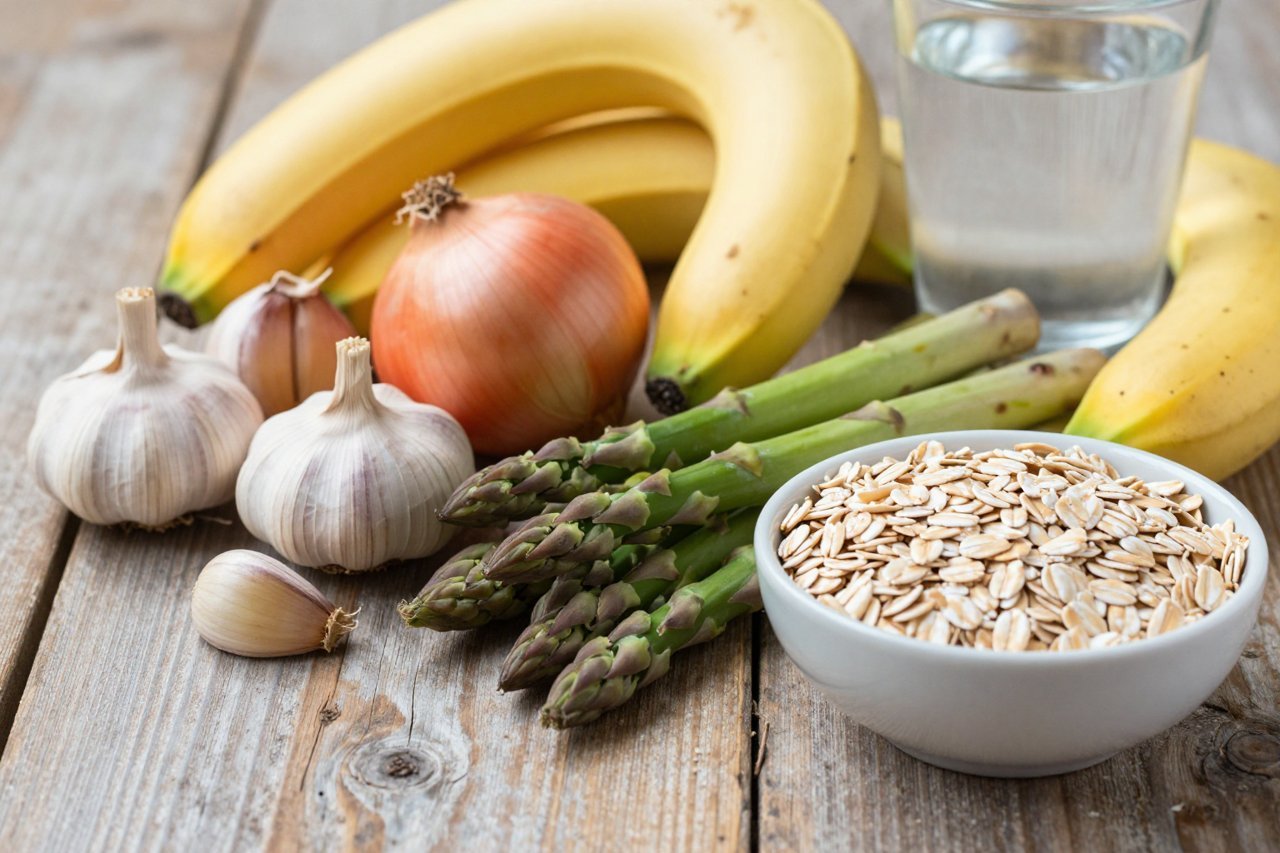
Chicory root is the richest source of inulin, providing about 65% fiber by weight. Jerusalem artichokes (sunchokes) come in second, with 16-20% inulin. Garlic, onions, and leeks are also excellent—they contain both inulin and FOS. Asparagus, with about 5% inulin by weight, is a great choice when grilled or roasted.
Fruits
Bananas, especially slightly green ones, contain resistant starch and small amounts of inulin. Apples with the skin on provide pectin, a type of soluble fiber that acts as a prebiotic. Dragon fruit is another surprising source—its seeds and flesh contain oligosaccharides that feed gut bacteria. You can read more about the benefits in our article on 17 Dragon Fruit Benefits for Health and Beauty.
Whole Grains and Legumes
Oats are rich in beta-glucan, a prebiotic fiber that also lowers cholesterol. Barley and whole wheat contain significant amounts of resistant starch. Lentils, chickpeas, and beans are packed with prebiotic fibers—just half a cup can provide 5-8 grams of fiber. If you’re not used to legumes, start small to avoid gas.
Fermented Foods
While fermented foods like yogurt and kimchi are known for probiotics, many also contain prebiotics. For example, miso and tempeh have prebiotic fibers from soybeans. Kombucha can contain small amounts of prebiotics from the tea. Our guide on Why Fermented Foods Are Your Gut’s Best Friend explains how to incorporate them into your meals.
How Much Prebiotic Fiber Do You Need?
Most adults get about 10-15 grams of fiber daily, but the recommended intake is 25-38 grams. For prebiotic effects specifically, studies suggest 5-10 grams of prebiotic fiber per day. That’s roughly one medium banana plus half an onion and a clove of garlic. However, if you’re not used to high-fiber foods, start with 2-3 grams and gradually increase over a few weeks. Too much too soon can cause bloating, gas, and discomfort.
It’s also important to drink plenty of water when increasing fiber intake. Fiber absorbs water, so staying hydrated helps prevent constipation.
Prebiotic Supplements: Do You Need Them?
Whole foods are the best source of prebiotics because they also provide vitamins, minerals, and antioxidants. But if your diet is lacking, a supplement can help fill the gap. Common prebiotic supplements include inulin powder, FOS, and GOS. They come in powders, capsules, and even gummies.
When choosing a supplement, look for one with minimal added ingredients and a clear label showing the type and amount of prebiotic fiber. For a detailed breakdown, check our Prebiotic Fiber Supplement Guide. It explains what to look for and why it matters.
If you’re considering a prebiotic supplement specifically, our article on Prebiotic Supplement: Your Gut’s Secret Weapon covers the benefits and potential side effects.
Potential Side Effects
Some people experience bloating, gas, or abdominal cramps when starting prebiotics, especially at high doses. This is normal as your gut bacteria adjust. To minimize discomfort, start with a low dose and increase slowly. If symptoms persist, try a different type of prebiotic fiber, as some may be better tolerated than others.
Tips for Maximizing Prebiotic Benefits
Getting the most out of prebiotics isn’t just about eating more fiber. Here are some practical strategies:
- Pair prebiotics with probiotics. Eat a prebiotic-rich food alongside a fermented food like yogurt or sauerkraut. This synergy helps the probiotics thrive.
- Cook wisely. Some prebiotic fibers are heat-sensitive. For example, garlic and onions lose some inulin when cooked at high heat for long periods. Light steaming or sautéing is better than boiling.
- Vary your sources. Different prebiotics feed different bacteria. A diverse diet leads to a diverse microbiome, which is linked to better health.
- Consider resistant starch. Cooked and cooled potatoes, rice, or pasta have higher resistant starch content. This type of starch acts as a prebiotic. Let your oatmeal or lentil soup cool slightly before eating.
You can also complement your diet with a multivitamin to ensure you’re getting all essential nutrients. Our guide on Food Supplement Vitamins offers practical advice on filling nutritional gaps.
Prebiotics vs. Probiotics: What’s the Difference?
It’s a common point of confusion. Probiotics are live bacteria that add to the population of good microbes in your gut. Prebiotics are the food that feeds those bacteria. You need both for optimal gut health. Think of it as planting seeds (probiotics) and then watering and fertilizing the soil (prebiotics). Without the fertilizer, the seeds may not grow well.
Some products are called synbiotics—they contain both probiotics and prebiotics in one formulation. These can be convenient, but it’s often better to get prebiotics from food and probiotics from fermented foods or supplements separately, so you can adjust the dose of each.
Common Myths About Prebiotics
Myth 1: All fiber is prebiotic. Not all fiber feeds gut bacteria. Cellulose and some insoluble fibers provide bulk but aren’t fermented by gut bacteria. Only certain types of soluble fiber have prebiotic effects.
Myth 2: You need expensive supplements. Whole foods like garlic, onions, bananas, and oats are cheap and effective. Supplements are helpful for some people but not necessary for everyone.
Myth 3: Prebiotics cause weight gain. While prebiotics are carbohydrates, they aren’t digestible by human enzymes, so they provide minimal calories. They may actually help with weight management by promoting fullness and altering gut bacteria composition.
Myth 4: More is always better. Overdoing prebiotics can lead to severe bloating, diarrhea, and discomfort. Stick to recommended amounts and listen to your body.
Start Small, but Start Today
Improving your gut health doesn’t require a complete diet overhaul. Add a clove of garlic to your stir-fry, toss some sliced banana into your morning oatmeal, or swap your afternoon snack for a handful of almonds and a piece of fruit. Small changes add up. Your gut bacteria will thank you with better digestion, stronger immunity, and maybe even a brighter mood.
If you want to track your progress, keep a food diary for a week and note how you feel after meals. You might be surprised which foods make you feel your best. And if you decide to try a supplement, start with a low dose and see how your body responds. Your gut is unique, so pay attention to what works for you.


