
Table of Contents
You know that sick feeling when you call your dog’s name and there’s no answer? I felt it last September, when my border collie Pip found a gap in the back fence. I ran down the street in my slippers calling his name for an hour. He eventually came back, but the experience stuck with me. That’s why I keep a GPS tracking device for dogs clipped to his collar now. And it’s why I understand why people get overwhelmed trying to pick one. There are a lot of trackers out there, and the marketing doesn’t make it easier.
After testing several models, I can tell you this: most of them work, but they work in very different ways. The key is matching the tracker to your dog, your lifestyle, and your budget. This guide walks you through the things that actually matter.
What a GPS tracking device for dogs actually does
It sounds simple, but there’s a difference between a GPS tracker and an “activity tracker with GPS”. A real GPS tracker uses satellite signals to calculate your dog’s position. Then it sends those coordinates to your phone using a cellular network. Some trackers also use radio frequencies, but those come with distance limits. The important thing is that a true GPS device works wherever there’s a signal, which is typically most places you’d let your dog roam.
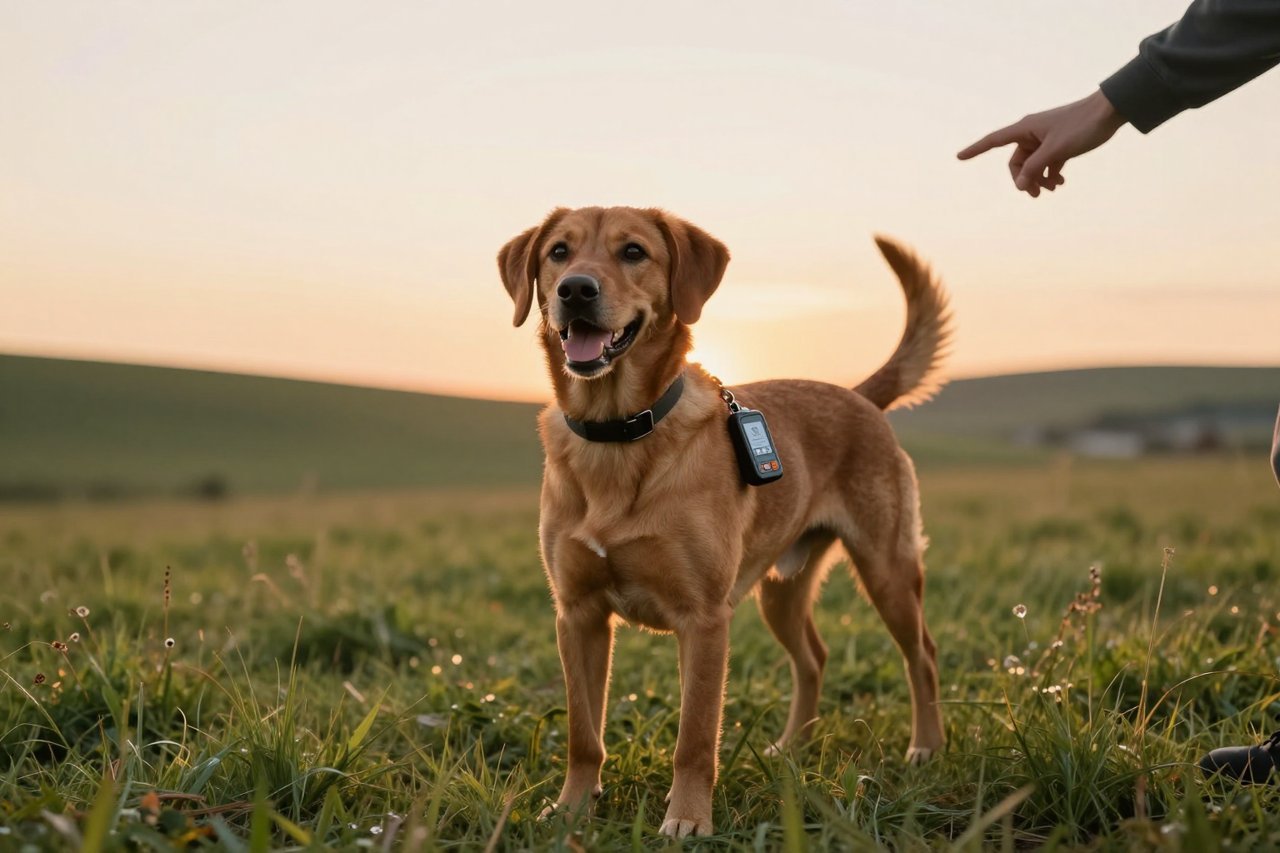
Not all trackers are the same. Some are simple pod-shaped devices that clip to a collar, while others are built into smart collars that also measure sleep, steps, and barking. If you’re trying to decide between a dedicated GPS unit and a multi-feature collar, this dog tracker guide breaks down the differences between each type.

What to look for in a GPS tracker for dogs
Every GPS tracking device for dogs promises “peace of mind”. But when you’re comparing specs, you need to look at four things: battery life, coverage, size, and recurring costs. Here’s the breakdown.
There’s also a lot of marketing fluff out there. Some trackers have features you’ll never use. The honest guide to dog GPS trackers cuts through the noise and tells you what really matters. Let me summarize the key points.
Battery life matters more than you think
The cheapest trackers often need to be charged every day. That’s fine if you’re diligent, but it’s easy to let it slide. My neighbor bought a budget tracker and stopped attaching it after a month because charging it became a chore. A good tracker should last at least 3–4 days on a single charge. If you go on long hikes or have a dog that spends weekends outside, look for 7+ days. Some high-end models last up to 2 weeks.
Also consider the charging method. Magnetic charging plates are easy; micro-USB ports on the tracker itself can be fiddly. And make sure the tracker charges without having to remove it from the collar every single time.
Coverage isn’t just about satellites
Yes, GPS satellites provide the location, but the tracker still needs a way to get that data to you. Most trackers use 4G LTE or similar cellular networks. That’s great in towns and cities. But if you live in a rural area or hike in valleys, coverage could be spotty. Check the carrier coverage map before you buy. Some trackers use a mix of Bluetooth and GPS, which can work offline but that limits range.
There are also trackers that use LoRa or custom radio frequencies. These have incredible range and don’t require monthly fees, but they need a separate handheld receiver. That’s a different setup, and it’s usually not what someone buying a simple GPS collar is looking for.
Size and weight matter for your dog’s comfort
If you have a 5kg chihuahua, you don’t want to hang a brick around their neck. Conversely, a 40kg Labrador won’t notice a slightly larger device. Manufacturers list the weight of the tracker. Also pay attention to the shape. Some trackers are long sticks, others are rounded pods. They should rest comfortably against the collar and not flop around. I prefer trackers that lie flat against the back of the neck, because they don’t bother the dog and are less likely to catch on branches.
The subscription cost is part of the overall price
A $50 tracker might sound great, but if it requires a $20 monthly plan, you’re paying $240 a year. Over two years, that’s more than the tracker itself. Most decent trackers fall into one of two camps: a higher upfront cost with a cheap or free plan, or a lower upfront cost with a mandatory subscription. When you’re looking at a specific model, always check the monthly fee. This no-nonsense buyer’s guide goes into the numbers and helps you calculate the real cost over the life of the device.
Types of GPS trackers for dogs
There are a few ways to go about tracking your dog:
- GPS collar: The tracker is built into the collar. These are usually the strongest and most comfortable, but you’ll have to buy the collar and the tracker as a package. If your collar wears out or your dog chews it, you’ll need to replace the whole thing.
- Attachable tracker: A small pod that clips to any existing collar. This is the most flexible. You can move it between a day collar and a harness, or use it on two different dogs. Just make sure the clip is solid—some of them pop off easily.
- Activity tracker + GPS: These combine location tracking with health monitoring. They’ll tell you how much your dog sleeps, how many calories they burn, and whether they’re scratching an itchy spot. They tend to be more expensive, and the battery often doesn’t last as long because of the extra sensors.
Your dog’s size and daily routine will dictate which makes sense. For example, if your dog only escapes on weekends, an attachable tracker that you clip on for hikes is enough. But if you want 24/7 protection, a dedicated GPS collar is probably easier. The practical guide to picking a tracking device that works can show you the trade-offs.
Fine print: subscriptions, coverage, and other gotchas
I’ve seen more than a few raised eyebrows when someone realizes their shiny new tracker requires a monthly fee. That fee usually covers the cellular data the tracker needs to talk to your phone. Some companies include the first year in the price, but after that you’ll be charged. On the other side, there are trackers that have no subscription at all because they use a radio system. Those have a longer range than Bluetooth, but you need to be nearby to pick up the signal, and you’ll need a separate handheld device.
Another gotcha is the app. The tracker can be great, but if the app is buggy or confusing, you’ll end up not using it. Look for apps with a clean map view, location history, and a simple “find your dog” button. I also like trackers that let you set a virtual fence and alert you when your dog leaves a specific area. That’s a feature you’ll appreciate the first time your dog squeezes through the garden gate while you’re in a video call.
Now, some people might tell you that any GPS tracking device for dogs is a waste of money because your dog never runs off. But I’ve watched a calm, obedient dog spook at a loud motorcycle and bolt across a major road. If you’ve ever had to search a park with a shaking flashlight at midnight, you’ll know exactly why a GPS is worth it. This article on why every dog owner needs a GPS collar mentions some real-world scenarios that will hit close to home.
How to test a GPS tracker before you trust it
You buy a tracker, attach it to your dog, and expect it to work. But you should test it before you need it. Here’s a simple way to test your new GPS tracking device for dogs.
- First, set up the device and charge it fully. Make sure the app is installed and the tracker is paired.
- Take your dog to a familiar park and let her run around. Open the app and watch the location update in real-time. Make sure it’s accurate – you should be able to see her moving around the field.
- Walk away to a distance of 50–100 metres. Then ask a friend to walk your dog while you watch the app. You should see the position update within a few seconds.
- Mimic an escape. Have your friend take the dog behind a shed or into a bit of woods, then wait a few minutes. Then use the app’s “live tracking” feature to locate them. If you can’t find them within a few minutes, you have a problem.
- Finally, check battery use. Leave the tracker on overnight and see how much battery it drains. You don’t want a dead tracker the next morning.
If a tracker fails any of these tests, exchange it for another model. Before you spend money on a unit that looks good in reviews, this practical guide to picking a tracking device can help you narrow down your options. Then you can run your own test with confidence.
I ran my own test after a scare with my dog. The tracker I use now has a 7-day battery and a live map that updates every second. It’s not the biggest or the most expensive, but it fits my dog’s collar and doesn’t carry a subscription fee that makes me wince. That’s exactly what you want: a GPS tracking device for dogs that disappears from your mind until the one moment you need it.


