
Table of Contents
Fat Got a Bad Reputation It Never Earned
Walk through any supermarket in the 1990s and you’d find shelves stacked with fat-free salad dressing, fat-free cookies and margarine tubs promising a healthier heart. A lot of people swapped butter for margarine and olive oil for sugar-laden “lite” products, and the results weren’t pretty. Rates of obesity and type 2 diabetes kept climbing while the fat-free aisle got bigger.
The pendulum has since swung hard the other way. Avocado oil now sells for £10 a bottle, “keto-friendly” labels sit on everything, and some people are spooning butter into their coffee. Both extremes miss the point. Fat is an essential macronutrient you need for hormone production, vitamin absorption and healthy cell membranes, but a gram of fat still carries 9 calories, roughly double what protein or carbohydrate delivers. So the question worth asking isn’t how to cut fat out. It’s how to spend your fat calories on sources that give something back.
Learn the Four Families in Two Minutes
You don’t need a biochemistry degree, but knowing the basics helps you ignore most of the noise on packaging.
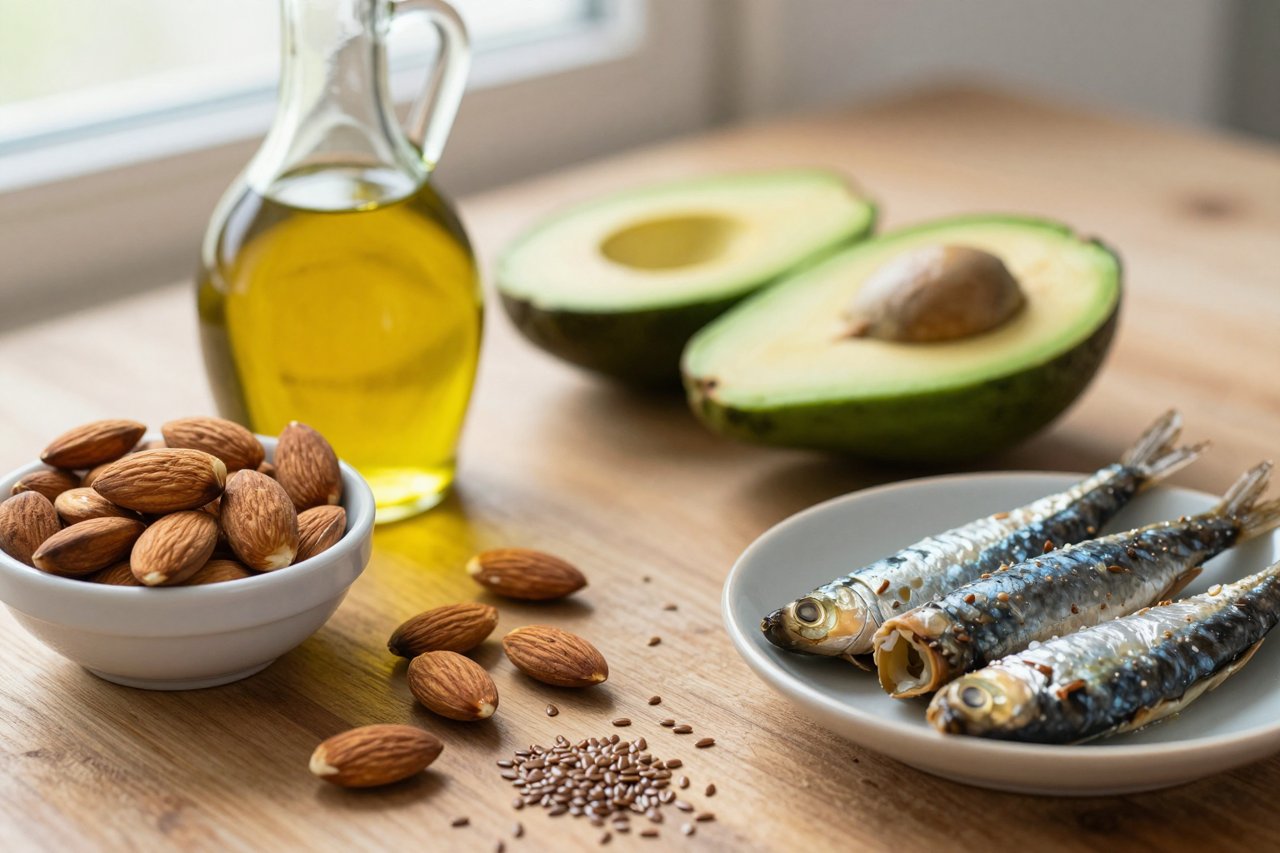
- Monounsaturated fats sit in olive oil, avocado, almonds, cashews and peanuts. They’re the backbone of the Mediterranean pattern of eating and are linked to better cholesterol profiles.
- Polyunsaturated fats include omega-6 (walnuts, sunflower seeds, most vegetable oils) and omega-3 (salmon, sardines, mackerel, flaxseed, chia, walnuts). Omega-3s are the ones most people fall short on.
- Saturated fats come mainly from meat, dairy, coconut and palm oil. They aren’t toxic, but most health bodies suggest keeping them under roughly 10% of daily calories.
- Trans fats are the ones to actively avoid. Industrially produced versions from partially hydrogenated oil have been removed from most Western food supplies, but they still turn up in some imported biscuits, margarines and fried snacks.
Rather than chasing ratios, treat this as a shopping filter. If most of your fat comes from plants, fish and minimally processed dairy, the arithmetic tends to sort itself out.

The Whole-Food Test Beats Any Label Claim
Here’s a shortcut I use far more than any nutrient breakdown: does the fat arrive with its own packaging? A 30g handful of almonds delivers about 14g of fat, but it also brings 3.5g of fibre, 6g of protein and a decent hit of magnesium. A tablespoon of olive oil brings 14g of fat plus polyphenols and vitamin E. Compare that to a croissant, which brings 14g of fat and very little else.
Fatty fish is the standout example. A 100g portion of farmed salmon supplies around 1.8g of long-chain omega-3s, the type your body uses most efficiently. Flaxseed and chia contain the plant omega-3 ALA, which converts to EPA and DHA at a poor rate, somewhere between 5% and 10%. Both are worth eating, but they aren’t interchangeable. Aim for two portions of oily fish a week and treat seeds as a top-up.
Some of these choices pay off in places you might not expect. Vitamin D and vitamin K are fat-soluble, so the olive oil on your roasted vegetables and the fat in a dairy portion genuinely help you absorb them, which matters for long-term bone density and strength.
Not All Processing Is Villainous
Cold-pressed olive oil is a processed food. So is tahini, peanut butter and tinned sardines. Rejecting anything processed would mean giving up most of the good stuff.
The distinction worth making is between mechanical extraction and industrial refinement. Extra virgin olive oil is essentially crushed fruit with the water spun out. Refined oils are heated, treated with solvents and deodorised, which strips flavour and some minor nutrients. Neither will harm you, but the less-refined version usually tastes better and carries more of the plant compounds you’re paying for.
The one processing method to check for on an ingredient list is hydrogenation. If you see “partially hydrogenated” anything, put it back. That’s where trans fats come from.
Read the Ingredient List, Not the Front of the Pack
Food marketing has become very good at borrowing health halo words. A few patterns I see constantly:
- “Made with avocado oil” on a bag of crisps, where sunflower oil is actually the first oil listed and avocado oil appears in tiny amounts near the bottom.
- Nut butters with added palm oil and sugar, where the only ingredient should be nuts and maybe salt.
- Keto-labelled cookies and bars that hit their carb numbers using sugar alcohols and a lot of refined fat.
- Trail mix where the nuts are outnumbered by yogurt-coated raisins and chocolate buttons.
- Fat-burning pills promising to “target stubborn fat” while containing nothing you couldn’t get from a tin of mackerel. If you’ve ever wondered whether those products do anything at all, this breakdown of fat burning supplements for men is worth five minutes.
A useful rule: if the front of the packet makes a nutrition claim, flip it over and spend ten seconds on the ingredients. Most of the decisions you need to make are settled right there.
Pair Fat With Fibre, Protein and Colour
Fat rarely turns up alone on a plate, and the company it keeps changes the effect on your body. A slice of wholegrain toast with mashed avocado and a boiled egg gives you slow-digesting carbohydrate, protein and fat together, so you stay full for hours. A bag of crisps delivers roughly the same calories and leaves you hungry twenty minutes later.
The absorption point is underrated too. Add a tablespoon of olive oil to a bowl of salad and you absorb meaningfully more of the carotenoids from the tomatoes, carrots and leafy greens. Skimp on the dressing and you’re partly wasting the vegetables.
There’s also a slower, less dramatic story happening in your gut, where the balance of bacteria affects how you digest food and extract energy from it. Getting enough fibre alongside your fat sources supports that ecosystem. The evidence on what the science really says about good bacteria is still developing, but the practical advice, more plants and fermented foods, aligns neatly with choosing whole-food fats.
Numbers That Actually Help in the Kitchen
General guidance puts fat at roughly 20% to 35% of daily calories. On a 2,000-calorie intake that’s about 44g to 78g a day, which sounds generous until you realise a single takeaway curry can clear 60g on its own.
Practical anchors instead of maths:
- 1 to 2 tablespoons of extra virgin olive oil daily, used for dressing and low-heat cooking
- A 30g handful of unsalted nuts most days
- Two portions of oily fish a week, roughly 140g cooked each
- Half an avocado or a small handful of olives a few times a week
- Seeds, such as ground flax or pumpkin, sprinkled over yoghurt or porridge
If you’re training hard, that intake also supports hormone production and recovery, which is one reason strength and resistance training in healthy aging goes hand in hand with eating enough good fat rather than cutting it to the bone.
Build a Rotation Instead of a Rulebook
The people who eat well long-term tend not to have perfect diets. They have a small repertoire of default choices that repeat without effort.
A workable weekly rotation looks like this. Olive oil for dressings, a neutral oil like rapeseed for higher-heat cooking. Nuts in a jar on the counter, portioned into a small bowl rather than eaten from the bag. Tinned sardines or mackerel in the cupboard for the nights nobody wants to cook. Eggs and full-fat yoghurt in the fridge. A block of decent cheese grated rather than sliced thick, because flavour goes further than volume. Salmon or trout once or twice, and a bag of frozen edamame or a handful of pumpkin seeds for the days that go sideways.
Swap one thing at a time. If most of your fat currently comes from fried food, pastries and processed meat, changing two of those defaults will do more than any supplement or any bottle of expensive oil. The goal isn’t a flawless diet. It’s a shopping basket where the fats you eat most often are the ones that bring fibre, protein, vitamins and flavour along with them, so the choice becomes automatic long before you have to think about it again.


