
Table of Contents
A 1997 Land Rover Defender 90 that changes hands for £14,000 in rural England can sell for $65,000 in Southern California. That price gap is why private sellers, dealers and returning expats keep shipping cars across oceans. It is also why so many of those shipments go wrong, because the difference between a profitable export and a very expensive lesson usually comes down to paperwork and port fees rather than the car itself.
Here is the process as it actually works, including the bits freight quotes tend to leave out.
Roll-on/roll-off or container? Decide before you request a quote
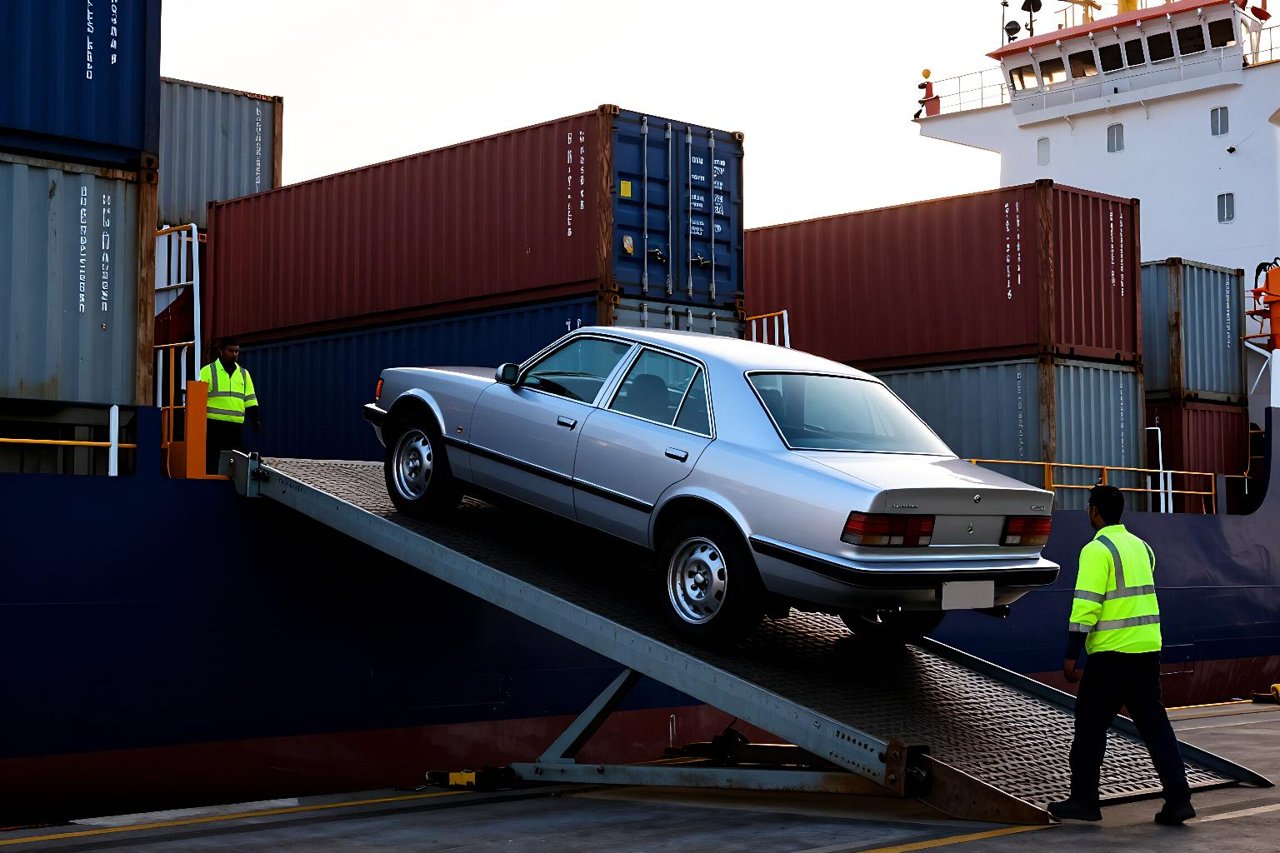
RoRo is the default for roadworthy cars. The vehicle is driven onto the vessel, lashed to the deck and driven off at the other end. A transatlantic crossing typically runs £700–£1,400 depending on size and season. You get no space for spare parts, the car has to start and move under its own power, and the service only exists between certain ports.
Container shipping costs more, roughly £1,600–£2,800 for a 20ft box, but a 40ft container will take two small cars if the shipper knows how to brace them. You get a sealed unit, protection from salt spray and deck damage, and room in the boot for parts. For anything valuable, modified or partly dismantled, container is usually the better call.

When RoRo is the wrong choice
- The car doesn’t run. Nobody at the terminal is going to push it up a ramp.
- It sits very low, such as a lowered MX-5 or a classic with 120mm of ground clearance, and risks damage on the ramp angle.
- You’re sending wheels, panels or tools with it.
- The destination port has no RoRo service, which is common across parts of Africa and the Caribbean.
Learn the destination’s import rules before you pay a deposit
Every country has a gatekeeper, and most of them are unsentimental. The United States exempts vehicles 25 years and older from federal safety and emissions standards, which is the single reason air-cooled Porsches and old Land Cruisers migrate west in such numbers. Even then you need DOT Form HS-7 and EPA Form 3520-1, plus an Importer Security Filing lodged at least 24 hours before the ship loads, with a $5,000 penalty for late filing. Duty is 2.5% on passenger cars and 25% on light trucks, thanks to the long-running chicken tax.
Australia is stricter again: a vehicle import approval before the car is even booked, an asbestos-free declaration (brake pads and gaskets are the usual offenders), 5% duty and 10% GST. The EU charges 10% duty plus local VAT and generally wants a certificate of conformity or an individual vehicle approval.
Trade policy also moves under your feet. Tariff changes and retaliatory duties have rewritten vehicle import costs more than once in recent years, in much the same way that tariffs have cost American farmers tens of billions of dollars. Get today’s rate from a customs broker in the destination country, not from a forum thread written in 2019.
The paperwork that actually stops shipments
Customs authorities care about the bill of lading more than anything else, because it is the document of title. Originals, not scans. Beyond that, a typical export file contains:
- Bill of lading, usually three originals
- Certificate of title or V5C logbook, plus a letter of authority if you aren’t the registered keeper
- Commercial invoice showing the price actually paid, and a separate customs value declaration
- Export declaration filed in the relevant system (AES in the US, CDS in the UK)
- Certificate of origin if the destination grants preferential duty
- Marine insurance certificate
- Destination-specific import forms, which vary wildly
A single mismatch between the invoice and the customs declaration will park the car at the dock, and port storage runs £30–£80 a day while someone sorts it out. If you’re buying the car in a country where you aren’t resident and exporting it immediately, ask about tax recovery at the point of sale too. The same principles that let travellers reclaim VAT on large purchases made abroad can apply to a vehicle in some jurisdictions, and on a five-figure car that is real money.
Clean it properly. Biosecurity inspections are not a formality
Australia and New Zealand treat soil as a genuine biosecurity risk, and they inspect accordingly. A steam clean of the undercarriage, wheel arches and engine bay costs £200–£400 and takes an afternoon. Skipping it can mean a failed quarantine inspection, a mandatory re-clean at destination rates, or in the worst case an order to re-export the vehicle. Do the cleaning before it reaches the terminal, not after someone has already found a seed head in the subframe.
Budget for the costs that never appear in the quote
An ocean freight quote covers ocean freight. Very little else.
- Inland transport to the port: £150–£400
- Terminal handling and documentation fees: £100–£250
- Destination port charges: $300–$700
- Customs broker: $300–$600 per entry
- Duty and VAT or GST, charged on car value plus freight plus insurance
- Storage or demurrage if clearance drags on
- Registration, inspection or compliance work after arrival
Dealers moving several cars a year feel this most, because the invoices arrive from three carriers, a broker, a port agent and a transport firm in four different formats. Anyone running that volume usually ends up with billing software that keeps freight and customs invoices reconciled, so a £600 charge doesn’t quietly disappear into the margin on the next sale.
Insure the whole journey, not just the sea leg
Marine cover typically costs 1.5%–3% of the vehicle’s value. Take all-risks rather than total loss only, and check that it starts when the car leaves your driveway rather than when it crosses the quay. Carrier liability under standard shipping terms is capped at a fraction of the vehicle’s worth, so the carrier’s own cover will not save you. Photograph every panel, the odometer and any existing damage before handover, and keep the photos timestamped.
Track the vessel and clear customs before it berths
Most carriers publish a container or booking reference you can track for free, and a good forwarder will send an arrival notice five to seven days out. Use that window to pre-lodge the customs entry and pay duty, because demurrage starts accruing the moment the car sits on the dock beyond its free days. Schedules slip for reasons entirely outside anyone’s control, and extreme heat and weather events have repeatedly disrupted port and freight operations in recent summers. Build a week of slack into any deadline you actually care about.
Getting it road legal at the other end
Arrival is not the finish line. In the US you need CBP Form 7501 stamped, the HS-7 in hand, and a state DMV inspection before plates go on. In the UK, the car must be notified to HMRC through NOVA within 14 days of arrival, duty and VAT paid, then registered with the DVLA. Australia requires the import approval to match the vehicle and a compliance inspection before registration. Miss the NOVA window and HMRC can add a penalty on top of the tax you already owed, which is a dull way to lose several hundred pounds after the car has already crossed an ocean to reach you.


