
Table of Contents
Half a teaspoon of ground turmeric turns a pot of pale lentils the colour of a traffic cone. It also leaves a ring on the benchtop that outlives the leftovers by three days. Both facts come from the same small group of molecules, and getting to know them is the difference between turmeric that tastes like something and turmeric that tastes like dusty disappointment.
Where the Yellow Actually Comes From
Good dried turmeric powder is roughly 2 to 5 percent curcuminoid by weight. Three compounds make up that fraction: curcumin, demethoxycurcumin and bisdemethoxycurcumin. Curcumin is the big one, usually 60 to 70 percent of the group, and it is responsible for the shade that dyed monks’ robes long before anyone thought to put the root in a pan.
The colour shifts with pH, which is worth knowing if you cook. In an acidic pan it stays a clean lemon yellow; add a pinch of bicarbonate of soda and it swings towards brick orange. Some cooks exploit this deliberately, putting a quarter teaspoon of bicarb into a chicken marinade for a deeper gold, then finishing with lemon juice to pull the brightness back.
Curcumin is bad at being absorbed
Curcumin is fat-soluble and poorly bioavailable on its own. The classic fix is black pepper. A frequently cited human study from 1998 found that 20mg of piperine, roughly what you get from a quarter teaspoon of ground pepper, increased curcumin absorption about twentyfold. Fat helps too, since it gives the curcuminoids something to dissolve into.

This is why traditional spice blends look the way they do. Indian masalas pair turmeric with pepper and ghee. Golden milk adds fat from milk or coconut and a crack of pepper. The chemistry arrived with the recipe centuries before anyone could name it.
One honest caveat: a teaspoon of powder in a curry delivers a curcumin dose far below what supplement trials use. The case for turmeric in the kitchen is flavour, colour and a long history of daily use, not a dose-response curve.
The Aromatic Half: Volatile Oils
Curcuminoids give colour, but they do not smell of much. The earthy, resinous, faintly medicinal aroma that drifts off a freshly opened jar comes from the essential oil fraction: ar-turmerone, alpha-turmerone, curlone and zingiberene. If you have ever thought turmeric smelled like wet carrot peel crossed with orange rind, that is these compounds talking.
They are also the fragile part. Volatile oils flash off and degrade under heat, which is why a long, aggressive fry flattens the aroma while the colour stays put. Fresh rhizome carries a higher proportion of oils to curcuminoids, so it tastes brighter and more gingery than the powder ever will.
How Turmeric Behaves in a Hot Pan
Bloom it, don’t scorch it
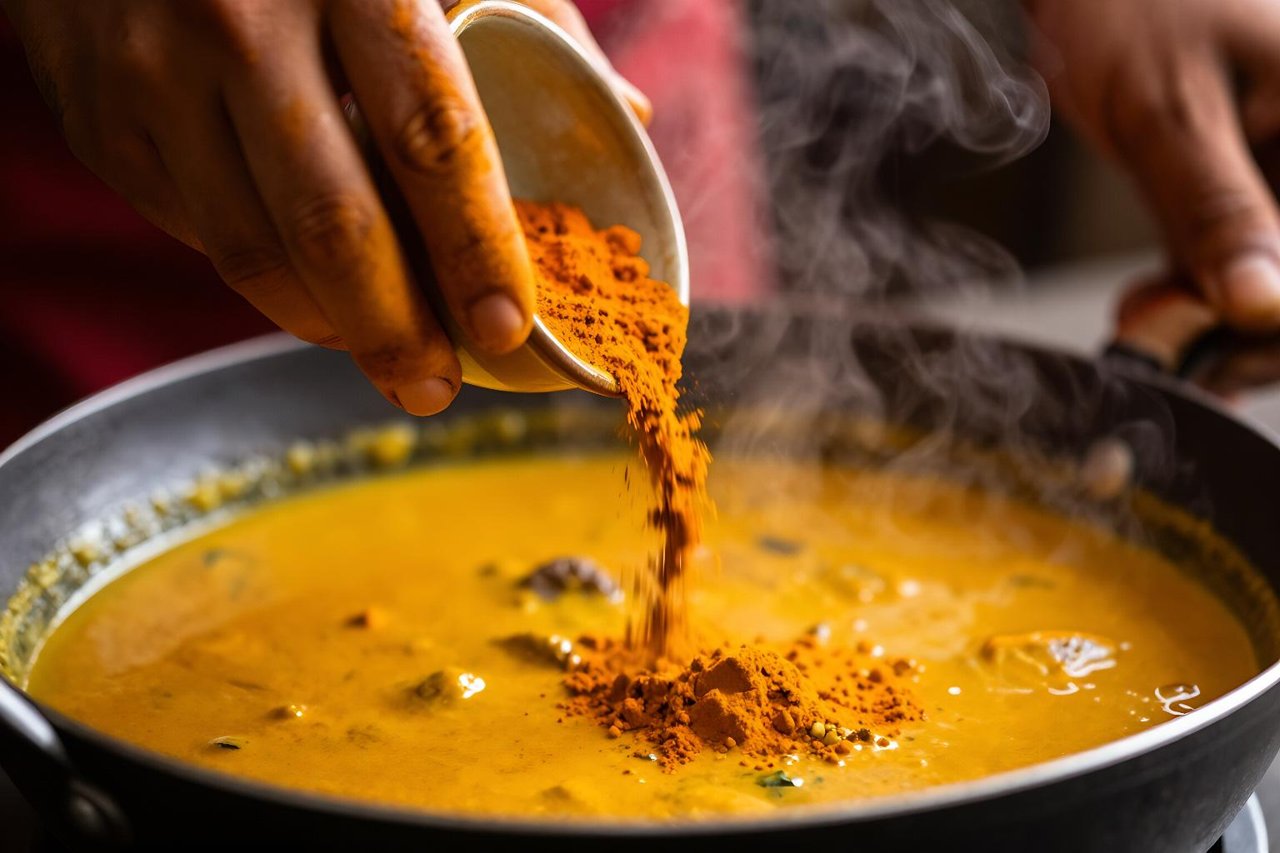
Thirty to sixty seconds in fat over medium heat is the sweet spot. Add it to the pan after the onions have softened but before they start browning hard, stir, and let the powder darken slightly and smell warm rather than sharp. Push it past that and the volatile oils burn, the starch in the powder scorches, and you get a bitter, acrid edge that no amount of coconut milk will hide. If the pan smells harsh, scrape it out and start again. It will not recover.
The staining problem is real
Curcumin binds readily to porous surfaces and to the oils in plastic. A few practical habits save a lot of scrubbing:
- Coat the inside of a plastic container with a thin film of oil before adding a turmeric-heavy curry; the stain lifts with the oil.
- Keep bamboo, silicone spatulas and pale wooden spoons for non-turmeric jobs, or accept that they will yellow permanently.
- Wash hands with oil and salt before soap and water, or wear gloves when grating fresh root.
- Leave stained chopping boards in direct sun for an afternoon; UV does more than bleach.
Where Turmeric Earns Its Place
It is not a background spice in the way salt is. Used well, it is a colouring agent, a bitter counterweight to rich fats, and a preservative that has kept pickles and mustards shelf-stable for generations. Some reliable applications:
- Dal and wet curries: half to one teaspoon per four servings, added with the ground spices after the onions.
- Rice: a quarter teaspoon per two cups of rice for a golden pilaf, or a pinch in the water for sushi-style rice used in a colourful bowl.
- Marinades: one teaspoon per 500g of chicken or firm fish, with yoghurt, lemon and crushed garlic.
- Roast vegetables: a teaspoon tossed with oil, cumin and cauliflower at 220°C for 25 minutes.
- Pickles and condiments: American yellow mustard and piccalilli owe their colour almost entirely to turmeric.
- Golden milk: a quarter teaspoon per cup, simmered briefly with pepper and honey.
- Regional staples: Moroccan chermila, Jamaican curry powder, Indonesian rendang, Sri Lankan fish curry and Persian golden rice all lean on it.
Fresh Rhizome Versus the Jar
Fresh turmeric looks like a small, orange-fleshed ginger finger. Grate it on a microplane or pound it into a paste, and use roughly two to three times the volume of powder the recipe calls for. Thai, Sri Lankan and Indonesian kitchens use it this way, and it is worth tracking down for a curry where turmeric is meant to be tasted rather than just seen. Indian pickles use slivered raw turmeric (kachi haldi) with mustard oil and lemon for a sharp, peppery crunch.
Dried powder, by contrast, concentrates the colour and keeps for six to twelve months in a sealed jar away from light. Buying whole dried fingers and grinding them as needed gives noticeably more aroma than pre-ground, though most of us will not bother. When choosing powder, look for a vivid orange-yellow that stains your fingers at the shop, not a pale mustard dust. A faintly peppery, bitter, earthy smell is a good sign; a chalky one usually means age or a filler such as starch.
Pairings and Sensible Quantities
Turmeric gets along with pepper, fat, acid, garlic, ginger, cumin, coriander, mustard seed, coconut and chilli. It does not get along with delicacy. A heavy hand pushes a dish from warm and earthy into soapy and chalky, and the bitterness lingers. Start with an eighth of a teaspoon per portion and build.
Timing changes the result. Added early to hot fat, turmeric contributes flavour and body to a curry. Stirred in off the heat, it contributes colour alone, which is what you want in a pale cream sauce or a lemony dressing where you would rather taste the acid. And a jar that has been open since 2019 will still turn your rice yellow. It just will not do much else.


