
Table of Contents
It’s 6:40 on a Tuesday. You’ve just walked in, the fridge contains half a cabbage and three eggs, and someone is asking what’s for dinner. You order noodles. Again.
That isn’t a willpower problem. It’s a systems problem. Preparing healthy meals when you have little time rarely fails because you don’t know what a balanced plate looks like. It fails because at 6:40pm you have no decisions left in you and nothing in the kitchen that can be cooked in under 20 minutes.
What follows is the boring, practical version that actually works: fewer choices, smarter shopping, and cooking broken into pieces small enough to fit into the gaps you already have.
Pick eight dinners and stop deciding
Decision fatigue is the real enemy. Sitting down on a Monday to work out what to eat costs you fifteen minutes you don’t have, and it happens seven times a week.

So write down eight dinners you can cook without opening a recipe. Eight is enough for a two-week rotation with some repeats, and it covers the days you’re wiped out. A real example: roast chicken thighs, lentil soup, a stir-fry, sheet-pan salmon, egg fried rice, bean chilli, tuna pasta, and a big salad with chickpeas and feta.
Stick the list on the fridge. Your shopping list now writes itself, and the 6:40pm question disappears because Tuesday is always stir-fry night. Boring? Slightly. Effective? Completely.
Stock a pantry that can cook for you
A fifteen-minute meal is really a shopping habit. If the right things are already in the cupboard, dinner is assembly rather than cooking. These are the items worth keeping permanently:
- Tins: chickpeas, black beans, chopped tomatoes, coconut milk, tuna
- Fast grains: couscous (five minutes, no heat), orzo, plus a couple of microwave rice pouches for emergencies
- Frozen: peas, spinach, edamame, prawns
- Flavour: olive oil, tahini, soy sauce, chilli crisp, jarred garlic and ginger
- Protein: eggs, Greek yoghurt, firm tofu, a decent block of cheese
From that list you are never more than fifteen minutes from a proper meal. Couscous, a drained tin of chickpeas, a handful of frozen peas, lemon and a spoon of tahini is a real dinner, not a compromise.
Cook components, not complete meals
This is the single biggest time saver in the whole article. Instead of cooking one dish that feeds you once, cook two or three building blocks that combine differently across the week.
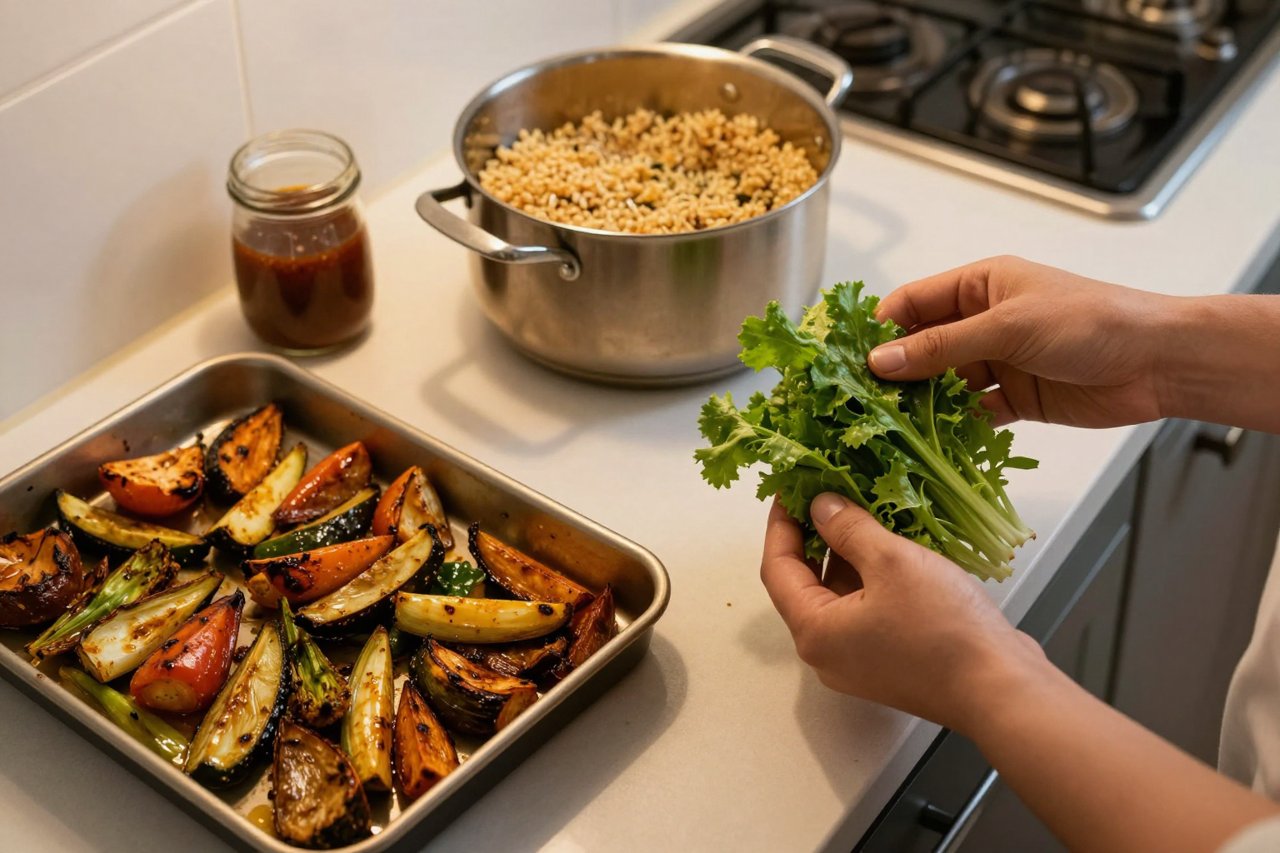
On Sunday, roast a tray of chicken thighs and a tray of vegetables at the same time. Cook a pot of grains while the oven does its thing. That’s roughly 45 minutes of your attention, much of it spent doing something else. Monday is a grain bowl. Tuesday is the same chicken shredded into a wrap with yoghurt and hot sauce. Wednesday it goes into a soup with the leftover vegetables and a tin of tomatoes.
Protein plus starch plus something raw plus sauce
That’s the formula. Chicken, rice, shredded cabbage, tahini dressing. Eggs, toast, tomatoes, chilli oil. Prawns, noodles, cucumber, soy and lime. Change the sauce and it tastes like a different meal, which is what stops batch cooking from feeling like punishment.
Keep two or three sauces in jars in the fridge: yoghurt with lemon and garlic, tahini loosened with water and soy, or pesto thinned with a splash of vinegar. If you like cooking with fresh aromatics, this step-by-step guide to ginger and its benefits is a good excuse to keep a jar of paste on hand.
The 45-minute Sunday reset
Kettle on, oven to 220C. Tray of chopped vegetables in first, because it takes longest and needs no supervision. Pot of grains on the hob. While those run, wash and chop the crunchy things you’ll eat raw: cucumber, peppers, carrots, spring onions. Whisk a jar of dressing. Boil six eggs.
By the time the tray comes out, you have the bones of five meals and a fridge that looks like someone capable lives there.
What not to prep
Some things actively get worse overnight. Don’t dress salads in advance, don’t cook pasta ahead of time, don’t cut avocado, and don’t batch-cook fish, which reheats into something with the texture of a sponge. Store components separately and combine at the last minute.
Shortcuts worth paying for
Pre-washed salad leaves, frozen chopped onion, a rotisserie chicken, pre-cut butternut squash, jarred garlic. Yes, they cost more per kilo. They also cost a lot less than the £14 takeaway you’d have ordered instead, and they turn a 40-minute dinner into a 12-minute one.
Judge each shortcut on one question: does this remove the step I would otherwise skip and then abandon the whole meal over? If yes, buy it without guilt.
Speed comes from technique, not gadgets
Most of the time people lose in the kitchen is spent waiting for a pan that was never hot enough. Get the pan properly hot before anything goes in, and salt early rather than at the end. Cut vegetables smaller than you think you should, because surface area is speed.
Use a lid. A lid turns 25 minutes of simmering into 12. Boil the kettle rather than waiting for a pan of cold water, and read a recipe once all the way through before you start so you’re not discovering step four with a smoking pan.
When there is genuinely no time, order well
Some nights nothing is happening in that kitchen, and pretending otherwise just adds guilt to hunger. Ordering in is fine. Just order with a little strategy: one protein and two vegetable dishes rather than three fried things, sauce on the side, steamed instead of deep-fried.
If Chinese is the default in your house, these five healthier Chinese takeout options are worth having in your head before you open the app, because deciding at the moment of ordering usually goes badly.
Snacks and small meals count too
A rushed day often falls apart between 3pm and 6pm, not at dinner. Keeping something decent within arm’s reach stops the biscuit tin from becoming a food group. Greek yoghurt with nuts, a boiled egg, hummus with carrot sticks, or a handful of edamame all take under two minutes and actually hold you until dinner.
If your snacking tends to drift into crisps by Thursday, this guide to healthy snacks that genuinely satisfy is a sensible place to build a short list from.
Keep the rotation from going stale
An eight-meal rotation works until you dread all eight. The fix is small: add one new recipe a week, not five. Cook it on a night when you have twenty extra minutes, and if it’s good, it graduates into the rotation and something tired gets dropped.
For inspiration that doesn’t require a specialist shopping trip, this collection of healthy recipes that actually taste good is built around food you’d want to eat again, which matters more than whether it’s technically virtuous.
Judge your kitchen by how it performs on your worst evening, not your best. A pantry with five reliable meals in it, a fridge holding two prepped components, and a short list of decisions already made will beat any meal plan you abandon by week two. Start with the eight dinners. Everything else gets easier from there.


