
Table of Contents
A cat can lose a surprising amount of water before anyone notices. There’s no dramatic cue, no empty glass left on the counter. Instead, a cat who is running dry gets quieter, eats a little less, and spends more of the afternoon asleep in a wardrobe. By the time the signs are obvious to an untrained eye, some cats are already 5 to 8 percent down on body water, which is enough to affect how their kidneys, heart and circulation are working.
The good news is that dehydration leaves fingerprints all over a cat’s body, and most of them can be read in about five minutes with your hands and a pair of eyes.
Why cats slide into dehydration so easily
Domestic cats are descended from desert hunters. Their bodies are built to squeeze moisture out of prey and to concentrate urine far better than ours. A mouse is roughly 70 percent water. A bowl of dry kibble is closer to 10 percent.
That mismatch matters. A cat eating only biscuits is getting very little fluid from their food and has to make up the difference at the bowl. Many don’t, because cats are also wired with a weak thirst drive. They simply don’t feel thirsty the way a dog does. Add in a hot week, a bout of vomiting, or an early kidney problem and the deficit builds quietly over days.

The five-minute at-home check
You don’t need a stethoscope. You do need to know what your cat feels like when they’re well, so run these checks once when they’re healthy and you’ll spot changes faster later.
The skin tent test
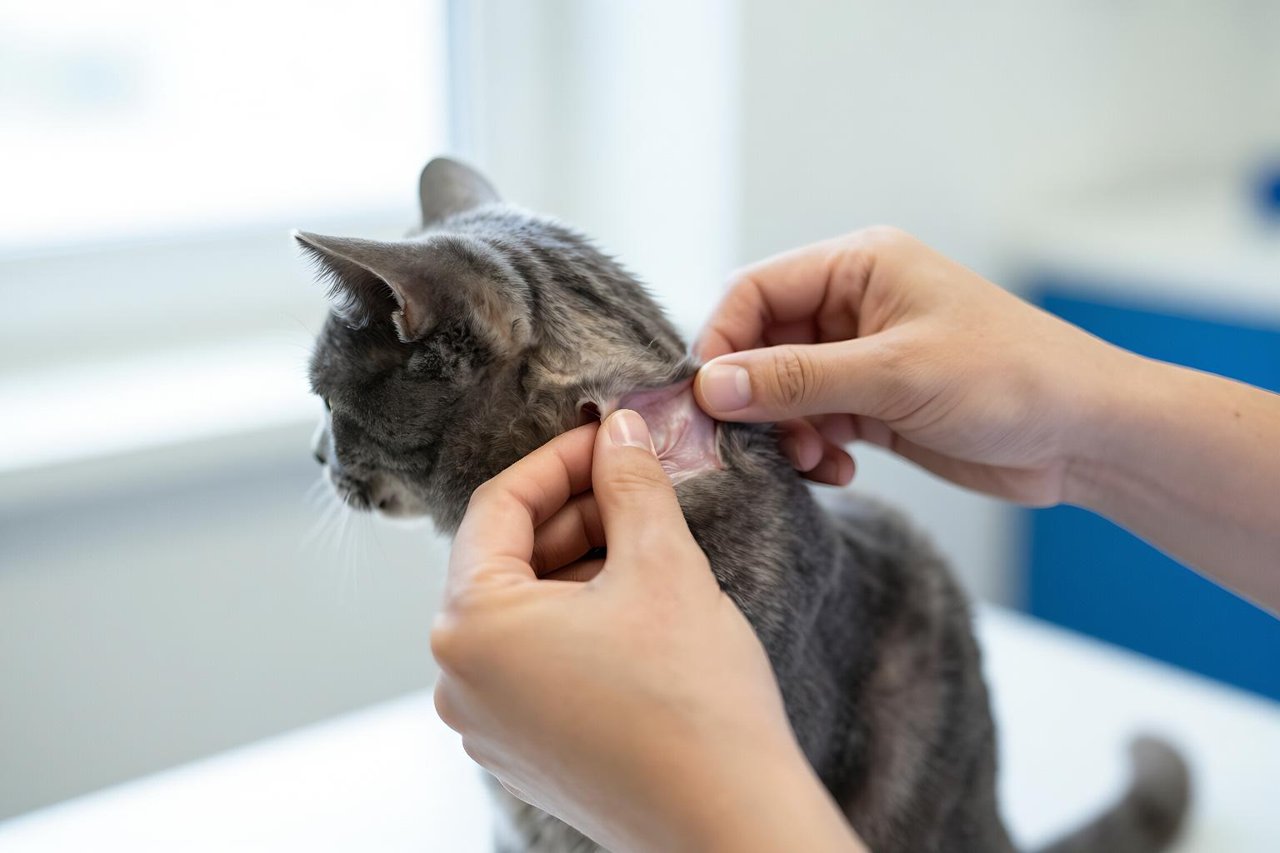
Gently pinch a fold of skin between the shoulder blades, lift it about a centimetre, and let go. On a well-hydrated cat the skin snaps back into place almost instantly, like an elastic band. On a dehydrated cat it stays tented for a second or two and settles slowly.
Two caveats. Thin, elderly cats and cats who have lost weight naturally have less elastic skin, so the tent can linger even when hydration is fine. And don’t test on the scruff of the neck, which is tougher and gives false readings. Compare against your cat’s own normal rather than a chart.
Gums and capillary refill
Lift the lip at the side of the mouth. Healthy gums are salmon pink and slick, as wet as the inside of your cheek. Dehydrated gums look dull and feel tacky or sticky to the touch, and the colour is often a shade paler than usual.
Then press a fingertip firmly on the gum until it blanches white and release. The pink should flood back in under two seconds. Anything slower suggests the circulation is struggling and needs a vet’s opinion that day.
Eyes and the third eyelid
Sunken, dull-looking eyes are a late sign, and a worrying one. In some cats the third eyelid, a pale membrane normally tucked into the inner corner, creeps across the eye when they’re significantly dehydrated or unwell. If you can see it at rest, phone your vet.
Weight, the most underrated tool
Water is heavy. Weigh your cat weekly on a kitchen scale, or hold them on bathroom scales and subtract your own weight. A drop of around 100 grams over two or three days, with no dieting involved, is a real fluid loss worth investigating.
The litter box is your best dashboard
Most owners never look closely at the tray. You should, because urine volume and colour tell you more about hydration than almost anything else.
- Fewer clumps. A cat who normally produces two or three decent clumps a day and is suddenly making one small one is holding onto water.
- Dark, strong-smelling urine. Concentrated urine looks amber rather than pale yellow and smells sharply of ammonia.
- No urine for 12 hours or more. This is an emergency, especially in male cats. A blocked urethra can turn fatal within 24 to 36 hours.
- Dry, hard stools. The colon reclaims water when the body is short, so constipation often travels with dehydration.
Behaviour changes that get written off as ‘just tired’
Cats are masters at masking discomfort, and dehydration makes them flat rather than dramatic. Watch for a cat who stops grooming properly, since grooming takes saliva and energy. A cat who picks at food and walks away. A cat who hides under the bed through the afternoon when they’re usually on the windowsill by two o’clock.
Some specific things to note:
- Sticky, stringy saliva instead of a clean, wet mouth
- Panting, which is unusual in cats and almost always significant
- Reluctance to jump onto furniture they normally manage
- Sunken flanks or a spine that suddenly feels sharper under your hand
A dry nose means nothing either way, despite the old myth. Noses change with temperature and sleep, not hydration.
How much water should a cat actually be drinking?
A rough guide is 50 to 60 millilitres of water per kilogram of body weight each day. For a 4.5 kg cat that’s around 220 to 270 ml, or roughly a cup. Cats on wet food get a large share of that from their meals, which is one reason kibble-only cats so often hover on the edge of dehydration without ever looking obviously ill.
To get a real number, fill the bowl with a measured amount each morning and measure what’s left 24 hours later. Do it for a week. You’ll learn your cat’s baseline and you’ll notice a change in intake long before the physical signs appear.
When to call the vet instead of watching
Try rehydrating at home with wet food and fresh water, but get professional help if any of the following apply: vomiting or diarrhoea more than twice in a day, refusal of both food and water for 24 hours, a skin tent that stays up, gums that are tacky or slow to pink up, panting, weakness, or no urine in the tray for half a day. Very young kittens, seniors and cats with kidney disease, diabetes or hyperthyroidism dehydrate faster than healthy adults and should be seen sooner rather than later.
Coaxing a reluctant cat to drink more
Once you know what to look for, prevention becomes practical. Cats are fussy about water in ways that have nothing to do with thirst.
- Place several wide, shallow ceramic bowls around the house, away from the food bowl and away from litter.
- Try a running water fountain. Many cats drink far more from moving water.
- Add a tablespoon of warm water to wet food, or switch one meal a day from kibble to canned.
- Drop an ice cube in the bowl on hot days, or float a bit of tuna water in it as a lure.
- Keep bowls scrupulously clean and top them up twice a day; stale water gets refused.
Seniors and cats with chronic illness need a different level of vigilance
Healthy adult cats can usually be judged by the checks above. Cats over about ten, and any cat with a known kidney or thyroid problem, are a different story. Their thirst can be exaggerated by disease rather than fixed by it, so a cat who suddenly starts drinking heavily is as much a red flag as one who stops. Weigh them weekly, keep a note of urine clumps, and ask your vet to run bloodwork at least once a year. Chronic dehydration is one of the main drivers of kidney decline in older cats, and it is far easier to head off in the early stages than to reverse once the damage is done.


