
Table of Contents
Ask a room of dog owners to name the most intelligent dog breeds and you will get a dozen answers, usually the breed currently asleep on someone’s feet. Border Collie people speak first and loudest. Poodle owners point to the obedience trial results. Somebody with a rescued Beagle mutters that the whole ranking business is nonsense. All three of them have a case.
Dog intelligence is not one score on one test. It is a bundle of skills that different breeds were shaped for over hundreds of years, and how you measure it changes who wins. Still, there are breeds that consistently learn faster, solve problems sooner and read human cues more accurately than the rest. Here is what the research says, what it misses, and what living with one of these dogs is genuinely like.
What Do We Actually Mean by Dog Intelligence?
The ranking most people quote comes from Stanley Coren, a psychologist at the University of British Columbia, who surveyed roughly 200 obedience judges for his 1994 book The Intelligence of Dogs. Judges rated breeds on how quickly a dog learns a command and how reliably it obeys on the first ask. The top dogs were learning new tasks in fewer than five repetitions and responding correctly about 95 percent of the time. The bottom of the list needed 80-plus repetitions.
That is a useful measure, but it is really a measure of biddability: how much a dog cares about doing what a human asks. Coren himself split intelligence into three types, and the distinction matters.

Instinctive intelligence
What the breed was built to do. A Border Collie gathering sheep, a Labrador retrieving from cold water, a Terrier clearing rats from a barn. Nobody trains most of this. It arrives pre-installed.
Adaptive intelligence
Problem-solving and learning from experience. Does the dog figure out that the door handle works, that the bin lid lifts, that whining at 6 a.m. produces a human? This is the intelligence that makes a dog easy or maddening to live with.
Working and obedience intelligence
The trainability score that produces the famous rankings. Useful, but narrow. A dog can be brilliant at reading a room and hopeless at holding a sit-stay.
Compared with the wider animal kingdom, dogs are doing something quite rare in their ability to follow a human pointing gesture. It is worth seeing how they stack up against other species, which you can do in this look at the most intelligent animals in the world.
The Breeds That Top the Rankings
Border Collie
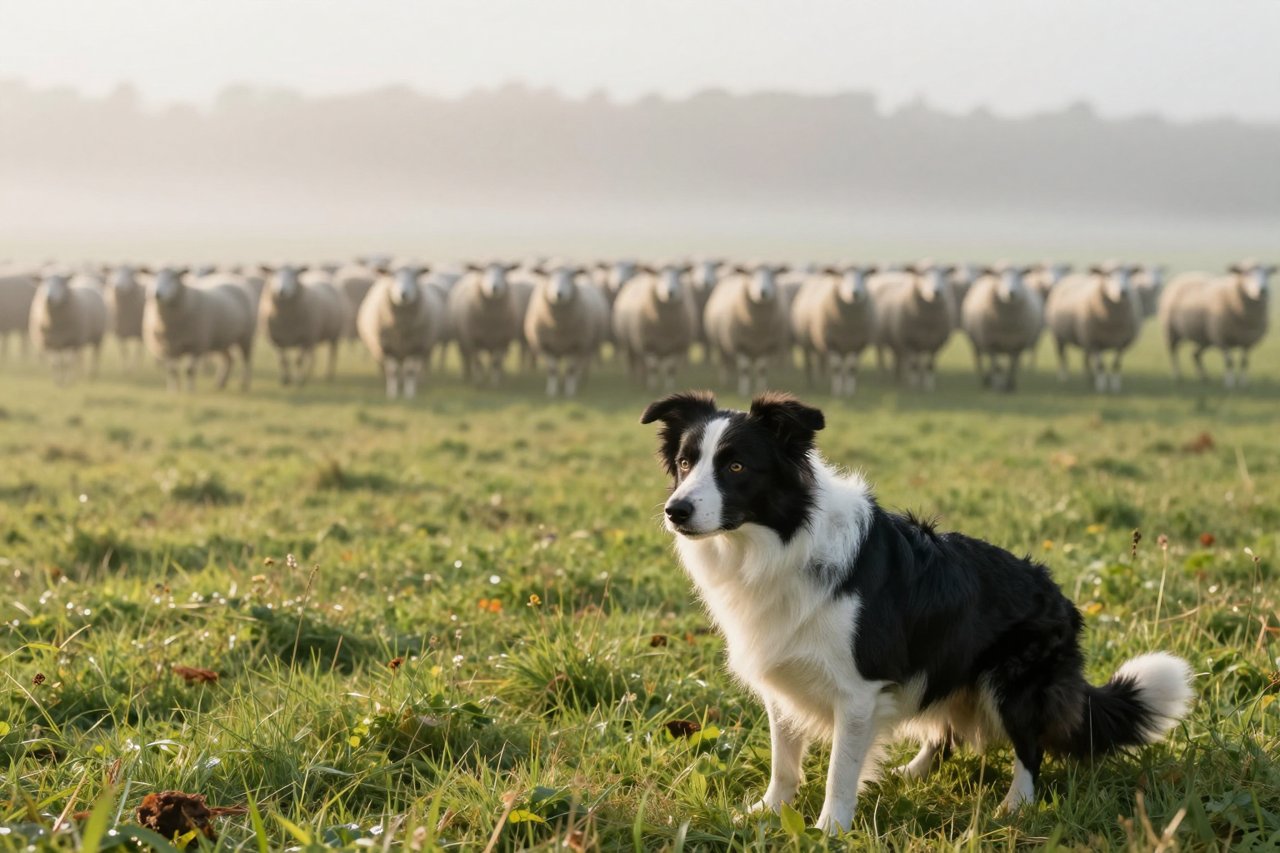
Number one on nearly every list, and the gap between first and second is real. Border Collies work stock at distance using a crouched stare called “the eye,” responding to whistles from hundreds of metres away. The most famous of them, Chaser, learned the names of 1,022 toys in a study published in 2011, and could pick the correct one from a pile by name. The catch: a Border Collie with no sheep, no agility course and no job will invent work. Herding toddlers, chasing bicycles, staring at the fridge. Give them two hours of real activity a day or expect creative consequences.
Poodle
Second place, and frequently underestimated because people see a groomed Toy and assume decoration. Poodles were bred as water retrievers; the word comes from the German Pudel, meaning to splash. They are among the most successful breeds in competitive obedience and agility. They also shed very little and produce less dander than most breeds, though the allergy claims around them are often oversold. This breakdown of hypoallergenic dogs and what actually causes reactions is a more honest starting point than any breeder’s brochure.
German Shepherd
Third on Coren’s list, and one of the most versatile working dogs alive. Police, military, search and rescue, guide work and detection all lean on the same traits: fast learning, strong drive, and a genuine desire to be near their person. A German Shepherd without mental work becomes anxious and protective of everything. Ask any trainer and they will tell you the same thing: this breed needs a task more than it needs a bigger garden. If protection is part of why you want one, read up on guard dog breeds for home protection and family safety before you commit.
Golden Retriever
Fourth place and almost unfairly easy to train. Goldens were developed in 19th-century Scotland for retrieving shot game from water and rough ground, which required a soft mouth, a steady temperament and the willingness to work alongside a person for hours. They are the breed most likely to learn a new cue in a single session and then offer it to you unprompted for the rest of the week. The trade-off is that they are social to the point of neediness and will chew through a sofa if left alone too long. Families considering one should look at these large dog breeds that genuinely fit family life.
Doberman Pinscher
Fifth place, and one of the few breeds created almost entirely by one person. Karl Friedrich Louis Dobermann, a German tax collector who worked in dangerous areas in the 1860s, bred a dog that was fast, fearless and loyal. The result is a thinker. Dobermans anticipate. They learn household routines and start acting on them before you ask. Own one and you get a partner, plus a dog that will test every boundary you fail to enforce consistently.
Shetland Sheepdog
Sixth, and the surprise of the top ten for anyone who assumes small means simple. Shelties are miniature herding dogs from the Shetland Islands, bred to work tough terrain in bad weather. They learn fast, excel at agility, and bark at anything that moves because their job was to notice things. Renters and apartment dwellers should weigh that noise level honestly.
The Breeds That Get Undersold
Papillon
Eighth on the list, weighing around 5 pounds, and regularly beating dogs ten times its size in agility. Papillons were bred as companions and are exceptionally attentive to human facial expressions. Nobody expects the butterfly-eared toy to outscore a Rottweiler on trainability. It does.
Hounds and terriers
A Bloodhound that ignores your recall is not stupid. It is following a scent trail several days old across a field while you shout into the wind. Beagles and Basset Hounds were bred to work independently of a handler, and independent work looks like stubbornness in an obedience ring. Terriers are the same story in a smaller, faster package: bred to solve problems alone, with opinionated results.
Adaptive intelligence is where these dogs shine. A Terrier that learns to open a gate, hook a paw under a bin lid and time its raids to your shower schedule is not failing a test. It is passing a harder one.
What a Highly Intelligent Dog Actually Costs You
Smart breeds are not low-maintenance breeds with better manners. They are more work, delivered with more charm.
- They need a job. Scent games, trick training, agility, herding lessons or structured fetch. Twenty minutes of brain work tires a Border Collie more than an hour of walking.
- They learn your habits as fast as their commands. That includes the rules you only enforce on weekdays.
- They get bored into destruction. Chewed skirting boards, dug-up beds and escaped gardens are often intelligence with nowhere to go.
- They need early socialization. The window closes somewhere around 16 weeks. Miss it and you spend years fixing what a few weeks of careful exposure would have prevented.
- They will out-think a first-time owner. Two short training sessions a day, every day, beats one long weekend class.
How to Pick a Brain That Fits Your Week
Before you fall for the number-one spot on a list, be honest about the hours you actually have. A German Shepherd or Border Collie thrives with an owner who wants a hobby, a training club and a reason to be outdoors in February. A Golden Retriever or Sheltie suits someone who wants a bright, responsive companion without a competition schedule. A Papillon will happily live in a flat provided the mental stimulation keeps coming.
If you are still deciding between a dog and something else entirely, this comparison of the most popular pets and the lifestyles they suit is a useful gut check. But if you have settled on a dog, match the brain to your calendar rather than your ego.
The dogs that top the intelligence rankings learn quickly, which cuts both ways. A dog that masters a new trick in five repetitions will also learn where you keep the treats, which fence panel is loose, and precisely how long you can be ignored before you give up and go back inside. The most intelligent dog breeds are not the easiest dogs to own. They are the ones that give the most back to an owner willing to keep them thinking.


