
Table of Contents
There’s a particular kind of defeat in watching a fresh hair tumbleweed roll across the kitchen floor ten minutes after you vacuumed. If your dog leaves a grey shadow on the sofa every time they stand up, you’re probably past the point of lint rollers and ready to fix the actual problem.
The good news is that most heavy shedding responds to three things you can change this week: brushing technique, diet, and how dry your house is. Here’s how to stop excessive dog shedding without shaving your dog to the skin or buying every gadget on the pet aisle.
Start by working out whether it’s shedding at all
Some breeds shed constantly and lightly (Labradors, Beagles, most short-coated mixes). Others dump their entire undercoat twice a year in a two to three week explosion: Huskies, German Shepherds, Akitas, Malamutes. If you own a double-coated breed and it’s April, the avalanche on your floor is normal and self-limiting.
What isn’t normal:

- Bald patches or thinning along the flanks, tail or ears
- Skin that’s red, scabby, greasy or smells sour
- Constant scratching, licking or chewing at the coat
- Hair that pulls out in clumps when you stroke your dog’s back
- Shedding that suddenly triples and stays that way for months
Any of those point to a medical cause, and no brush in the world will fix a thyroid problem. We’ll get to that.
Brush the right way, with the right tool
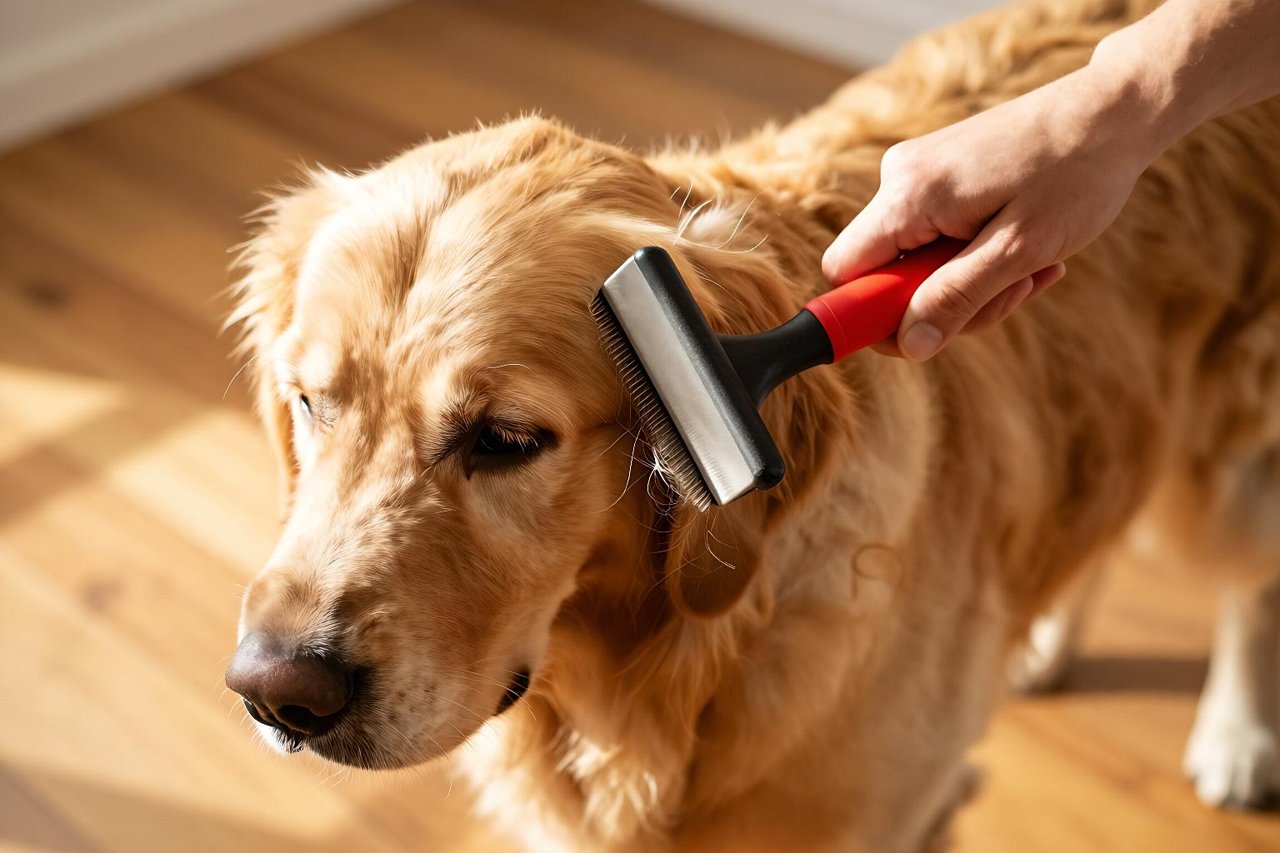
Most people brush their dog’s back and call it done. The back is the easiest place to reach and the least productive. Undercoat lives on the chest, behind the front legs, around the ruff and along the flanks, and that’s where the loose hair actually sits.
- Double coats: an undercoat rake. Go easy with deshedding blades on a dog in full coat, because they can cut through guard hairs and leave the coat patchy.
- Short, smooth coats: a rubber curry brush in circles, then a stiff bristle brush to collect what lifts.
- Curly or wool coats (Poodles, Doodles): a slicker brush plus a metal comb, worked line by line.
- Long silky coats (Yorkies, Shih Tzus): pin brush first, then comb, daily behind the ears where mats start.
Work in sections and brush with the grain, then against it. Two five-minute sessions beat one twenty-minute marathon, mainly because your dog will actually stand still for it. If your double-coated dog has never had a proper deshed, expect to fill a carrier bag in the first week.
Bathe less often, not more
Counterintuitive but true: drying out the skin makes shedding worse. Shampoo strips the natural oils that help keep hair in the follicle, and a flaky, dry coat lets go of hair faster. Aim for one bath every four to six weeks with a gentle oatmeal or moisturising shampoo, and rinse thoroughly. Leftover soap residue itches, and an itchy dog scratches hair out in handfuls.
Between baths, a warm-water rinse or a wipe down with a damp microfibre cloth lifts loose hair without touching the skin’s oil layer. If your dog swims in the sea or rolls in mud three times a week, rinse the salt and dirt off with water alone and save the shampoo for the monthly bath.
Feed the coat from the inside
Hair is roughly 95% protein. A dog eating a food built mostly on cereal filler will grow a dull coat that sheds readily. Check the guaranteed analysis on your bag and aim for something in the 25 to 30% protein range for a healthy adult dog.
Fats matter just as much. Omega-3 fatty acids, especially EPA and DHA, calm skin inflammation and support the hair growth cycle. A reasonable maintenance dose sits around 300mg of combined EPA and DHA per 10kg of body weight per day, but fish oil capsules vary wildly in concentration, so read up on how to add omega-3 oils to your dog’s diet safely before you start squeezing capsules over the bowl. If your dog is itchy as well as sheddy, the benefits for skin and coat health from a properly balanced fat intake usually show up in six to eight weeks, not six days.
Manage the house, not just the dog
You can’t out-brush a house. Loose hair gets into soft furnishings, then back onto your clothes. Run a vacuum with a HEPA filter twice a week, and wash dog beds and blankets weekly on a hot cycle rather than shaking them out in the garden. Keep indoor humidity between 40 and 50% in winter, because central heating dries the air and dried-out skin sheds more. A cheap hygrometer will tell you where you stand.
Leather and tightly woven fabrics hold far less hair than velour or bouclé. If you’re buying a sofa anyway, that’s a free win.
Stress sheds hair too
Cortisol pushes dogs into a shedding phase, which is why so many leave a handful of fur on the vet’s exam table. Fireworks, a house move, a new baby, kennel stays and separation anxiety can all trigger a heavy moult that starts two to three months after the event. If your dog is a nervous type, giving them something to chew during stressful moments does more for the coat than another grooming tool, and the role of chews in managing dog anxiety is worth understanding before you buy another brush.
The medical causes worth ruling out
If six to eight weeks of proper grooming and better food hasn’t changed anything, book a vet appointment and ask for bloodwork. The usual suspects are hypothyroidism, Cushing’s disease, seasonal or food allergies, fleas and mites, yeast overgrowth and ringworm. Each one has a specific treatment, and each one causes hair loss that looks like shedding but isn’t.
Flea allergy dermatitis is the sneaky one. A single flea bite can set off weeks of scratching on a sensitive dog, and you may never actually see a flea. Ask your vet about a spot-on or tablet trial even if you haven’t spotted anything moving.
A ten-minute routine that actually works
Daily, in this order: five minutes with the undercoat rake over the chest, flanks and ruff; two minutes with a curry brush while you watch TV; three minutes with the vacuum around the sofa and the dog’s bed. That’s it. Ten minutes.
Weekly: hot-wash the bedding, wipe down the hard floors, and check the brush. Monthly: one bath, and a quick weigh-in, since sudden weight gain plus a dull coat is a classic early sign of thyroid trouble.
Keep a rough note of what comes off the brush each week. If it fills up for two or three weeks and then drops off, you’ve caught a seasonal blowout and won. If the brush never empties, or your dog’s skin looks worse rather than better, that’s your cue to stop buying tools and get a professional opinion instead.


