
Table of Contents
Searching for foods for diabetes usually delivers the same endless list: leafy greens, berries, quinoa, salmon. All true, but none of it tells you what a realistic meal actually looks like. That’s where this guide differs. Instead of handing you another celebrity-approved diet plan, we’re going to walk through a simple, visual method you can use starting tonight. No calorie counting, no measuring cups for every grain, just a plate, some protein, and a few smart swaps.
If you’re newly diagnosed or trying to get back on track, this step-by-step approach takes the guesswork out of dinner. You’ll learn the plate method, how to pick the protein and carbs that keep your blood sugar steady, and see a full sample day. At the end, there’s a challenge that takes less than an hour to implement.
Step 1: Build Your Plate Using the Half-Quarter-Quarter Rule
The easiest way to eat for better blood sugar is to stop obsessing over grams and start using your actual dinner plate as a guide. Separate your plate mentally into three zones: half, quarter, quarter.
The large half is for non-starchy vegetables. Grilled zucchini, roasted bell peppers, a mountain of sautéed spinach, tomato salad. These add bulk and fiber with very little impact on glucose.

One quarter is for lean protein. Chicken breast, turkey, fish, tofu, eggs, or pulses like lentils. Protein slows digestion and keeps you full, which prevents the elevator-drop hunger that leads to snacking at 10 p.m.
The final quarter is for starchy carbs. That means brown rice, wholewheat pasta, sweet potato, quinoa, or a few slices of seeded bread depending on your tolerance. This is where your blood sugar response is mostly determined, so it’s the part you’ll want to fine-tune over time.
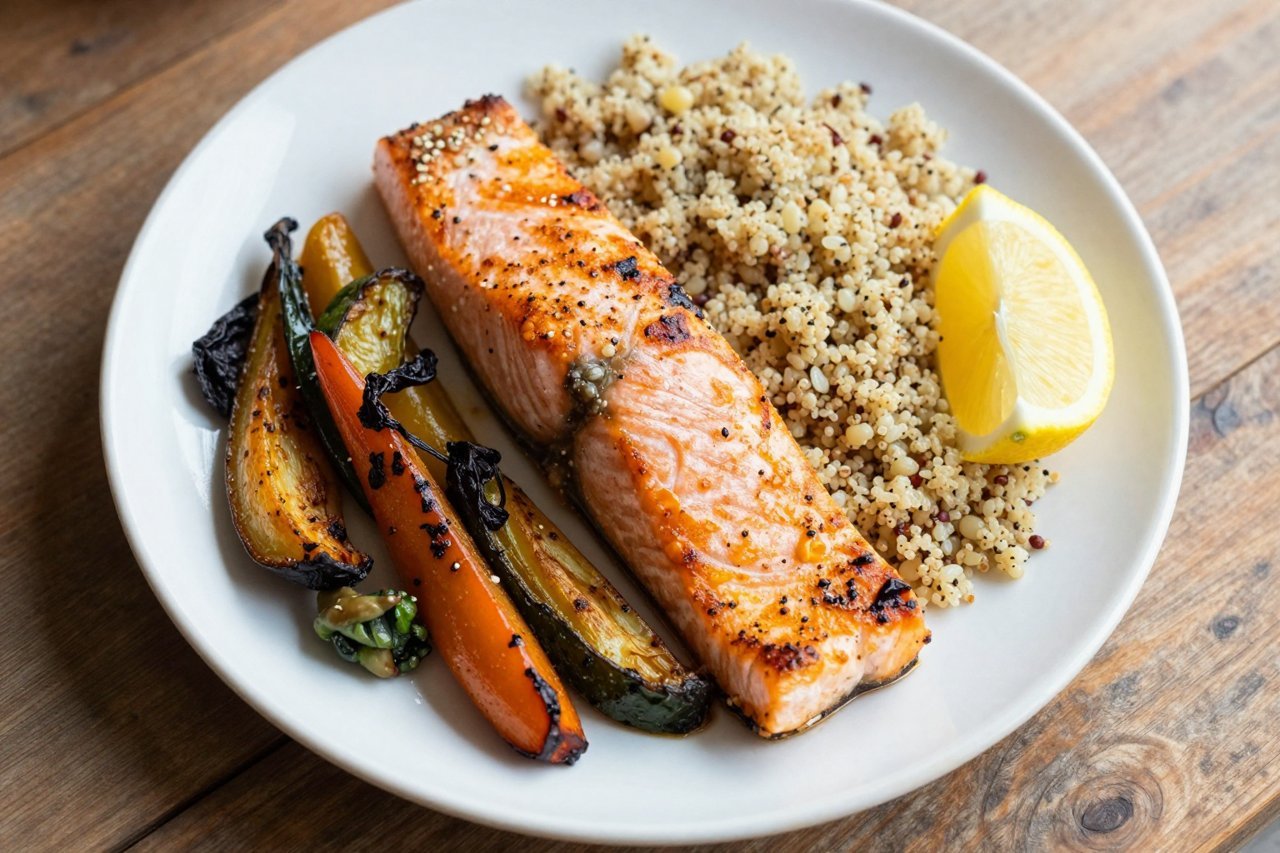
Try this tonight: get a standard dinner plate, fill half with a roasted vegetable tray, one quarter with a piece of baked fish, and the last quarter with a fist-sized portion of brown rice. That’s it. For someone with type 2 diabetes, this single meal typically produces a much gentler glucose curve than a meal where the rice takes up a third of the plate.
If you want a broader overview of the best individual ingredients to rotate through, our complete foods for diabetes guide breaks down the top choices by category.
Step 2: Choose a Protein That Pulls Its Weight
Protein doesn’t just sit there in your stomach. It triggers the release of glucagon-like peptide-1, a hormone that prompts your pancreas to release insulin. That’s why a meal with enough protein usually means a smaller spike in blood sugar afterward.
But not all protein is created equal. A plate of bacon or pepperoni will introduce heavy saturated fat and sodium, which doesn’t do your insulin resistance any favours. Instead, aim for these:
- Fish like sardines, mackerel, or salmon twice a week. The omega-3s reduce inflammation and support heart health.
- Skinless chicken or turkey, about the size of your palm.
- Beans and lentils. A cup of cooked lentils gives you 18 grams of protein and 15 grams of fiber, making it one of the most efficient foods for glucose control.
- Greek yogurt or cottage cheese for breakfast or snacks.
- Eggs, boiled or scrambled with vegetables.
Because diabetes makes you two to four times more likely to develop heart disease, your protein choices should also protect your cardiovascular system. Our real-world list of foods for heart health shares many of the same picks, so you can plan your shopping list around both goals at once.
Step 3: Pick Carbs That Earn Their Place
The quarter of your plate reserved for carbs is where the real magic happens. Swap refined white rice for barley, regular pasta for lentil pasta, and bread for rye or whole grain. The key is fiber. Fiber coats the carbohydrates in a kind of gel, slowing how quickly they break down into sugar.
For example, a slice of white bread spikes blood sugar nearly as fast as a teaspoon of table sugar. In contrast, a slice of 100% whole grain bread with visible seeds might keep your glucose curve flat for hours.
If you’re not sure how to eat more of the right carbs, start with your breakfast. Swap sugary cereal for a bowl of steel-cut oats with berries and a tablespoon of ground flaxseed. The oats release energy slowly, and the flaxseed adds another 4 grams of fiber.
Still struggling with the fiber target? Our practical guide to eating more fiber without bloat explains the right way to increase your intake gradually.
Step 4: Add Fats That Lower Inflammation
Fat gets a bad name, but the right fats improve insulin sensitivity. A handful of almonds, a drizzle of olive oil over roasted vegetables, or a mashed avocado spread on your toast all help delay stomach emptying, which blunts the glucose spike from the carbs around them.
One easy habit: make your own salad dressing. Whisk two parts extra-virgin olive oil with one part apple cider vinegar, a pinch of salt, and a little Dijon mustard. Use it instead of store-bought dressings, which often contain added sugar and soybean oil.
Olive oil, walnuts, and fatty fish are also naturally anti-inflammatory. Since chronic low-grade inflammation directly interferes with insulin signaling, eating more of these can make your own insulin work longer and harder. The anti-inflammatory foods guide highlights exactly which fats, fruits, and spices to stock up on.
Step 5: See the Whole Day in Action
Let’s pull this together into a realistic day of foods for diabetes that stays within the half-quarter-quarter framework while still tasting like actual food.
Breakfast
Scrambled eggs made with two eggs and a small handful of spinach, served with a slice of sourdough or a small whole grain tortilla. Add a side of blueberries. Drink water or black coffee.
Lunch
Buddha bowl style: a base of leftover roasted sweet potato cubes, chunks of grilled chicken, cherry tomatoes, cucumber, tzatziki-style yogurt, and a big bed of lettuce. Sprinkle with pumpkin seeds for extra crunch.
Dinner
Baked salmon with herbs, a generous portion of steamed broccoli and green beans, and half a cup of cooked quinoa. Squeeze lemon over everything.
Snacks
Here are a few emergency snacks that have saved me on busy afternoons:
- Two hard-boiled eggs with flaky salt
- Hummus with carrot sticks and celery
- A small apple with a small handful of walnuts
- 1/2 cup of plain Greek yogurt with a few raspberries
Notice how none of these require a calculator. Each snack combines a little carbohydrate with protein or fat, which is exactly the pattern that prevents the 4 p.m. sugar crash.
Your Immediate Goal: Start With Two Dinners
You don’t have to reinvent your entire kitchen in one weekend. Set a modest goal: this week, make two dinners using the half-quarter-quarter template. Take a photo before you eat. After a few days, you’ll start to see patterns in how your body reacts to certain portion sizes and foods.
Keep a bottle of olive oil on the counter. Buy a bag of frozen vegetables so a half-plate of greens is never out of reach. Grill an extra chicken breast tonight and turn it into tomorrow’s lunch salad. Small actions like these add up to real changes in your blood sugar, and they’re all reproducible with foods you already like.
The most effective foods for diabetes aren’t exotic or expensive. They’re the everyday ingredients you can combine on a single plate, in the right proportions, week after week. Start with one plate tonight and let the habit build itself.


