
Table of Contents
A ripe papaya is about 88% water. That one detail explains a lot: why it feels so light after a heavy meal, why a brimming bowl of it adds barely 60 calories to your day, and why it’s easy to dismiss as a fruit with not much going on. The remaining 12% is where the interesting work happens. The nutritional value of papaya is concentrated in vitamin C, carotenoids, folate and an enzyme that most fruits simply don’t have.
What 100 Grams of Papaya Actually Contains
A hundred grams of ripe papaya is roughly two thick slices, or about a third of a small fruit. Here’s what those slices bring to the table, based on standard food composition data:
- Calories: 43 kcal, with 10.8 g of carbohydrate (7.8 g of it sugars)
- Vitamin C: 60.9 mg, or roughly two-thirds of an adult’s daily requirement
- Vitamin A (as carotenoids): around 47 µg RAE, plus 276 µg of beta-carotene and 1,828 µg of lycopene in red-fleshed varieties
- Folate: 37 µg
- Potassium: 182 mg, with smaller amounts of magnesium (21 mg) and calcium (20 mg)
- Fibre: 1.7 g, mostly soluble
Scale that up to a realistic serving and the picture shifts. Half a medium papaya, about 300 g of flesh, lands near 130 calories with close to 180 mg of vitamin C. That’s double the daily requirement in a single sitting, without a supplement in sight.
Vitamin C: The Number Most People Miss
Papaya is quietly one of the strongest everyday sources of ascorbic acid. Gram for gram, it edges out the orange, which sits around 53 mg per 100 g. Guava still beats both, but guava isn’t sitting in most fruit bowls on a Tuesday.

Vitamin C matters for more than immune marketing. It’s a cofactor in collagen synthesis, which is why wound healing and skin elasticity depend on steady intake, and it regenerates vitamin E in the body. It also does something specific and useful in this fruit: it protects the carotenoids in papaya from oxidising before you eat them.
How much survives the fridge
Vitamin C degrades with heat, light and time. A papaya left on the counter for four days will hold noticeably less than one eaten at peak ripeness. Cut fruit stored in a sealed container in the fridge loses less than a bowl left open on the table, so portion and cover what you don’t finish.
Papain, the Enzyme Behind the ‘Digestive Fruit’ Reputation
Papain is a proteolytic enzyme, meaning it breaks proteins apart. It’s concentrated in the milky latex of unripe fruit and in the seeds, and it’s the reason papaya has been used for centuries as a meat tenderiser. Wrap a tough cut of beef in green papaya leaves overnight and the fibres loosen measurably.
Does that translate to better digestion in humans? Partly. Papain stays active in the stomach’s acidic environment longer than many plant enzymes, and it does help break down protein there. Traditional medicine across Southeast Asia, the Pacific and parts of Africa leans on ripe papaya after meals for bloating and heaviness. The clinical evidence is thinner than the folk reputation, but it isn’t nothing, and the fruit is gentle enough that there’s little downside to testing it on yourself after a heavy dinner.
Carotenoids: Beta-Carotene, Lycopene and Beta-Cryptoxanthin
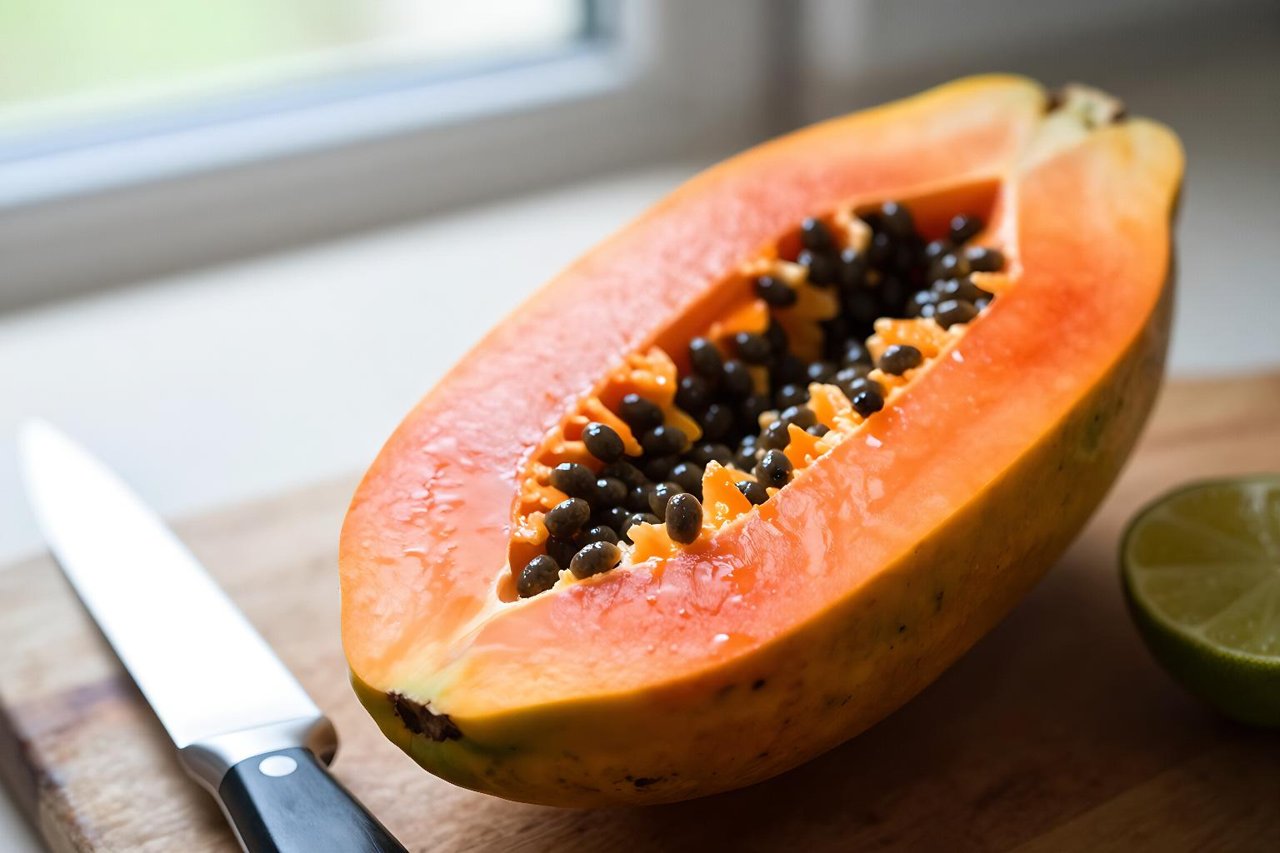
Slicing into a papaya is basically watching carotenoid synthesis happen. Green flesh turning orange or salmon-pink is the visible sign of those pigments accumulating. Red-fleshed cultivars like Maradol and Sunrise carry lycopene levels that rival a tomato, while the yellow-fleshed types lean more on beta-cryptoxanthin, a carotenoid linked in population studies with lower inflammatory markers and better lung function.
These compounds are fat-soluble, which is a practical instruction rather than a chemistry footnote. A squeeze of lime and a spoon of yoghurt, a handful of chopped nuts scattered over the top, or papaya alongside avocado on toast all improve absorption. Eating it alone on an empty stomach is fine, but you’re leaving some of the benefit on the plate.
Fibre, Folate and Potassium
The fibre figure looks unremarkable at 1.7 g per 100 g next to a bowl of lentils, but a real serving gets you about 5 g, and papaya’s fibre is largely soluble pectin, the kind that slows gastric emptying and feeds gut bacteria. It’s also soft enough to be tolerable for people who find raw vegetables abrasive.
Folate is the quiet achiever here. A 300 g serving supplies roughly 110 µg, over a quarter of the adult daily target, and folate is especially relevant in the months before and during early pregnancy. Potassium at 182 mg per 100 g won’t compete with a banana, but it contributes to the electrolyte balance that keeps blood pressure in check, and it does so with almost no sodium.
The Parts Most People Throw Away
Papaya seeds are edible, peppery and slightly bitter, closer to mustard or nasturtium than to anything fruity. They contain benzyl isothiocyanate and papain-like enzymes, and traditional practice in several countries uses them for parasite management. If you’re curious about putting more seeds to work in your cooking, there’s a useful roundup of fruit seeds worth eating instead of binning that covers the basics. Start with a teaspoon of fresh seeds crushed over a salad; they’re assertive.
The skin is technically edible but usually tough and unpleasantly bitter when ripe. Green papaya skin, however, is regularly shredded into Thai som tam, so nothing needs to go to waste if you’re cooking with unripe fruit.
Green Papaya and Ripe Papaya Are Different Foods
Treat them as two separate ingredients. Green papaya is starchy, low in sugar and much higher in papain, which is why it works in savoury salads and curries rather than desserts. As the fruit ripens, starch converts to sugar, water content rises and the carotenoid pigments build. Vitamin C generally holds steady or climbs slightly through ripening, while the enzyme activity falls.
If you’re watching blood sugar, this progression matters. Ripe papaya has a moderate glycemic index in the low 60s, but the glycemic load of a typical portion stays modest because a serving carries under 10 g of carbohydrate. Green papaya sits lower still.
Low Calories, High Volume, and Where That Matters
At 43 kcal per 100 g, papaya is squarely in the category of foods you can eat a lot of without thinking hard about it. That’s useful if you’re managing weight, and it’s exactly the wrong choice if you’re trying to add mass. If the latter is your goal, there are high-calorie fruits that help with weight gain far better suited to the job, and papaya plays a supporting role at best. Knowing which fruit does which job is most of the battle.
Buying, Ripening and Storing It Properly
Papaya is usually picked hard and green and ripens off the tree, so supermarket fruit often needs three to five days on the counter. Look for skin that’s turning from green to yellow-orange, yields slightly to a gentle thumb press near the stem end, and carries a faintly sweet smell at the blossom end. A perfectly smooth, rock-hard fruit will ripen, but rarely to the same sweetness as one that started to colour naturally.
Once ripe, move it to the fridge to slow the decline. Cut papaya keeps three to four days in a sealed container; chunks freeze well for smoothies, though the texture collapses on thawing. If you want a broader set of tricks for stretching fruit past its prime, these tips on making produce last longer cover ethylene traps, paper-bag ripening and the containers that actually work.
Who Might Want to Be Careful
Papaya is not a fruit that causes trouble often, but a few groups should pay attention. People with a latex allergy can cross-react to papain and should approach the fruit cautiously, since the proteins are structurally similar. Unripe papaya and its seeds have traditionally been avoided during pregnancy because the latex contains enzyme compounds that can stimulate uterine contractions in high doses; ripe papaya in normal amounts is considered fine, but the caution around the green fruit is widely observed and worth respecting. Anyone on warfarin should note the modest vitamin K content, though at 2.6 µg per 100 g it’s unlikely to shift an INR on its own.
Getting More of It Into Your Week
Papaya rewards minimal intervention. A squeeze of lime and a pinch of salt is the standard across much of the world for good reason, since the acid sharpens the sweetness and the salt suppresses the slightly musky note that puts some people off.
- Cube it into a green salad with mint and toasted peanuts
- Blend with yoghurt, ginger and a little honey for a breakfast smoothie
- Shred green papaya with carrot and dress it with lime, fish sauce and chilli
- Chop it into salsa with red onion and coriander for grilled fish
- Freeze chunks and blitz them alone for a one-ingredient soft-serve
One consistent observation in nutrition research is that people who eat fruit regularly tend to hit their micronutrient targets without much effort, simply because fruit crowds out less useful snacks. Papaya fits that pattern neatly: cheap in most tropical markets, mild enough for children, soft enough for older adults, and dense enough in vitamin C and carotenoids to do real work. It’s not a superfood, and nothing about it is miraculous. It’s a well-built everyday fruit that happens to carry an enzyme, a serious dose of vitamin C and a carotenoid profile most people never think about. Building a handful of these broader habits around better health and a longer life expectancy is where the small, repeatable choices pay off.


