
Table of Contents
A tenant sues her former landlord over a $4,200 security deposit. He insists the apartment was trashed. She has dated move-in photos, a signed move-out checklist, and a text from him that reads, “the carpet was fine, honestly.” There is no video, no third-party witness, no dramatic courtroom reveal. She wins anyway.
That result puzzles people until they understand one phrase: preponderance of the evidence. It is the standard that governs most civil courtrooms in the United States and much of the common-law world, and it quietly decides billions of dollars in disputes every year. It also sounds far grander than it actually is.
What “Preponderance of the Evidence” Actually Means
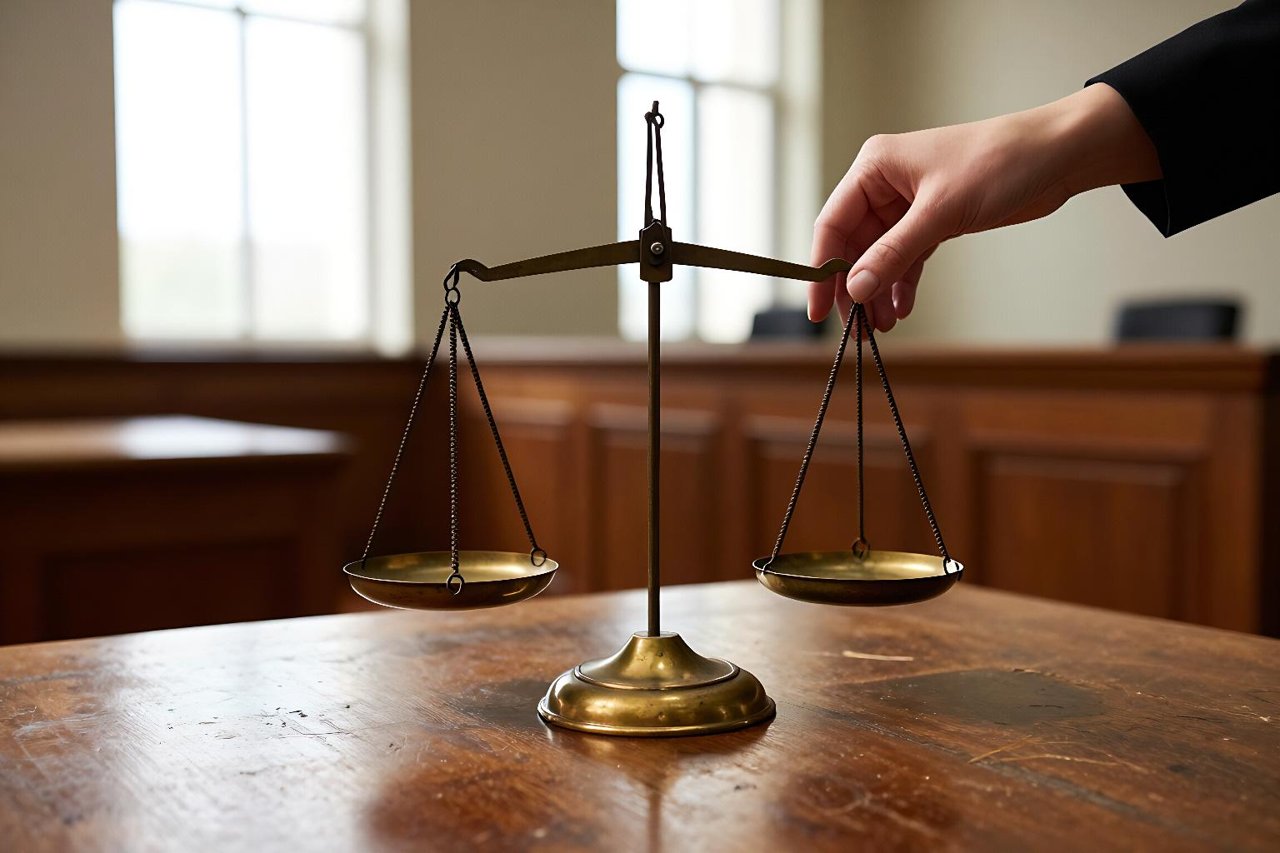
Preponderance of the evidence means the plaintiff’s version of events is more likely true than not. Not “probably.” Not “clearly.” Just more likely. Courts frequently describe the threshold as 50.1 percent against 49.9 percent, or as the side of the scale that tips lower even by a hair.
You will hear judges paraphrase it in several ways: “the greater weight of the evidence,” “more convincing than the evidence offered in opposition,” or “such evidence as, when weighed with that opposed to it, has more convincing force.” All of those mean the same thing. The party carrying the burden needs the edge, not a knockout.

It Applies to Each Element, Not the Case as a Whole
This is where people get tripped up. A negligence claim is broken into pieces: duty, breach, causation, damages. The plaintiff must tip the scale on every single element. Win three out of four and you lose the case. A personal injury plaintiff who proves the driver was careless but cannot show the crash caused her back injury has not met her burden, even though she won the more dramatic argument.
The Balance-Scale Test vs. Other Standards of Proof
American law uses a handful of evidence standards, and they sit on a ladder of increasing strictness. Preponderance is the lowest rung on that ladder for civil disputes, which is exactly why civil litigation moves faster and settles more often than criminal prosecution does.
- Preponderance of the evidence — more likely than not, roughly 50.1 percent. Used in most civil suits, small claims, contract disputes, and personal injury cases.
- Clear and convincing evidence — highly probable, often described as around 70 to 75 percent certainty. Required for terminating parental rights, involuntary civil commitment, and some fraud or punitive damages findings.
- Beyond a reasonable doubt — the highest standard, reserved for criminal convictions where liberty is at stake. In practice this sits somewhere near 90-plus percent certainty, though no court has ever attached a number to it.
Why the Gap Between Civil and Criminal Standards Matters
Because the standards differ, the same conduct can produce two different verdicts. Think of a highway collision that kills a passenger. A jury might acquit the driver of vehicular homicide because the state could not prove recklessness beyond a reasonable doubt, then a civil jury in a wrongful death suit could find the same driver liable for negligence under the far more forgiving preponderance test. The line between civil and criminal cases comes down largely to this difference in what has to be proven.
The criminal side is harder in another way too: prosecutors must also defeat any reasonable doubt raised by the defense, which is why the state’s burden before a person can lose their freedom is so much heavier than a plaintiff’s burden in a lawsuit over money.
Where You’ll See This Standard in Action
Preponderance governs a wide sweep of everyday legal disputes: unpaid invoices, car accident claims, slip-and-fall suits, breach of contract fights, boundary and property disagreements, insurance coverage battles, and most small claims matters. Probate contests and many family law issues, such as property division in a divorce, apply it as well.
You will rarely hear the words spoken in a small claims courtroom. The judge may simply say, “I find the plaintiff has proven her case,” but the reasoning underneath is the same tipping scale.
Who Carries the Burden, and What Happens on a True Tie
The plaintiff generally carries the burden of proving the claim. The defendant carries a burden for affirmative defenses, meaning things that excuse liability even if the plaintiff is right, such as the statute of limitations running out or the plaintiff’s own contributory negligence. Each side can therefore be the burden-holder on different issues in the same trial.
Here is the part most people do not expect: if the evidence is perfectly balanced, the plaintiff loses. A tie is not a win for the person who filed the case. Since the plaintiff must prove more likely than not, an even split means the burden went unmet. That is a different outcome from a criminal trial, where a hung jury produces a mistrial rather than a verdict of not guilty.
For a deeper walkthrough of how these burdens shift between the parties, this breakdown of who has to prove what in a civil case is worth reading.
Five Misconceptions Worth Clearing Up
- “Preponderance means a mountain of evidence.” Volume is not the measure. One credible witness with contemporaneous records can outweigh six vague ones.
- “The bigger injury wins.” Sympathy plays no formal role. A sympathetic plaintiff with a weak causation case still loses.
- “It’s basically a coin flip.” The conceptual threshold is close to 50 percent, but judges and juries apply it to the quality of testimony, documentation, and consistency, which makes some cases clear winners well before deliberation.
- “Both sides have to prove something.” Only the burden-holder on each specific issue must.
- “Criminal charges can be settled on a preponderance standard.” Never. A conviction requires proof beyond a reasonable doubt, no matter how strong the police file looks.
How It Plays Out: A Rear-End Collision
Picture a highway crash. The plaintiff, rear-ended at a stoplight, claims $18,000 in medical bills and lost wages. The defense counters that she brake-checked. Her evidence: a repair estimate showing front-end damage to his bumper and rear-end damage to her trunk, an emergency room record from the same night, and consistent testimony about her work schedule. His evidence: his own recollection, plus a claim that she was on her phone.
The damage pattern supports her version. The ER record supports her version. She has a five-week gap in treatment that she explains with a lapse in insurance, which the judge accepts but does not love. On balance, the judge finds her more likely than not to be telling the truth about the crash, while trimming part of the disputed medical expense she could not tie to the collision. Both outcomes flow from the same standard applied to separate elements.
Building a Case That Tips the Scale
Since the bar is only a shade above even, the practical work of a civil case is about small margins. A few concrete steps consistently matter more than dramatic testimony.
- Photograph and date everything at the moment a dispute becomes visible.
- Keep receipts, invoices, and medical records in one chronological folder.
- Write down events while your memory is fresh, and avoid contradicting your own notes later.
- Identify witnesses early, and get their contact details rather than relying on them to show up.
- Get an estimate or expert opinion on anything involving value, causation, or repair cost.
Documents that were created close to the event carry far more weight than a summary typed up months later. That is not a rule of evidence so much as human nature applied to judging credibility, which is what the standard ultimately asks of the factfinder.
If you are preparing to bring a claim yourself, understanding the procedural sequence helps as much as understanding the standard. This step-by-step guide to filing a civil lawsuit covers filing fees, service of process, and what happens at the first hearing. And if you are on the other side of a police investigation rather than a lawsuit, remember that the preponderance standard offers you no protection at all; the much stiffer test described in this account of what happens between an arrest and a verdict is the one that applies.


