
Table of Contents
[ad_1]

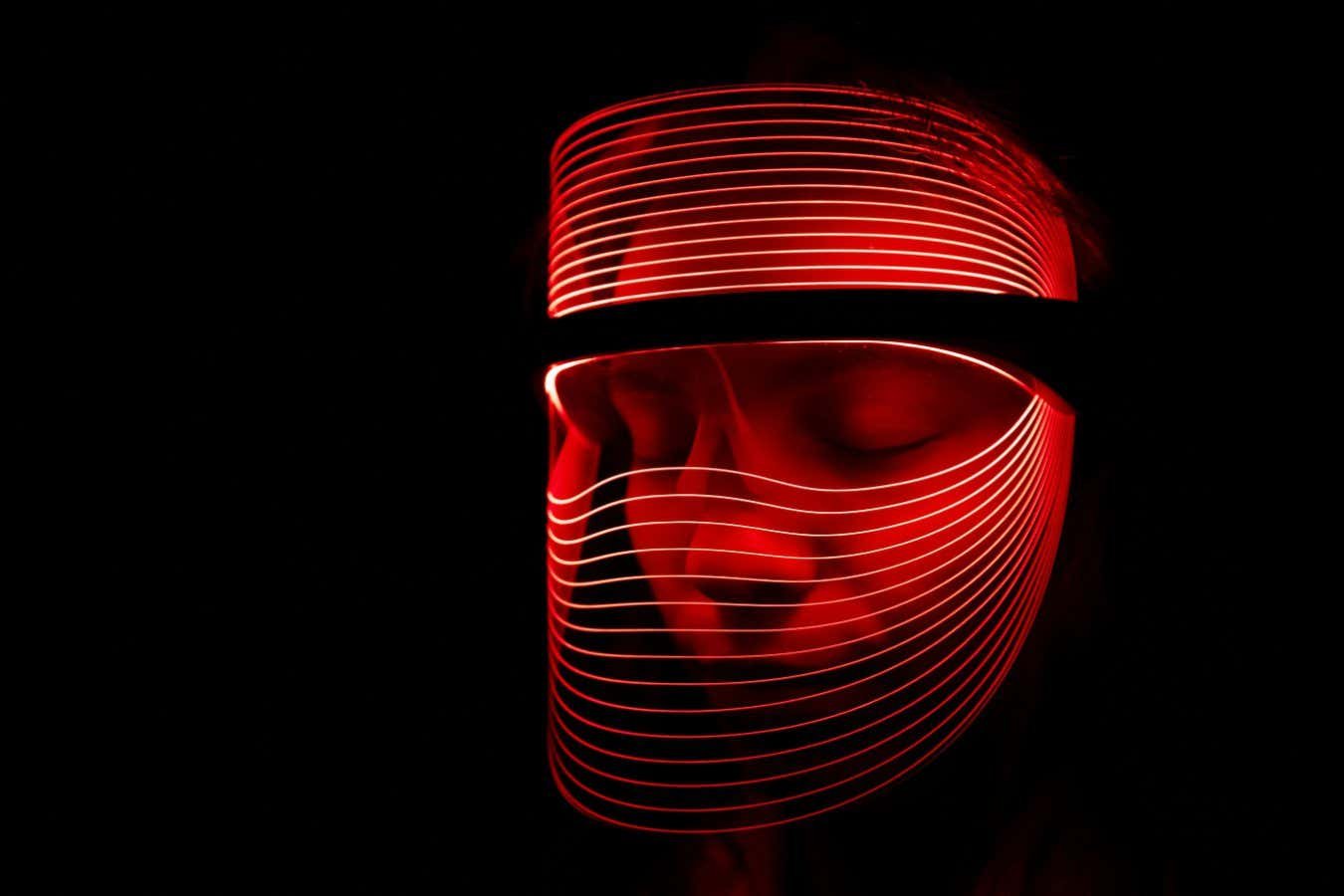
George Dagerotip/Unsplash
Better sleep, boosted mood, fewer wrinkles – these are just a handful of the supposed benefits of red light, delivered onto your skin via laser or light-emitting diodes (LEDs). Indeed, if the wellness industry is to be believed, simply bathing in a rosy glow for a few minutes a day can cure a whole host of ailments, from hair loss and acne to chronic pain and depression, and that is just scratching the surface.
Given the hype, you would be forgiven for thinking this is just an expensive fad. After all, if something sounds too good to be true, it probably is.
While evidence for most of these claims is thin at best, there is another world of red-light therapy that is far more exciting than the prospect of a glow-up. Emerging evidence finds it may mitigate cognitive decline, and researchers are now trialling the technology for conditions such as Alzheimer’s and Parkinson’s, with many more applications in the pipeline. “It’s slowly starting to get traction,” says John Mitrofanis at the University of Grenoble Alpes in France, who has been working on red-light therapy for 15 years. “When I started, there might have been 10 or 20 publications a year, but now there are thousands.”
Lighten up
Using electromagnetic radiation is commonplace in medicine. Doctors routinely deploy X-rays to peer at bones and ultraviolet light to ease certain skin conditions. Yet unlike these, red light falls within the visible spectrum, the narrow band of wavelengths detectable by the human eye. Its wavelengths are longer than other visible lights, like blue or green light, spanning between around 650 and 750 nanometres. This allows it to pass through the dead outer layer of our skin, penetrating a few millimetres beneath. The longer the wavelength, the deeper it travels.
Once consigned to dermatologist offices and spas, red-light therapy is now readily available via consumer devices such as face masks and full-body panels. Influencers peddle it on social media, and the US Food and Drug Administration has cleared devices for acne and hair loss, though they aren’t yet approved as clinically effective.
Yet research on red-light therapy goes back to 1960, with the invention of the laser. Biomedical researchers quickly wondered whether these narrow beams of light had medical applications. They soon got their answer.
In 1967, the physicist Endre Mester at Semmelweis University in Budapest, Hungary, shone red lasers with a wavelength of 694 nanometres onto shaved mice to see if it triggered skin cancer. It didn’t – instead, it caused their fur to grow back more vigorously.
Mester later discovered the lasers enhanced wound healing and started using them to treat ulcers and other intractable wounds in people. A new branch of medicine, which Mester called low-level laser therapy (LLLT), was born. Other scientists discovered the light doesn’t have to be visible: near-infrared with wavelengths between 700 and 850 nanometres, just beyond the visible spectrum, also had healing effects. LEDs could also be used instead of lasers.
The science behind LLLT – now rebranded as photobiomodulation – isn’t fully understood, but we have the basics, says Glen Jeffery at University College London. When red or near-infrared light strikes the skin, it acts on specialised structures in underlying cells called mitochondria. It is here – the power packs of cells – that the light does its scintillating work.
Mitochondria contain light-absorbing molecules called chromophores. One, cytochrome c oxidase, is especially important. It is a key component in the pathway that cells use to produce the energy-carrying molecule ATP. Absorbing red or near-infrared light stimulates cytochrome c oxidase, speeding up the process and producing more ATP.
This is beneficial for several reasons. As we get older, mitochondria’s efficiency dwindles, and with it, their ability to produce sufficient energy. “By the time you reach middle age, you’ve generally got an ATP deficit,” says Jeffery.
This has another downside: the overproduction of reactive oxygen species – volatile chemicals that wreak havoc on nearby cells, spurring inflammation. “By the time you’re 30, you’ve got systemic inflammation, and systemic inflammation is one of those things that’s going to kill you in the end,” says Jeffery. It contributes to all manner of chronic illnesses, including diabetes, heart disease and cancer.

Red light speeds up the process by which cells produce energy
Bakhrom Tursunov/Alamy
Stimulating mitochondria with red light makes up the ATP deficit and dials down reactive oxygen species – in other words, it rejuvenates. It also stimulates natural anti-inflammatory molecules, such as prostaglandins. “Unquestionably ATP goes up,” says Jeffery. “Unquestionably inflammation goes down.” It’s win, win.
The process also appears to boost a mechanism by which cells heal one another, called the biophoton effect. Cells produce light, particularly in their mitochondria, and use it to communicate with each other. “Cells in distress issue ultraviolet or blue light. But if it’s happy and healthy, it’ll be red and near-infrared,” says Mitrofanis. “They use this light to repair each other. If a cell is dying, it communicates this, and then nearby cells give it red and near-infrared light.”
Exogenous light can profoundly affect energy metabolism. In 2024, Jeffery and his colleague Michael Powner at City St George’s, University of London, shone red light onto a small area of the upper backs of 15 people without underlying health conditions. The participants then drank sugary water and underwent periodic blood-sugar testing over the next 2 hours. On average, blood sugar was nearly 28 per cent lower in this group than in a separate group of 15 people who hadn’t received red light, indicating the light had stimulated their mitochondria, helping them to more efficiently convert sugar into ATP.
The research also suggests that the effects spread beyond the light-soaked mitochondria, as the small patch of skin cannot account for the large impact, says Jeffery. This may be related to the mysterious abscopal effect, a rare phenomenon in cancer radiotherapy where irradiation of a primary tumour can shrink secondary tumours located elsewhere, he says.
Healing at home?
Consumer companies touting red-light therapy for wellness have seized on this scientific explanation. In the early 2000s, plastic surgeons began using it to aid post-operative wound healing, and word spread of its healing powers. Clinics started offering it to people who hadn’t undergone surgery, and the first at-home devices soon followed.
Red-light therapy is now a booming business. According to fashion magazine Vogue, the global market was worth around $520 million in 2021 and is forecast to reach $800 million by 2031. Salons, spas and gyms increasingly offer it alongside massages and facials. Consumers can buy at-home devices, ranging from hand-held wands and face masks to helmets and blankets, the cheapest of which cost around £100 ($135), but some go for thousands.
Companies market the products as an easy route to wellness and cosmetic improvement. The list of concerns they are purported to help with includes, but is not limited to, wrinkles, hair loss, acne, stretch marks, inflammation, pain, insomnia, obesity, athletic performance, erectile dysfunction, menstrual cramps, depression, brain fog, infertility and age-related deterioration.
Given the general rejuvenating and energy-burning effects of red light, these claims seem plausible. But in fact, most of them are “highly dubious”, says Jeffery. However, there are some bright spots.
In 2025, a team led by dermatologist Michelle Pavlis at Duke University in North Carolina reviewed 59 studies – encompassing more than 1880 people – on using red-light therapy to treat skin conditions, from actinic cheilitis to acne. When it came to cosmetic use, “the strongest evidence is for acne, including with some home-use LED devices”, says Pavlis.
Pavlis found the therapy can be as good as, or sometimes better than, standard acne drug treatments. For instance, one study showed 12 weeks of red-light therapy reduced pimples by 79 per cent, on average. In comparison, an oral antibiotic paired with topical adapalene – a standard acne treatment – led to just a 69 per cent reduction. Acne-specific devices often emit blue and red light, as both wavelengths can kill off pimple-causing bacteria.
The review also found the treatment evened out skin tone in people with psoriasis – an autoimmune condition – or rosacea, where skin becomes ruddy and bumpy. Both use cases, however, have been tested in only a single clinical trial.
What of wrinkles and general skin rejuvenation? Here the evidence is mixed. In the most successful study, 60 per cent of participants saw fewer wrinkles and an improvement in overall skin tone, as evaluated by a dermatologist. But two other studies found no significant improvement at all.

Some studies suggest that red-light therapy may prevent and even reverse hair loss
Martin Parr/Magnum Photos
Hair growth is another area with promise. At any one moment, around 15 per cent of hair follicles are dormant, which precedes hair falling out. The vigorous fur regrowth Mester observed in his shaved mice was probably from hair follicles getting a red-light energy boost, jolting those that would have been resting into action.
The same appears true in humans. In a 2020 trial, researchers in South Korea used a helmet to beam red light onto the scalps of 30 adults with androgenetic alopecia, the most common form of hair loss. Participants used the device every other day for 25 minutes, while a separate group of 29 people did so with a mock version. After 16 weeks, hair density in those who got the real deal increased more than 57 per cent, on average, compared with the control group. Their hair strands also thickened, whereas those in the control group thinned. But it isn’t known how long this effect lasts.
Mester’s other application, wound healing, also has some backing. Many studies have found red and near-infrared light can help heal burns, scars and diabetic foot ulcers. However, most of them included just a handful of participants, meaning the evidence isn’t definitive. Which wavelength works best also isn’t known, though some research points towards the 630-to-660-nanometre range.
Studies have even shown that the therapy may assist with weight loss, especially when combined with diet and exercise. Yet almost all of them had fewer than 100 participants. And claims that red-light therapy can remove fat from specific areas – known as “spot fat” reduction – are questionable. In 2016, researchers at Nicolaus Copernicus University in Poland illuminated one side of 24 people’s bellies with a consumer red-light device, leaving the other side untouched. After six sessions, there was no difference in fat tissue between the two sides.
As for the rest of the purported benefits, forget it. The evidence simply doesn’t exist.
So, does that mean that at-home red light therapies have got the, er, green light? Not necessarily. Even in cases where evidence backs red light, devices vary in how they deliver it, using different wavelengths for different durations, and research hasn’t settled on which combo is best.
More importantly, consumer devices are, on the whole, too powerful, says Jeffery, emitting an order of magnitude more power than the few milliwatts needed to nudge mitochondria. Consumer devices typically deliver 60 milliwatts per square centimetre. But the optimal power is around a tenth of that – and Jeffery has seen effects at less than 1 milliwatt per square centimetre.

Face masks have become a popular way of delivering red-light therapy
Juli Konia/Alamy
“The [wellness] industry just loves the concept of more and more power,” says Jeffery. And, in the case of red light, more isn’t better. Turbocharging cellular energy production can gum up the whole system, with potentially serious consequences, including a build-up of those havoc-wreaking reactive oxygen species, he says.
Such an influx might explain why red-light therapy seems to lessen wrinkles. Because these molecules cause inflammation, they may temporarily plump up skin. Jeffery worries that people who use powerful red-light devices regularly are storing up trouble. “We don’t know what’s going to happen in 10 years’ time,” he says. “Maybe your face is going to drop off.”
When it comes to buying your own red-light device, Jeffery’s advice is: don’t bother. “You’re doing more harm than good, and you’re wasting money.”
Beyond aesthetics
The hype around these potential cosmetic uses has outshone the ways red-light therapy is advancing into mainstream medicine.
More than 200 clinical trials have tested the tech for treating 15 illnesses. A 2025 review found it showed promise for 12 of them, with the strongest evidence for fibromyalgia, osteoarthritis and cognitive impairment.
Fibromyalgia is a poorly understood condition characterised by widespread muscular and skeletal pain, leading to insomnia, fatigue and depression. It has few treatments. Yet the review found red-light therapy can help alleviate its symptoms, including the primary one, pain. It also reduces pain and disability in knee osteoarthritis and, to a lesser degree, improves burning mouth syndrome, neck pain, diabetic foot ulcers and some kinds of tendinopathy. But for six conditions – rheumatoid arthritis, plantar fasciitis, Achilles tendinopathy, fractures, carpal tunnel syndrome and tinnitus – there is no effect.
Perhaps most surprisingly, it may slow age-related cognitive impairment. A 2023 review of 11 clinical trials, mostly involving people with Alzheimer’s and Parkinson’s, but also some with traumatic brain injuries, found transcranial near-infrared light most promising. With this in-clinic treatment, light passes through the skull, into outer brain regions. “We’re talking 20 to 30 millimetres, and that’s certainly enough to get to our best piece of brain,” says Mitrofanis, referring to the cerebral cortex, which carries out functions such as planning and short-term memory. Red-light therapy can’t cure or even halt cognitive decline, but it could potentially decelerate its progression, probably through boosting energy production in struggling brain cells.
While positive, the evidence remains uneven, with studies ranging from single sessions up to 72, each lasting between 30 seconds and 30 minutes. This underscores the need for larger, more standardised trials, some of which are already under way.
Mitrofanis and his colleagues are trialling an optical fibre that delivers near-infrared light deep into brain regions affected by Parkinson’s disease. He is also investigating its treatment potential for traumatic brain injury, stroke, Lewy body dementia and depression, and preliminary results are encouraging. “The patients felt better, their get-up-and-go was better, they had less fatigue, their mood was better,” he says. “But there is a long way to go.” The technology must still undergo multiple clinical trials, and researchers must pinpoint the best delivery method for each condition.
If that pans out, in the long term, the sky may be the limit. “This thing will potentially help any cell that’s in distress as long as it’s not too far in distress,” says Mitrofanis. “If mitochondria are too damaged, nothing will save [them]. But if you’ve got early signs of distress – the mitochondria are starting to get a bit wobbly – then you can save it.”
In other words, red-light therapy might help any condition in which cells are struggling – which is many of them. It may not be too long before we are all basking in a red glow, not because of social media hype, but because it is doctor’s orders.
Topics:
[ad_2]
Source link


