
Table of Contents
Few hair remedies have gathered as much buzz as rosemary oil. A trip through TikTok might convince you it’s a miracle cure for thinning hair. The evidence is actually more nuanced, but surprisingly encouraging. Clinical research suggests it can nudge hair follicles back into a growth phase, though it won’t transform a bald scalp overnight. Here’s what you need to know about using rosemary oil effectively, safely, and realistically.
What the Science Says About Rosemary Oil for Hair Growth
In 2015, a clinical trial compared rosemary oil to minoxidil, the active ingredient in Rogaine. The results? After six months, both groups saw significant increases in hair count. The rosemary group even experienced less scalp itching than the minoxidil group. That’s a small study, but it sparked legitimate interest in a plant people had been using for millennia.
Why might rosemary oil work? Researchers point to several mechanisms. It appears to increase blood circulation in the scalp, which delivers oxygen and nutrients to hair follicles. It also contains carnosic acid, a compound that could help calm the inflammation that shrinks hair follicles. Some studies in rodents suggest it can influence androgen receptors, though human evidence is thinner. Keep in mind that most research uses concentrated extracts, not just diluted essential oil. That difference matters. But the ingredients in the plant itself have real biological activity.
The 2015 minoxidil study at a glance
That study enrolled 100 people with androgenetic alopecia, which is the medical name for common pattern hair loss. Half used 2% minoxidil, the other half used rosemary oil, two drops applied to the scalp twice a day for six months. At the end, both groups had similar hair counts. The rosemary group even reported less itchy scalp, a nice side effect compared to minoxidil’s known irritation. There’s also a 2020 study that found rosemary oil improved hair growth in people with alopecia areata, though that sample was smaller.

How rosemary oil interacts with the scalp
Rosemary oil is a vasodilator, meaning it widens blood vessels. Better blood flow means more oxygen and nutrients reach the hair bulb. It also has antioxidant properties that protect follicular cells from oxidative stress. Some evidence points to its ability to inhibit a byproduct of testosterone called DHT, which drives hair miniaturization in pattern hair loss. The combination of better circulation and hormonal modulation makes it a plausible tool for supporting scalp health.
How to Use Rosemary Oil Without Ruining Your Hair
Essential oil is strong. If you apply it directly to your skin, you risk chemical burns or allergic reactions. The rule of thumb is to dilute rosemary essential oil to a concentration of about 1% to 2%. That works out to 3 to 6 drops per tablespoon of carrier oil. Good carrier oils include jojoba, argan, sweet almond, or even plain fractionated coconut oil.
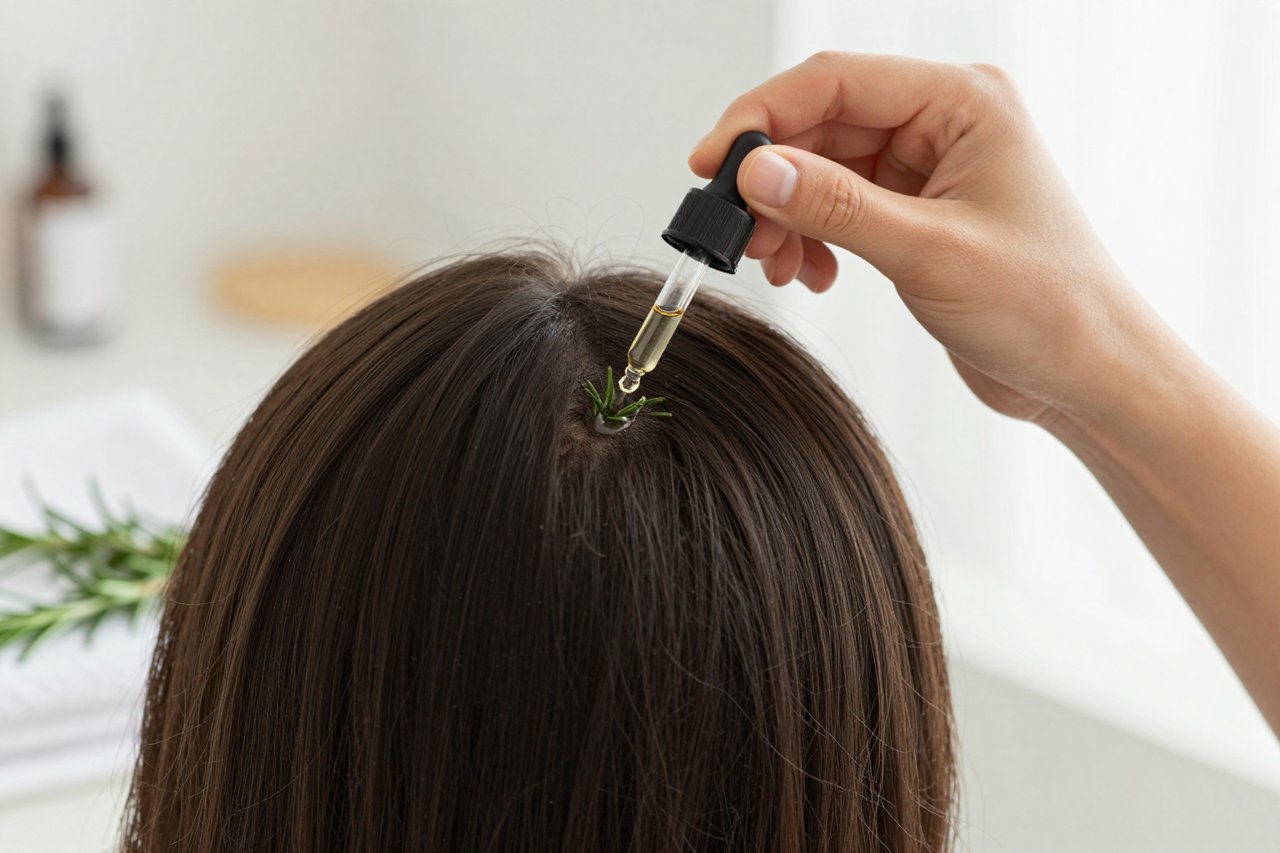
For hair growth, you want it on your scalp, not the lengths. Using a dropper, part your hair in sections and apply the mixture directly to the scalp. Then massage for a few minutes. This isn’t just about comfort; massage alone has been shown to aid mechanical stretching of hair follicles. Together with the oil, you’re creating a better environment for growth.
Leave it on for at least two hours or overnight, then shampoo normally. Repeat two to three times per week. If you have a dry scalp, you might start with once a week and see how your skin reacts. You can also try this easy DIY coconut oil spray with rosemary volumizing powder for a lighter daily option, or you can learn more about different application methods in this no-nonsense guide to hair oils.
The scent is strong, and it lingers. If you’re going to be in an office all day, you might prefer to apply it on the weekend or right before bed.
Who Should Skip Rosemary Oil (and Who Should Try It)
Rosemary oil isn’t a universal fit. If you have a known allergy to the Lamiaceae plant family (rosemary, mint, basil, lavender), patch test is essential. Pregnancy? Most experts recommend avoiding essential oils in the first trimester, and you should definitely talk to your midwife or doctor before using any essential oil while pregnant.
If you have a sensitive scalp, dilute even more or use a carrier oil that’s less likely to clog pores. Jojoba is closest to the skin’s natural sebum and often a safe first choice.
If you’re experiencing sudden, patchy hair loss, see a dermatologist first. Quick-onset shedding can signal an autoimmune issue, thyroid imbalance, or malnutrition. Rosemary oil won’t fix those. It’s better suited for gradual thinning or as a maintenance tool.
What to Look for When Buying Rosemary Oil
Not all oils are equal. You want a pure essential oil, with the botanical name Rosmarinus officinalis on the label. The label should say “steam distilled” and the country of origin. Oils sold in amber or dark glass bottles protect them from light damage. The scent should be sharp, camphoraceous, and clear; if it smells flat or sour, the oil is already oxidized.
- The label says ‘fragrance oil’ instead of essential oil.
- No botanical name is listed.
- It comes in a clear or plastic bottle.
- There are added ingredients or artificial scent.
There are also rosemary-infused oils, made by steeping rosemary leaves in a carrier oil. These are much gentler and might be a good starting point, though they contain less concentrated active compounds. For targeted scalp treatment, a pure essential oil diluted fresh each time tends to be more effective.
Strengthen Your Hair Routine Alongside Rosemary Oil
If rosemary oil is your go-to, consider how it fits with your shampoo and conditioner. Many people want faster results and add too many actives at once. That can overload the scalp and cause irritation. Instead, keep a simple base routine. You can start with one of the best shampoos and conditioners for dry hair to keep your hair from feeling dry or brittle from the oil washes. A weekly hair mask can also help strengthen the ends while you focus the oil on your roots.
If you’re also looking at serums, think carefully. Many commercial hair growth serums contain rosemary oil as one of several ingredients. You can find detailed guidance on that in our breakdown of what actually works in hair growth serums. The key is not to layer too many products on your scalp on the same day. Rotate instead.
Realistic Expectations: How Long Until You See Results
Hair grows about half an inch per month, and new growth often takes a while to become visible. Clinical trials with rosemary oil generally show improvement at the 3 and 6 month marks. Some people notice less shedding within weeks, but that’s not the same as increased density. If you’re consistent, you might notice baby hairs along your hairline in two to three months. Full results usually take at least six months.
This is also where people fail. They try rosemary oil for two weeks and then jump to another TikTok trend. Give a product a fair trial. If you can’t stick with a schedule, maybe a serum with a dropper and an easy spray application is better for you. The best routine is the one you can actually maintain.
The science is promising, but no oil will reverse advanced hair loss overnight. What works is consistency, a sober look at your diet, and a scalp-care routine you can live with. If rosemary oil fits into that, you might just see the fullness return a step at a time.


