

Table of Contents
[ad_1]

A decades-old assumption about how the body handles fat may have been incomplete.
For 60 years, scientists believed they understood exactly how a protein called HSL worked. Since the 1960s, hormone-sensitive lipase has been recognized as one of the body’s main fat-burning enzymes, helping release stored fat when energy is needed. But there was one major problem with that explanation: people born without HSL do not become obese. Instead, they lose fat tissue and develop a rare disorder called lipodystrophy.
Now, researchers from the University of Toulouse say they have finally solved the mystery.
Their study reveals that HSL has a second, previously unknown job inside fat cells. Beyond helping break down fat, the protein also enters the nucleus of adipocytes, where it helps regulate the health and function of fat tissue itself.
The finding reshapes scientists’ understanding of body fat, which is increasingly viewed not simply as stored energy but as a highly active organ involved in metabolism, hormone signaling, inflammation, and cardiovascular health.
Fat Cells Are More Complex Than Scientists Thought
Adipocytes, or fat cells, store energy in the form of triglycerides packed into tiny structures called lipid droplets. During fasting, exercise, or other energy-demanding situations, hormones such as adrenaline activate HSL, allowing the body to release fatty acids that can fuel muscles, the heart, and other organs.
Because of that role, researchers long assumed removing HSL would trap fat inside cells and cause severe weight gain.
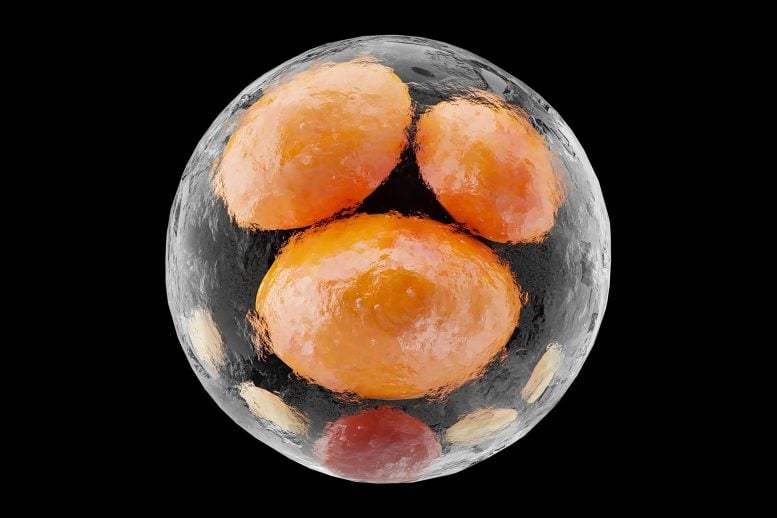
Instead, both mice and humans lacking the protein develop lipodystrophy, a condition marked by the loss of healthy fat tissue. Despite appearing opposite to obesity, lipodystrophy can produce many of the same dangerous complications, including insulin resistance, diabetes, fatty liver disease, and heart problems.
That paradox led researchers to look closer at where HSL operates inside cells.
A Hidden Role Inside the Cell Nucleus
Using advanced imaging and molecular analysis, the team discovered that HSL is not confined to the surface of fat droplets. It also accumulates inside the nucleus, the compartment that controls gene activity.
There, HSL interacts with proteins involved in gene regulation and cellular signaling. The researchers found that nuclear HSL helps maintain healthy adipose tissue by influencing pathways linked to mitochondrial function and the extracellular matrix, the structural framework surrounding cells.
“In the nucleus of adipocytes, HSL is able to associate with many other proteins and take part in a program that maintains an optimal amount of adipose tissue and keeps adipocytes ‘healthy’,” said study co-author Jérémy Dufau, who conducted the work as part of his doctoral research.
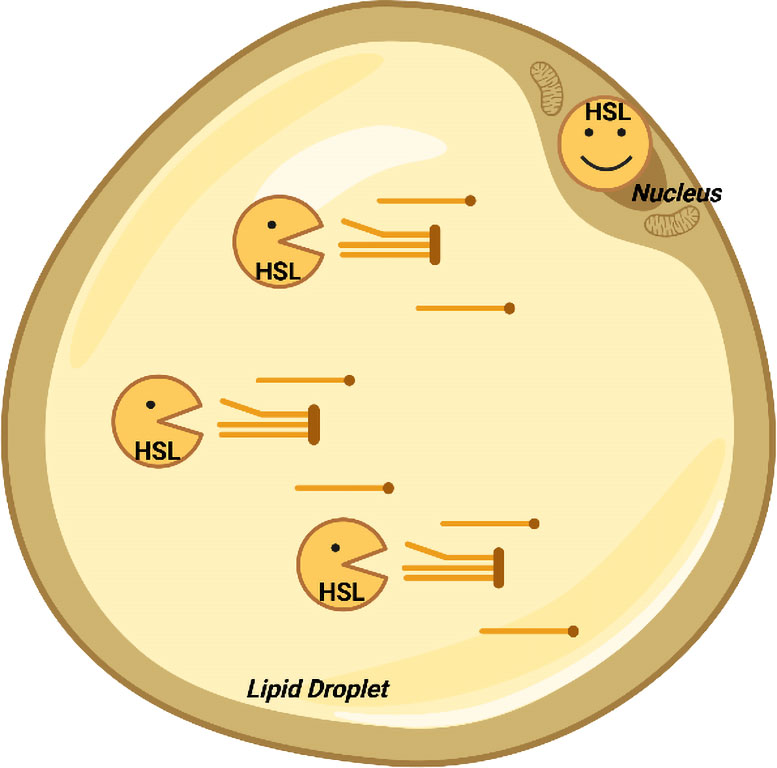
The discovery suggests HSL acts not only as a metabolic enzyme but also as a regulator of cellular behavior.
The study further showed that this nuclear activity is carefully controlled. During fasting, adrenaline activates HSL and pushes it out of the nucleus toward fat droplets, where it helps release stored energy. In obesity, however, HSL accumulates excessively inside the nucleus of fat cells.
Researchers believe that imbalance may contribute to unhealthy changes seen in obesity, including impaired metabolism and tissue dysfunction.
The Connection Between Fat Tissue and Metabolic Disease
Scientists now recognize that healthy fat tissue is essential for overall health. When adipocytes stop functioning properly, the consequences can spread throughout the body.
In obesity, fat cells often enlarge, become inflamed, and struggle to manage energy normally. In lipodystrophy, the body lacks enough functional fat tissue to safely store lipids. In both cases, excess fat can spill into organs such as the liver and muscles, increasing the risk of metabolic disease.
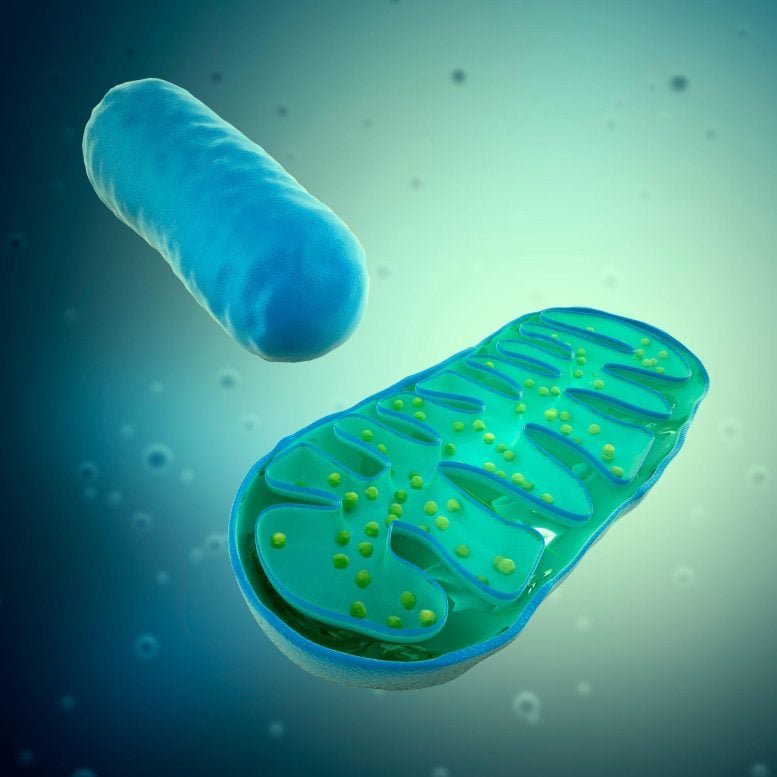
The new findings suggest HSL may sit at the center of several important biological systems, linking fat storage, energy release, mitochondrial activity, and cellular signaling pathways tied to inflammation and tissue remodeling.
The researchers also found evidence that HSL interacts with SMAD3, a major regulator in the TGF-β signaling pathway, which has been strongly linked to fibrosis, obesity, and insulin resistance. That connection could help explain how fat tissue becomes dysfunctional during chronic weight gain.
Why the Discovery Matters
More than 2 in 5 US adults are currently living with obesity, according to the Centers for Disease Control and Prevention (CDC). Rates of type 2 diabetes, fatty liver disease, and other metabolic disorders have also climbed sharply over the past several decades.
Although weight-loss drugs such as GLP-1 medications have transformed obesity treatment, scientists are still trying to understand the deeper biology of fat tissue itself.
This discovery adds an important piece to that puzzle.
“HSL has been known since the 1960s as a fat-mobilizing enzyme,” said Dominique Langin, who led the study. “But we now know that it also plays an essential role in the nucleus of adipocytes, where it helps maintain healthy adipose tissue.”
Researchers say the work could eventually open new avenues for treating obesity, lipodystrophy, and related metabolic diseases by targeting the health and behavior of fat cells rather than simply reducing body weight.
Reference: “Nuclear hormone-sensitive lipase regulates adipose tissue mass and adipocyte metabolism” by Jérémy Dufau, Emeline Recazens, Laura Bottin, Camille Bergoglio, Aline Mairal, Karima Chaoui, Marie-Adeline Marques, Veronica Jimenez, Miquel García, Tongtong Wang, Henrik Laurell, Jason S. Iacovoni, Remy Flores-Flores, Pierre-Damien Denechaud, Khalil Acheikh Ibn Oumar, Ez-Zoubir Amri, Catherine Postic, Jean-Paul Concordet, Pierre Gourdy, Niklas Mejhert, Mikael Rydén, Odile Burlet-Schiltz, Fatima Bosch, Christian Wolfrum, Etienne Mouisel, Genevieve Tavernier and Dominique Langin, 23 October 2025, Cell Metabolism.
DOI: 10.1016/j.cmet.2025.09.014
Funding: European Foundation for the Study of Diabetes 407 (EFSD/Novo Nordisk Program for Diabetes Research in Europe 2019 to D.L.), Agence Nationale de la Recherche (ANR-17- 409 CE14-0015Hepadialogue to C.P. and D.L.; ANR-23-IAHU-0011 IHU Health Age to D.L.), European Research Council (ERC) 411 under the European Union’s Horizon 2020 research and innovation program (SPHERES, ERC)
Never miss a breakthrough: Join the SciTechDaily newsletter.
Follow us on Google and Google News.
[ad_2]
Source link


