
Table of Contents
You’ve seen the before-and-after photos, the glowing Instagram captions, and the guy at the health food shop swearing by it. And look, they’re not wrong. Tea tree oil is one of the few natural ingredients with a solid pile of evidence behind it for acne. But here’s the catch: slapping undiluted oil straight onto a pimple is a fast track to a chemical burn and a worse breakout than you started with. Used properly, it’s a brilliant addition to your routine. So let’s walk through the exact, step-by-step method—the dilutions, the timing, the mistakes to dodge.
Does Tea Tree Oil Actually Work for Acne?
Yes, but it’s not magic. A widely-known 2007 study compared a 5% tea tree oil gel to 5% benzoyl peroxide. Tea tree oil worked a bit slower, but it came with far fewer side effects like dryness and flaking. The active compound, terpinen-4-ol, has been shown to kill Cutibacterium acnes, the bacteria that contribute to inflamed pimples, and it also calms redness. That’s why it’s been used for decades as a standalone spot treatment or mixed into cleansers and masks.
Start With the Right Tea Tree Oil
Not all tea tree oil is created equal. You want 100% pure tea tree oil, preferably sourced from Melaleuca alternifolia (the classic Australian variety). Check the product label for the terpinen-4-ol concentration—good quality oils list it between 30% and 40%. Avoid anything labelled as a “blend” or “fragrance oil,” because it might contain only a tiny amount of actual tea tree oil alongside synthetic fillers.
You’ll also want to store it properly: keep the bottle away from direct sunlight, in a cool, dry place. If you’re new to essential oils and want a broader safety overview, check out our complete guide to essential oils for skin before you start.

How to Dilute Tea Tree Oil: The Exact Ratios
Here are the numbers you actually need. A standard spot-treatment dilution is 5% tea tree oil. That works out to:
- 5 drops of tea tree oil mixed with 1 teaspoon (5 ml) of carrier oil.
Good carrier oils to use are jojoba, grapeseed, sunflower or squalane. Jojoba is great because it mimics your skin’s own sebum, while grapeseed is lighter and absorbs quickly.
If you have sensitive skin, start gentler: use 3 drops per teaspoon instead. Never exceed 10% for a face product—more than that is irritating and doesn’t make the oil more effective.
For a face mask, you’ll want a weaker dilution because it sits on your whole face. We’ll get to that in a minute.
Step-by-Step Spot Treatment Routine
This is your go-to method for a single, angry pimple. Follow these steps in order.
- Cleanse your face with a gentle, non-stripping cleanser and pat it dry.
- Do a patch test the first time — dab a tiny amount of your diluted blend on your inner forearm and wait 24 hours. If there’s no redness or itching, you’re clear to use it on your face.
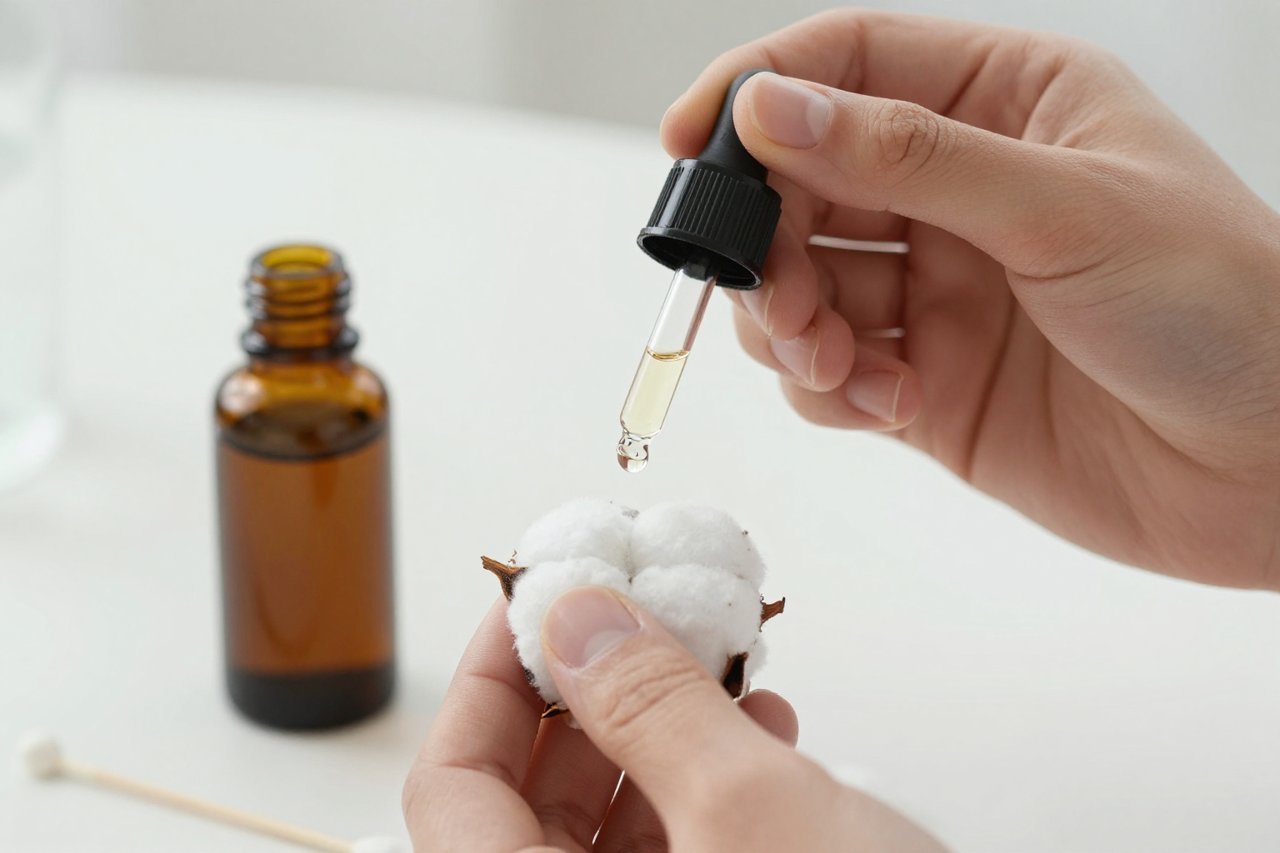
- Dip a clean cotton swab into your diluted tea tree oil mixture. Don’t pour it directly on your face.
- Dot it onto the pimple only — avoid the surrounding skin, especially if you have dry patches.
- Leave it on for 20 minutes the first week, then rinse off with cool water. If your skin doesn’t react, you can leave it on overnight, but always wash it off in the morning.
Repeat this morning and night until the blemish flattens. For a deep, under-the-skin pimple, you’ll often see it come to a head faster after two or three days.
Want more variations on this recipe? We’ve put together a whole collection of DIY tea tree oil spot treatments that include honey, aloe, and green tea additions.
How to Use Tea Tree Oil as a Face Mask
When you’ve got breakouts across a larger area, a face mask helps you cover more ground without overdrying individual spots. Here’s a simple blend I’ve used and seen good results from:
- 2 drops tea tree oil
- 2 tablespoons plain aloe vera gel (or plain yogurt if you don’t have aloe)
- Optional: a teaspoon of raw honey
Mix everything together, apply a thin layer to your face, and leave it on for 10-15 minutes. Rinse off with lukewarm water. Use this once or twice a week at most. Over-masking can strip your skin barrier and make your breakouts angrier.
If you’re looking for more ways to adapt tea tree to your routine, our main practical guide to tea tree oil for acne covers the broader picture, including how to pick the right product.
Adding Tea Tree Oil to Your Everyday Routine
You don’t have to limit tea tree to spot treatments. One easy tweak is adding a drop of diluted tea tree oil to your regular moisturizer. Here’s how: squeeze your usual amount of moisturizer into your palm, add a single drop of tea tree oil (not directly from the bottle—dilute it with a bit of carrier blinker or mix it really well), and apply.
That gives a mild, all-over antibacterial effect without turning your face into a drying experiment. You can do the same with your serum or even your cleansing oil.
But here’s a word of caution: tea tree oil is not a substitute for a full acne routine containing proven actives like salicylic acid or niacinamide. It works best as an add-on. If you’re building a routine from scratch, take a look at our guide to the best acne products that actually clear skin and see where tea tree might fit in.
Common Mistakes to Avoid When Using Tea Tree Oil
Even when you follow a step-by-step routine, it’s easy to slip up. Here are the most common pitfalls—and how to steer clear.
- Always dilute it. Undiluted tea tree oil can cause severe contact dermatitis, blisters, and hyperpigmentation. There’s no benefit to using it at full strength.
- Don’t use it on broken or weeping skin. If you’ve already picked a pimple and it’s open, applying tea tree oil directly will sting like nothing else and may slow healing. Wait until the wound has sealed.
- Skip the tea tree if you’re using strong exfoliants every night. Combining heavy tea tree use with high-strength benzoyl peroxide or retinoids can push your skin past its limit. Alternate nights, or use tea tree in the morning and other actives at night. For the full 2025 treatment landscape, see our complete guide to acne treatment.
- Don’t clump it on. More oil does not equal faster clearing. It will just make your face greasy and increase the chance of clogged pores. Stick to a thin, even layer.
- Watch out for expiry. Essential oils oxidize over time. If your tea tree oil smells less “fresh” or has changed color, toss it. Old oil is far more irritating to your skin.
Nail these details, and tea tree oil can be a genuinely useful weapon in your anti-acne arsenal. Keep your routine consistent for at least two weeks before judging how it works for you, and always let your skin’s comfort guide you.


