
Table of Contents
AlphaFold’s 2021 release dropped more than 200 million protein structures into the public domain in a single afternoon. Scientists who had spent entire careers crystallising a handful of molecules suddenly had a searchable map of biology’s building blocks. That is roughly the shape of every technology on this list: a long, unglamorous build-up, then a moment where the constraint that held a problem in place quietly gives way.
The technologies that could solve major global challenges almost never arrive as one clever invention. They arrive as a cluster — cheaper electricity, denser batteries, faster chips, better data — and the cluster is what actually moves the needle. A vaccine is only as useful as the cold chain that delivers it. A climate model is only as good as the sensors feeding it.
Why the Breakthroughs Arrive in Clusters
Look at what happened to solar power. Utility-scale photovoltaic costs fell roughly 90% between 2010 and 2022, according to IRENA’s cost tracking. Nothing about that curve was inevitable. It came from manufacturing scale in China, thinner wafers, better inverters, and financing models that let a village in Kenya buy panels on a payment plan. Five overlapping advances, one collapsed price.
The cluster that matters most right now looks something like this:

- Cheap renewable electricity — the input cost for almost everything else, from desalination to green hydrogen.
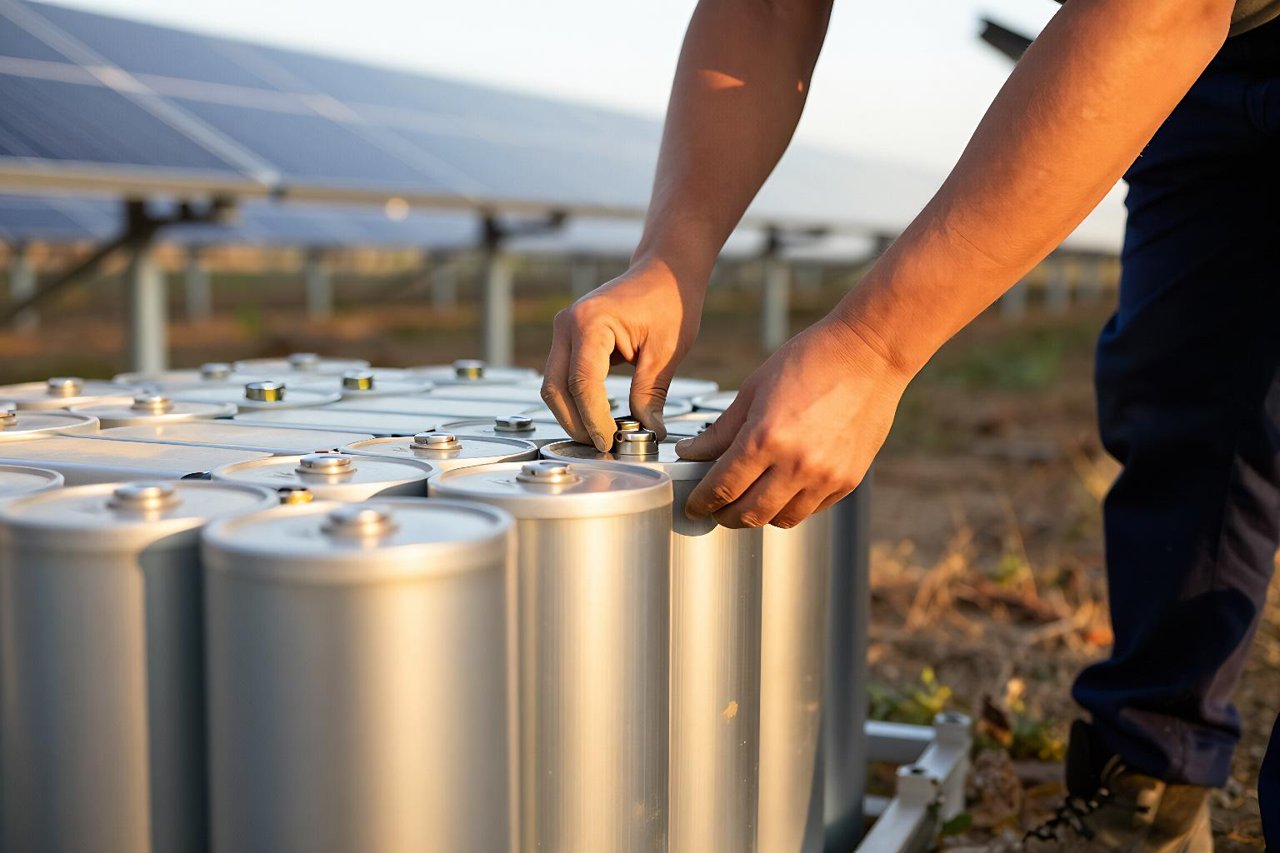
- Grid-scale storage — lithium-ion packs that fell from about $1,400 per kWh in 2010 to under $150 in 2023, plus pumped hydro and iron-air for long duration.
- Machine learning in the lab — models that propose molecules, predict protein shapes, and cut months off clinical timelines.
- Cheap sensing — satellites, low-cost air quality monitors, and DNA sequencing that now costs a fraction of the $3 billion spent on the first human genome.
- Interoperable data — the unglamorous layer that lets all of the above talk to each other.
Energy: The Maths Just Keeps Getting Better
Solar and wind are now the cheapest source of new electricity in most of the world. That single fact reshapes agriculture, transport, and water treatment. Perovskite tandem cells have pushed lab efficiencies past 33%, and while they degrade faster than silicon in the field, the combination of perovskite on top of silicon wafers is a genuinely practical path to 30%-plus commercial panels.
The trickier problem is the grid itself. Interconnection queues in the United States now hold more than 2,600 gigawatts of proposed projects — roughly double the country’s existing capacity — waiting for permission to plug in. Storage solves the evening peak; it does not solve a decade of permitting. Anyone tracking how renewable energy is reshaping the world will notice that the binding constraint has shifted from engineering to paperwork.
AI That Shortens the Drug Timeline
Antimicrobial resistance directly caused about 1.27 million deaths in 2019, and was associated with nearly 5 million. The pipeline for new antibiotics has been drying up for decades because the economics are awful: you develop a drug, then spend the next twenty years telling doctors to use it as little as possible.
Machine learning changes the cost side. In 2020, a model trained on chemical libraries flagged halicin, a compound originally explored as a diabetes treatment, as a potent antibiotic. The team found it in a few days rather than a few years. Similar work is now screening millions of molecules against tuberculosis and hospital-acquired infections. The approaches in these technologies that could combat antimicrobial resistance — phage therapy, rapid diagnostics, novel beta-lactamase inhibitors — all get cheaper and faster with the same computational toolkit.
The mRNA platform as a general-purpose tool
The lasting legacy of the COVID vaccines is not the shots themselves. It is a manufacturing platform that can be retargeted in weeks. Moderna’s seasonal flu candidates, the malaria work at BioNTech, and personalised cancer vaccines in late-stage trials all rest on the same design-build-test loop. That loop is now measured in weeks, not years.
Feeding Eight Billion Without Draining the Aquifers
Agriculture consumes about 70% of global freshwater withdrawals and produces roughly a third of greenhouse gas emissions when you count land use change. Precision irrigation, guided by soil moisture sensors and satellite imagery, can cut water use by 20-50% on the same yields — but only where farmers can afford the hardware and have reliable connectivity.
Gene editing is the more contentious lever. Drought-tolerant maize, blight-resistant potatoes, and nitrogen-fixing cereals are in various stages of development. CRISPR edits that add no foreign DNA face lighter regulation in several countries, including Japan and Brazil, which speeds the path from greenhouse to field. Meanwhile, a third of food produced is wasted, and the Cold Chain Innovation Hub estimates better refrigeration alone could recover enough to feed hundreds of millions. Sometimes the global challenge is a logistics problem wearing a science costume.
The Data Plumbing Nobody Notices Until It Fails
Every system described above depends on shared, trustworthy data. Disease surveillance across borders, carbon accounting, grid balancing, water basin modelling. In practice, that data is scattered across incompatible formats, locked in national systems, and often simply missing.
This is where the least photogenic work matters most. Getting climate observations from African weather stations into global models, or making hospital lab results comparable across languages, is more than just moving your data from one warehouse to another. It means agreeing on definitions, cleaning up decades of drift, and building interfaces that a ministry of health with two IT staff can actually run.
Supply Chains That Can See Themselves
The 2021 semiconductor shortage cost the automotive industry roughly $210 billion in lost revenue, largely because nobody had visibility beyond tier-one suppliers. Sensor tags, digital twins, and shared forecasting platforms are slowly changing that. Pharmaceutical serialisation has already done it for medicines in dozens of countries — every pack traceable to a batch.
Smaller manufacturers still struggle, and the practical playbook for overcoming supply chain challenges with technology usually starts with boring stuff: one source of truth for inventory, exception alerts rather than dashboards, and supplier portals people actually log into.
Guardrails Decide Whether Any of This Lands
Almost every technology here is dual-use. Protein design models that help develop vaccines can help design pathogens. Autonomous agents that optimise a power grid can also be gamed. The difference between a useful deployment and a disaster is usually documentation, testing, and clear boundaries about what a system is allowed to do.
That is true even at the level of individual projects. Teams building AI agents for anything consequential are learning that writing a proper spec for AI agents — defining scope, failure modes, and human override points — is not bureaucracy. It is the difference between a system that fails safely and one that fails in a headline.
The Bottlenecks Worth Tracking
If you want to know which of these technologies will actually matter by 2035, watch four things rather than the lab results.
Transmission and permitting. A solar farm that takes two years to finance and seven years to connect is a solar farm that does not get built. Grid reform is a bigger climate lever than most R&D budgets.
Manufacturing capacity. Lab demonstrations scale at the speed of factories. Battery gigafactories, electrolyser plants, and mRNA facilities are the real scoreboard, and they are being built in South Korea, China, and Texas, not in journal pages.
Cost of capital. A technology that needs a 12% return will not be deployed in the countries that need it most. Concessional finance and blended capital do more for global health and energy access than another incremental efficiency gain.
Human capacity. A clinic with no trained technician and a grid with no control engineer will not benefit from any of this. Training programmes, open standards, and local maintenance ecosystems are the least discussed and most decisive factor. The countries that solve that problem will be the ones where these technologies actually deliver.


