
Table of Contents
The Quiet Revolution in How We Power Our Lives
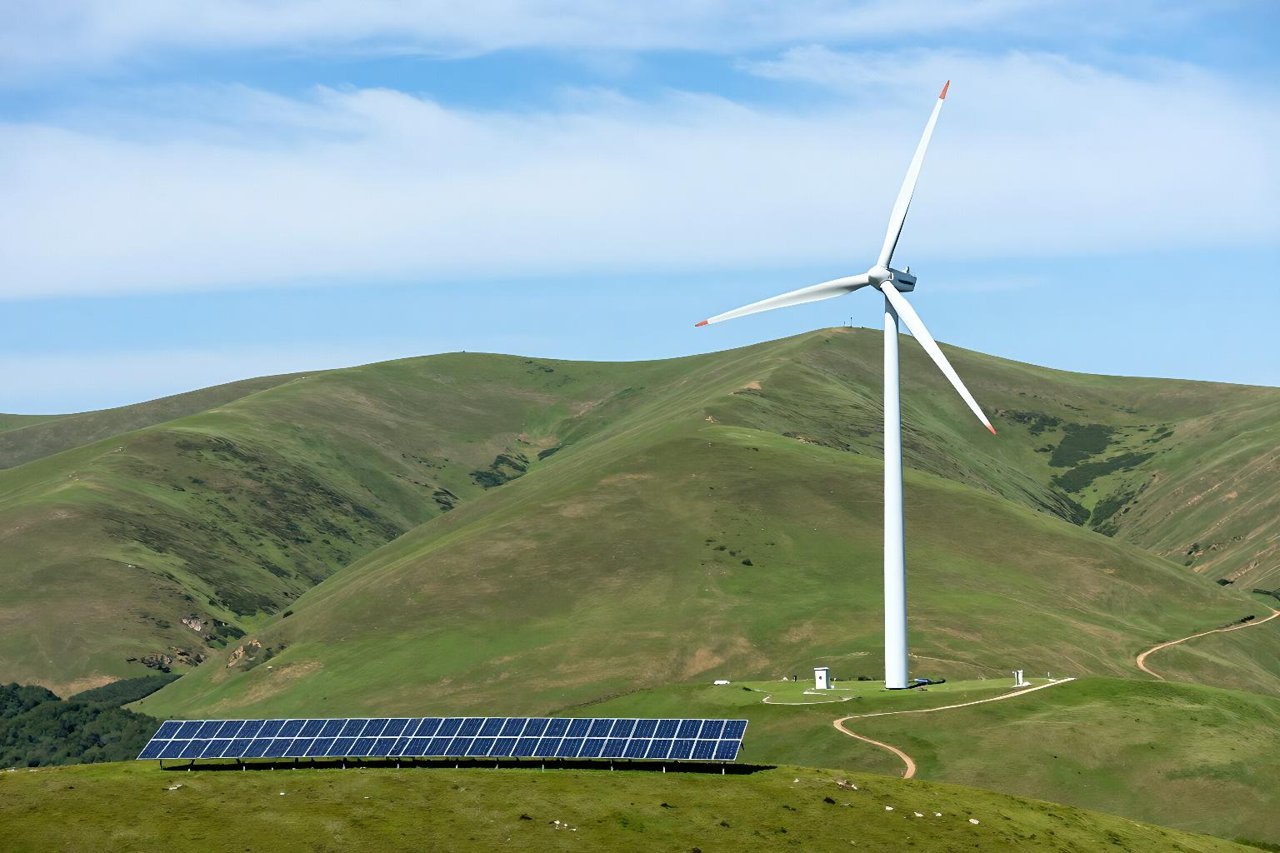
Walk outside on a sunny day and you might notice more than just the warmth. Rooftops glint with solar panels. Wind turbines spin on distant ridges. Electric cars hum silently past gas stations. Renewable energy has moved from a niche ideal to a mainstream force. In 2023, renewables accounted for over 30% of global electricity generation, and that share keeps climbing.
But what does this shift actually mean for you? It’s not just about polar bears or melting ice caps—though those matter. It’s about lower electricity bills, new jobs, energy independence, and a grid that can weather storms. Let’s unpack the technologies, the hurdles, and the surprising ways renewable energy is changing our world.
Solar Power: From Space Stations to Suburbs
Solar photovoltaic (PV) panels have become astonishingly cheap. The cost of solar modules has dropped by more than 80% since 2010. Today, a typical home solar system in the U.S. costs around $15,000 to $25,000 before incentives, and it can pay for itself in 7 to 10 years.
But solar isn’t just for houses. Utility-scale solar farms now produce electricity at 2 to 4 cents per kilowatt-hour in many regions—cheaper than coal or natural gas. And innovations keep coming. Scientists recently achieved a record 47.6% efficiency with a concentrated solar cell. Meanwhile, more practical advances like liquid batteries that store solar energy promise to solve the intermittency problem that has long plagued solar power.

Community Solar: Rooftops Without the Roof
Not everyone can install panels—apartment dwellers, renters, or homes with shady roofs. Community solar programs let you subscribe to a local solar farm and get credits on your electric bill. Over 40 U.S. states now have at least one community solar project, and the model is spreading globally.
Wind Energy: Bigger Blades, Better Economics
Wind turbines have grown dramatically. The latest offshore turbines have rotor diameters larger than the wingspan of an Airbus A380. A single rotation can power a household for a day. Onshore wind is now the cheapest source of new electricity in many parts of the world, with costs as low as $30 per megawatt-hour.
Offshore wind is booming, too. Europe leads, but the U.S. is catching up with projects like Vineyard Wind off Massachusetts. Floating turbines are opening up deep-water sites where fixed-bottom towers aren’t feasible. This technology could unlock vast wind resources off the coasts of California, Japan, and the Mediterranean.
Challenges: Birds, Bats, and NIMBY
Wind farms face opposition from some local communities and concerns about wildlife impacts. But careful siting, slower blade speeds, and even painting one blade black to reduce bird collisions are helping. The industry is also working on recycling turbine blades, which have historically ended up in landfills.
Energy Storage: The Missing Piece
The sun doesn’t always shine, and the wind doesn’t always blow. That’s where storage comes in. Lithium-ion battery costs have fallen by 90% in the last decade, making grid-scale batteries economical. The world’s largest battery facility, in California, can store enough energy to power 250,000 homes for four hours.
But batteries aren’t the only game. Pumped hydro storage—using excess electricity to pump water uphill and releasing it through turbines when needed—accounts for over 90% of global storage capacity. New approaches like compressed air, gravity-based systems, and flow batteries that store energy in liquid tanks are emerging. The more storage we deploy, the more renewable energy we can integrate into the grid.
Electric Vehicles as Mobile Batteries
Electric vehicles (EVs) are not just clean transportation—they can also stabilize the grid. When parked, an EV’s battery can send power back to the grid during peak demand and charge when renewables are abundant. This vehicle-to-grid (V2G) technology is being tested in fleets and pilot programs worldwide. As electric vehicles become strategic energy assets, they could reduce the need for fossil-fuel peaker plants.
EV adoption is accelerating. Global EV sales surpassed 10 million in 2022, and many countries plan to phase out internal combustion engines by 2035. Charging infrastructure is expanding, with fast chargers that can add 200 miles of range in 15–20 minutes. However, the grid must be upgraded to handle the extra load, and renewable generation must grow alongside EV fleets.
Grid Modernization: Making It All Work Together
Our electrical grid was built for a world of centralized, predictable power plants. Integrating variable renewables requires a smarter, more flexible grid. That means sensors, automated controls, and software that can balance supply and demand in real time. It also means modernizing transmission lines to carry power from windy plains and sunny deserts to cities.
In the U.S., the Department of Energy estimates that we need to double or triple the transmission capacity by 2035 to meet renewable energy targets. That’s a massive engineering and regulatory challenge, but it’s doable. Countries like Denmark and Germany already manage grids with high shares of renewables—sometimes over 50% of annual electricity—without major problems.
Policy and Economics: The Drivers of Change
Renewable energy growth isn’t just about technology—it’s also about policies that level the playing field. Tax credits, renewable portfolio standards, and carbon pricing have all accelerated deployment. In the U.S., the Inflation Reduction Act extended generous tax credits for solar, wind, and storage. Many homeowners and businesses are taking advantage of clean energy tax credits while they’re available.
On the economic side, renewable energy creates jobs. The solar industry alone employs over 250,000 Americans, and wind energy supports more than 120,000 jobs. These are often local, skilled positions in manufacturing, installation, and maintenance. And unlike fossil fuels, renewables have no fuel costs—once a wind farm or solar plant is built, the marginal cost of generating electricity is near zero.
Global Perspectives: Not Everyone Is on Board
While renewables are growing fast globally, adoption varies hugely. China installs more solar and wind capacity each year than any other country. Europe is pushing ahead with the European Green Deal. But some regions face unique challenges. For instance, Sardinia’s renewable energy resistance highlights how local opposition, driven by concerns over landscape and tourism, can stall projects even where resources are abundant.
In developing countries, renewable energy offers a path to leapfrog fossil fuels and bring electricity to remote communities. Off-grid solar systems are already powering millions of homes in Africa and South Asia. The International Energy Agency projects that renewables will meet almost all new electricity demand growth through 2026.
The Deep Ocean Connection
Climate change and renewable energy are deeply linked. As we reduce emissions, we also need to understand the changes already underway. Scientists are learning from the deepest oceans how warming and acidification affect marine ecosystems. These insights inform the urgency of the energy transition. The ocean itself also holds renewable potential: tidal and wave energy are still early-stage but could provide consistent power for coastal communities.
What’s Next: The Next Decade of Renewable Energy
By 2030, renewables could supply more than half of global electricity. Solar will likely dominate, but wind, hydro, and emerging technologies like geothermal and advanced nuclear will all play roles. The cost of green hydrogen—made by splitting water using renewable electricity—is falling, opening up decarbonization for heavy industry and shipping. Meanwhile, smart home devices and electric heat pumps will make buildings more efficient.
The transition isn’t without friction. Mining for materials like lithium, cobalt, and rare earths raises environmental and ethical questions. Recycling and circular economy approaches are critical. But the overall direction is clear: renewable energy is not a futuristic dream—it’s being built right now, panel by panel, turbine by turbine. And it’s working.


