
Table of Contents
A decade ago, most people outside a few retirement communities in Florida had never heard of pickleball. By 2024, the sport had more than 13 million American players, its own professional tours, and a scheduling problem: there are not enough courts. That kind of growth explains why the fastest-growing sports are no longer just football, basketball, and cricket. They are smaller, cheaper, and often played in spaces that were never designed for sport.
Growth can be measured in participation, revenue, broadcast audiences, or court bookings. The sports below lead on at least one of those measures, and several are winning on all four.
Pickleball: The Fastest-Growing Sport in America
Pickleball is the fastest-growing sport in the United States by participation. The Sports & Fitness Industry Association counted 13.6 million players in 2023, a 52% jump in a single year. Over five years, participation rose by more than 220%. No other sport in the survey came close.
The appeal is easy to explain. A court is small. The rules take ten minutes to learn. A decent paddle costs about $40. You can play with two people or four, and the rally often lasts longer than the walk from the car. Cities have responded by striping tennis courts, converting unused retail space, and building dedicated facilities. Major League Pickleball has drawn team owners from sports and entertainment, while equipment sales have become a rare bright spot for sporting goods retailers.

Padel: Europe’s Court-Booking Phenomenon
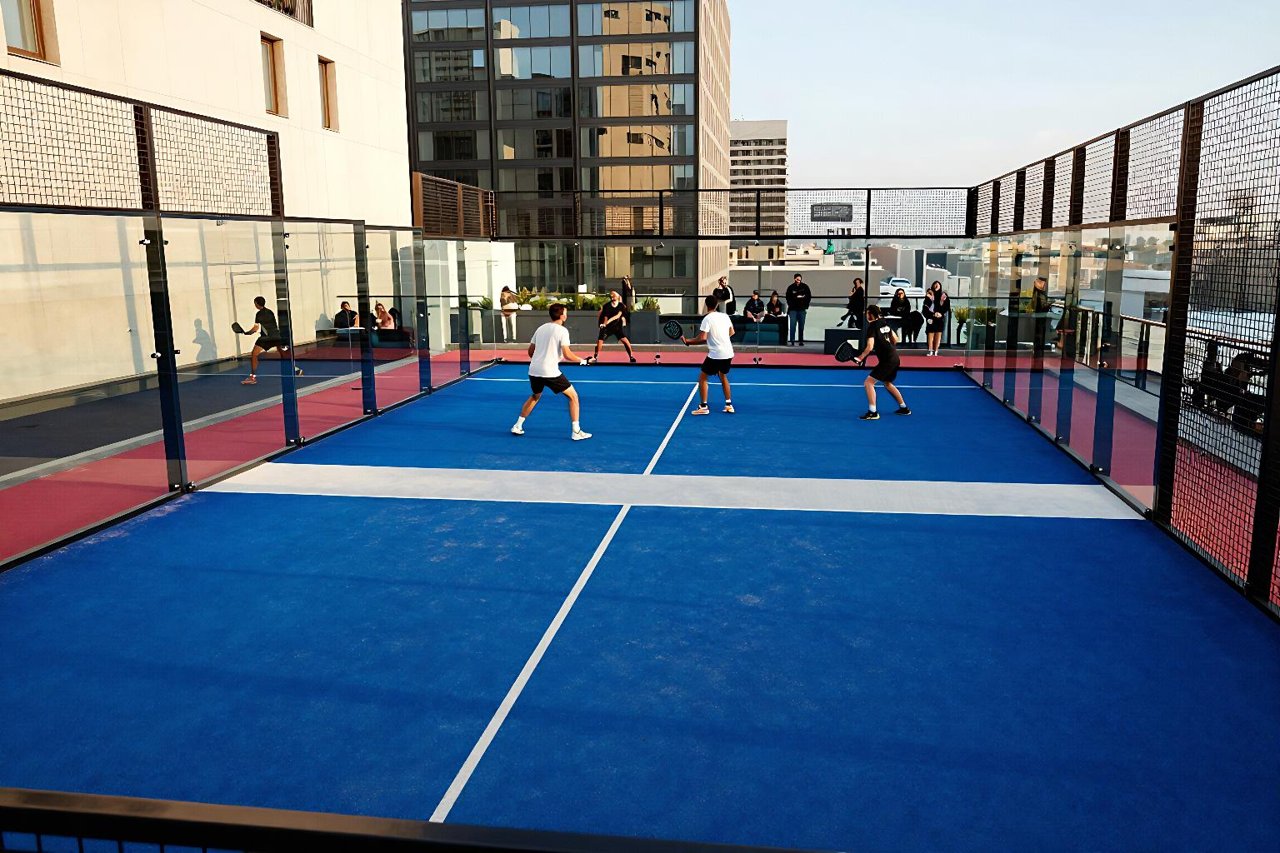
If pickleball owns the American headlines, padel is the fastest-growing sport in parts of Europe and the Middle East. The game combines tennis and squash: you play in a glass-walled court, use a solid paddle, and almost always play doubles. Spain alone has more than 15,000 courts, and the sport is spreading through France, Italy, Sweden, and the Gulf states.
Padel’s growth is driven by real estate as much as sport. A padel court fits into a former warehouse, a hotel roof, or a shopping center car park. Clubs can sell memberships, coaching, and food and drink in the same footprint. In London, Dubai, and Stockholm, peak-time bookings are often sold out days in advance. The International Padel Federation has talked about a global court count above 30,000, and new facilities are opening faster than most national federations can update their records.
Cricket’s Short-Format Surge
Cricket’s growth is a broadcast and format story. The Indian Premier League is one of the most valuable sports leagues per match in the world. T20 cricket has compressed a five-day game into three hours, and that version has traveled. The 2024 Men’s T20 World Cup was held in the United States and the West Indies, with matches in New York and Dallas. Major League Cricket has brought international stars to American soil. Cricket returns to the Olympics in Los Angeles in 2028.
Betting interest tends to follow global audiences. If you are new to the markets around these tournaments, a guide to placing smarter bets can save you from rookie mistakes.
Women’s Football Is Breaking Attendance and Revenue Records
Women’s football is growing faster than the men’s game in several markets, even if the absolute numbers are smaller. The 2022 UEFA Women’s EURO final drew 87,192 spectators at Wembley. England’s Women’s Super League now has broadcast deals and club attendances that would have seemed impossible a decade ago. In the United States, the NWSL added expansion teams in San Diego, Los Angeles, and the Bay Area, with more planned. Sponsorship has followed. Brands that once treated women’s sport as a charity now treat it as inventory.
Tennis: The WTA’s London Return Shows the Pull of Live Women’s Sport
Tennis offers a useful case study in how women’s sport can re-enter a market and immediately find an audience. The WTA is returning to London after more than 50 years, with Katie Boulter as the home favorite. The event matters because it puts elite women’s tennis back in a city that already has Wimbledon, the Queen’s Club, and a deep tennis culture. Ticket demand and sponsor interest will show whether the return is a one-off or the start of a regular stop. The WTA’s London return after more than 50 years is a signal that promoters see untapped demand for women’s tennis outside the Grand Slam calendar.
3×3 Basketball and the Olympic Effect
3×3 basketball might be the most Olympic-friendly sport on this list. It needs one hoop, half a court, and about 12 seconds to understand. FIBA’s 3×3 World Tour has taken over city squares from Amsterdam to Mexico City. Olympic medals in Tokyo and Paris gave the format credibility. It is cheap to stage, easy to broadcast, and fits urban spaces. That combination makes it attractive to cities and sponsors who want a sports property without building a 60,000-seat stadium.
Formula 1’s American Acceleration
Formula 1 is not new, but its American growth is. Drive to Survive turned drivers into characters and brought in viewers who had never watched a race. The United States now has three Grands Prix: Austin, Miami, and Las Vegas. Miami’s debut in 2022 drew a star-studded crowd and strong TV numbers. Las Vegas added a nighttime street race with huge local economic claims. F1’s U.S. television audience has grown substantially, and sponsors from tech and finance have followed. Betting markets have expanded alongside the calendar; the same essential guide to placing smarter bets applies to race markets, where odds move quickly.
What Makes a Sport Grow Fast
The fastest-growing sports tend to share a few practical advantages:
- Low entry cost and small footprint. Pickleball, padel, and 3×3 need less space and less equipment than golf, tennis, or full-court basketball.
- Broadcast-friendly formats. T20 cricket, 3×3, and F1 highlights fit into short attention windows and social media clips.
- A social scene. Doubles formats and team events give people a reason to return beyond the result.
- Female participation and visibility. Women’s football and tennis are drawing new audiences, sponsors, and media rights.
- Stars with stories. Drive to Survive and the WTA’s London event prove that narrative sells tickets as effectively as the sport itself.
None of these advantages guarantees long-term success. A sport can grow quickly and then plateau when court construction slows, media rights flatten, or the early adopters move on. The ones that last tend to build coaching pathways, junior leagues, and affordable places to play.
The Next Wave: What to Watch
Flag football is the most obvious candidate for a participation spike. Its inclusion in the Los Angeles 2028 Olympics will push schools, colleges, and recreational leagues to add teams, especially in the United States and Mexico. Kabaddi already has a professional league in India with millions of viewers, and its short, physical format travels well to mobile screens. Teqball, played on a curved table, is still niche but has world championships and a tiny footprint that suits fan zones and city centers.
The common thread is not tradition. It is access. Sports that fit into a busy evening, a small space, and a modest budget are the ones finding new players fastest. That is why the next fastest-growing sport may be one you have not heard of yet, and why the smart money is on the games that make it easy to say yes.


