
Table of Contents
Travel in 2026 looks a little different from the version we were sold five years ago. Overtourism rules have teeth now, new flight routes have opened up corners of the Balkans and the Caucasus that used to take two connections to reach, and a weak yen is quietly reshaping where your money goes furthest. The result is a genuinely good year to skip the obvious choices.
Here’s where value, crowds and weather actually line up over the next twelve months, with the practical detail that makes each one work.
Japan’s Second Cities: Kanazawa and Fukuoka
Japan welcomed 36.8 million visitors in 2024 and the surge has pushed Kyoto and central Tokyo into full crowd-management mode, complete with timed entries and climbing fees. The smarter play is to ride the same rail network west. The Hokuriku Shinkansen now runs through to Tsuruga, which puts Kanazawa within easy reach and the Noto Peninsula a bus ride beyond it.
Kanazawa hands you Kenroku-en garden, the crab and uni stalls of Omicho market, and a samurai district that stays quiet until about 9am. Fukuoka, down on Kyushu, is the ramen capital, with yatai street stalls along the river and a ferry to Busan if you fancy two countries on one ticket.

The yen is still historically weak against the dollar and euro. A bowl of Hakata ramen runs ¥900–1,100 and business hotels near either station cost noticeably less than a mediocre room in Shinjuku.
Albania’s Riviera, Before the Rest of Europe Catches On
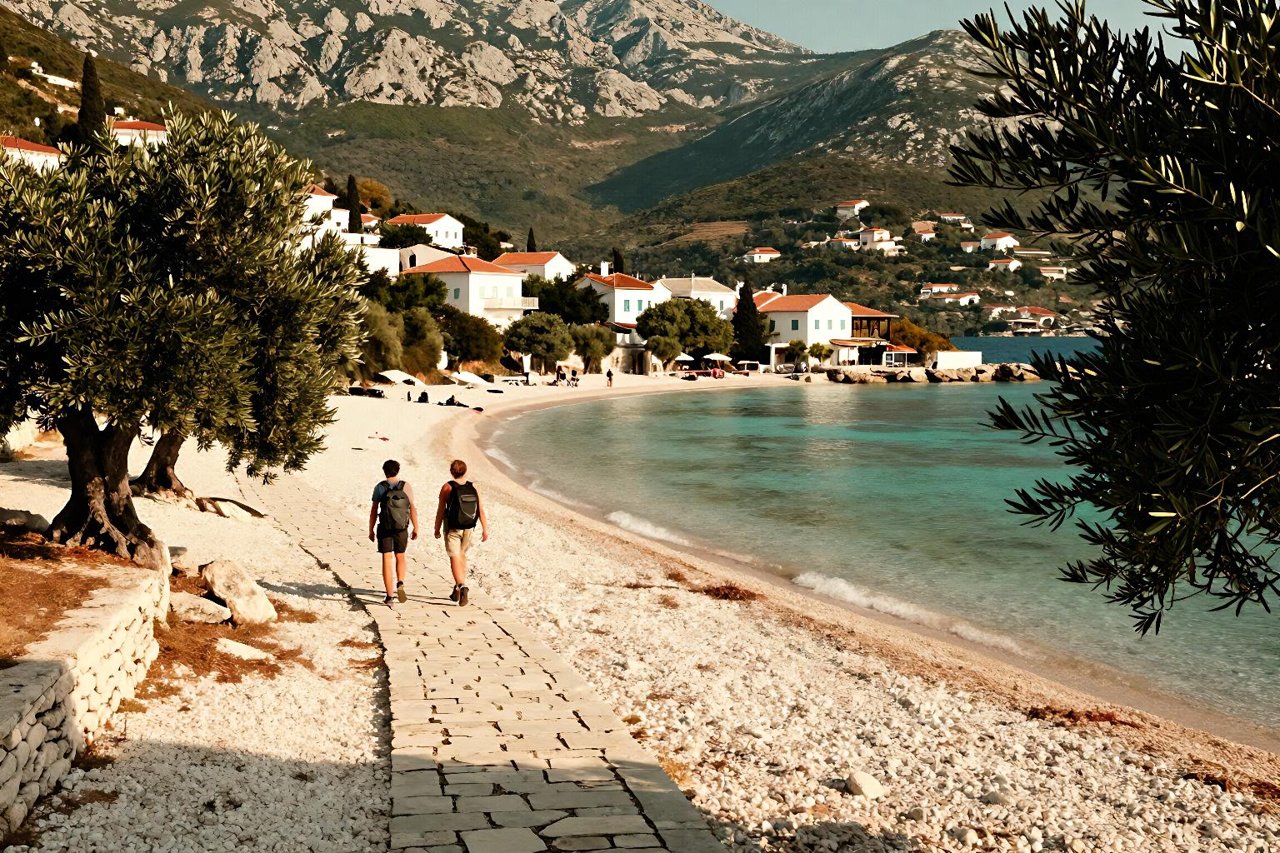
Albania has been “the next Croatia” for about six years, and 2026 is roughly the last window before prices fully catch up. The riviera between Vlorë and Ksamil delivers Ionian water that looks Photoshopped, pebble coves accessible only on foot, and a seafood lunch for two that costs less than a single main course in Split. Inland, Berat and Gjirokastër are UNESCO-listed Ottoman towns where a guesthouse night still lands around €35.
Getting there has become far easier: Vlorë’s new international airport is now receiving flights, and ferries from Corfu take under an hour. If you want to compare what a day genuinely costs across the region, this breakdown of the cheapest countries to visit in 2026 puts real numbers against accommodation, food and transport.
Georgia: Mountains, Wine and a Twelve-Month Visa
Tbilisi’s old town is half crumbling, half restored, and entirely worth three days. From there, the Georgian Military Highway climbs to Kazbegi for the Gergeti Trinity church walk, while Svaneti in the northwest offers villages like Ushguli sitting under 5,000-metre peaks. Add the Kakheti wine region, where qvevri fermentation has been happening for 8,000 years and a cellar tasting costs about 15 lari.
Many nationalities get 365 days visa-free, which is why the city fills with slow travellers and remote workers every spring. It’s also one of the standout entries in this guide to places where $50 a day still buys a real holiday.
Namibia: The Road Trip That Punches Above Its Weight
Self-drive Namibia is the best-value safari-adjacent trip on the planet right now. A compact 4×4 with rooftop tent runs around $90–120 a day, and camping inside the national parks costs a fraction of a lodge. You get Sossusvlei’s red dunes at sunrise, the dead camel-thorn trees of Deadvlei, Etosha’s waterholes in the dry season, and the granite boulders of Spitzkoppe where you can camp essentially alone.
Time it for June to October, when animals concentrate around water and the nights are cold but the days are clear. November brings the heat and the first rains, plus dramatically lower rates.
Northern Vietnam, Beyond the Ha Long Postcard
Vietnam gets cheaper the further you move from the tourist triangle. The Ha Giang loop, three or four days of mountain switchbacks on a semi-automatic motorbike, remains the single best thing in Southeast Asia for the money. Ninh Binh’s limestone karsts are the Ha Long Bay substitute you can actually cycle through, and Cat Ba island gives you the same seascape with a fraction of the boats.
Expect $30–45 a day without trying. Our roundup of real budgets and insider tips for the ten cheapest countries to travel is worth reading before you book anything.
The Azores: Europe’s Atlantic Outpost
São Miguel alone justifies the flight: Sete Cidades’ twin crater lakes, the geothermal cooking pots at Furnas, and hot springs that cost €8. Pico is for whale watching and volcanic wine, Terceira for its bull-running streets and Angra do Heroísmo’s UNESCO centre. Azores Airlines connects Boston, New York and Toronto directly, which makes it a rare European destination that doesn’t require a connection.
Pack for four seasons in one day. The archipelago sits in the Gulf Stream and famously delivers sun, mist and drizzle within an hour.
Oaxaca, Mexico: Food, Mezcal and a Coast Within Reach
Oaxaca city has become the food capital of the Americas for good reason: seven moles, tlayudas off a comal at 11pm, and mercado stalls selling chapulines by the scoop. Spend a day in the mezcal palenques around Santiago Matatlán, then take the six-hour mountain road down to Puerto Escondido or the quieter Mazunte for the coast half of the trip.
Avoid July’s Guelaguetza unless you’ve booked months ahead. Late October, when Day of the Dead altars go up and the city fills with marigolds, is the better cultural window.
Timing Is Half the Battle
Where you go matters less than when. A few rules that hold up almost everywhere:
- Two weeks after peak season ends is the sweet spot: late September in the Mediterranean, early May in Japan, November in Namibia.
- Rainy season isn’t a write-off. It usually means one heavy afternoon downpour, green landscapes and 30–40% lower room rates.
- Festival weeks double prices. Check local calendars before locking dates, not after.
- Long-haul flights price best 2–5 months out, and Tuesday or Wednesday departures are consistently cheaper than Friday ones.
If you’re travelling in the colder months specifically, this guide to the best places to go in December covers everything from Arctic Norway to the Andaman coast, with notes on which destinations actually improve in low season.
The Booking Maths That Saves the Most Money
Accommodation is where most of the savings hide. Booking directly with small guesthouses in Albania, Georgia or Vietnam typically beats the platform price by 10–15%, and a WhatsApp message two weeks ahead is usually enough. For high-season Japan or the Azores, book three to four months out; the same rooms climb 50% closer to the date.
Build in one rest day for every four of movement. The trips people remember aren’t the ones where they hit nine cities in twelve days. They’re the ones with a spare afternoon in Kanazawa, a second coffee in Tbilisi, or an unplanned stop at a roadside stall in Damaraland. Pick two bases, stay five nights in each, and let the destination do the rest.


