
Table of Contents
Some places look Photoshopped. A salt flat so flat and so wet that the horizon disappears. An island where the trees resemble upturned umbrellas and bleed red sap when cut. A working Spanish town where half the houses sit tucked beneath a single overhanging cliff. You see the photo, assume a filter, then stand there and realise the camera was the thing struggling.
These are the most unusual places to visit, and the appeal isn’t weirdness for its own sake. Each one exists because of a specific accident of geology, history or stubborn local habit. Some are a short flight from home. Others need permits, patience and a flexible attitude to flight schedules. All of them will make your camera roll look suspicious.
Salar de Uyuni, Bolivia: the world’s largest mirror
Bolivia’s Salar de Uyuni spreads across roughly 10,600 square kilometres of the Altiplano at 3,650 metres above sea level, making it the biggest salt flat on earth. For most of the year it’s a white crust you can drive across at speed, stopping at cactus-covered islands and posing for the forced-perspective photos everyone takes.
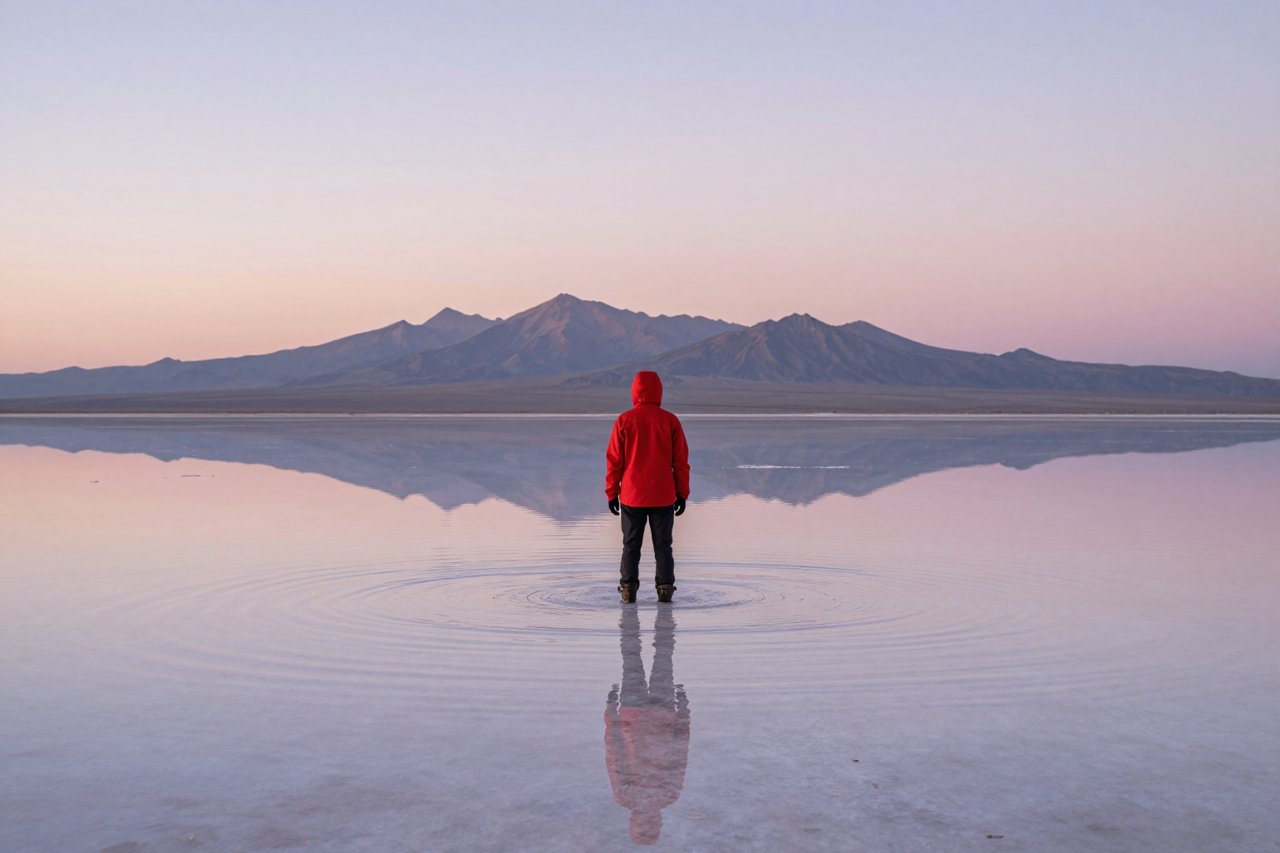
Then the rains arrive. A few centimetres of water turn the whole flat into a mirror, the horizon stops existing, and clouds appear both above your head and under your boots. Tours leave Uyuni town around 4am to catch sunrise, which is worth the alarm clock and also why you should spend a day acclimatising first.

The mirror effect peaks between December and March, which is why the salt flat keeps turning up in guides to the best places to go in December. Outside that window you get the same landscape without the reflection, plus firmer roads and far fewer people.
Socotra, Yemen: an island that evolved on its own
Socotra sits about 380 kilometres south of the Yemeni mainland in the Arabian Sea, isolated long enough that roughly a third of its plants grow nowhere else on the planet. The dragon’s blood trees do most of the visual work: thick trunks, flat mushroom-shaped canopies, and a dark red resin that has been traded as dye, medicine and varnish for centuries.
Bottle trees, cucumber trees and long empty beaches fill out the rest of the island. The catch is access. Flights to Hadibo have been sporadic for years and travel advisories differ sharply between countries, so check your own government’s advice rather than a forum post, and go with an established operator. Week-long 4×4 trips with local drivers are the norm.
Setenil de las Bodegas, Spain: a town built into a cliff
Twenty minutes north of Ronda in Cádiz province, Setenil de las Bodegas does something no other Andalusian pueblo blanco does: it builds into the roof. The town grew along a narrow gorge cut by the Río Trejo, and rather than fight the overhanging rock, residents built their walls beneath it. The rock is the ceiling.
Streets like Cuevas del Sol are barely wider than a car and stay in shade most of the day, which is a blessing in August. Bars serve cold sherry under a rock face; the church tower gives you the aerial view; the river walk takes ten minutes. Half a day covers it comfortably, so treat it as a stop rather than a destination.
Kolmanskop, Namibia: the ghost town filling with sand
Diamonds turned this patch of the Namib into a German colonial town with a casino, a bowling alley, an ice factory and a hospital. When the deposits ran out, people left, and by 1956 it was empty. The desert has been moving in ever since. Dunes pour through doorways, sand sits at the windowsills, and wallpaper survives in the rooms the light never reaches.
It’s about 10km outside Lüderitz, with day permits and guided tours available in town. Arrive early; the low sun cutting through sand-filled doorways is the entire reason to bring a camera. The driving in this part of Namibia is easy and guesthouses are affordable, so if you’re considering it on your own, the best places to travel alone is a sensible next read.
Salina Turda, Romania: an underground theme park in a salt mine
Turda, in Transylvania, mined salt from the Middle Ages until 1932. In 2010 the old Terezia mine reopened as something between a spa, a museum and an amusement park, 120 metres below ground. There’s a salt lake with rowing boats, a Ferris wheel, an amphitheatre and a constant 10 to 12°C that makes a jacket non-negotiable even in July.
It’s about 30km from Cluj-Napoca, so it works as a half-day add-on to a city break. It also happens to be one of the rare genuinely odd places that keeps children happy for hours, which is why it fits neatly into these places to travel with family that actually work.
Five smaller oddities worth a detour
Not every strange place needs its own flight. These are the ones you fold into a bigger trip:
- Fly Geyser, Nevada. Not natural at all. A geothermal well drilled in 1964 was capped badly, and mineral-rich water has been erupting ever since, building red and green terraces on Fly Ranch near Gerlach. Guided tours only.
- The Crooked Forest, Poland. Around 400 pines near Nowe Czarnowo, all bending sharply north at the base. Planted around 1930, and nobody has a settled explanation. A 20-minute stop off the road to Szczecin.
- Spotted Lake, British Columbia. Near Osoyoos, where minerals pool into circles as the water evaporates in summer. Sacred to the Syilx people and fenced off, though the view from the roadside is decent.
- Chand Baori, India. A Rajasthan stepwell with 3,500 narrow steps across 13 storeys, built in the 8th or 9th century. Geometrically hypnotic, and roughly two hours from Jaipur.
- Waitomo, New Zealand. Glowworm caves where you drift through total darkness in a boat beneath thousands of blue-green lights, with the engine off and nobody talking.
If you’d rather pick a trip by atmosphere than by geography, this set of unique adventures for every mood covers everything from adrenaline to slow, quiet travel.
Aogashima, Japan: the village inside a volcano
About 350km south of Tokyo, Aogashima is a volcanic island with a second, smaller volcano sitting inside its caldera, and roughly 170 people living on the slopes between the two. Steam vents feed the public bath. A tiny distillery makes shochu from island sweet potatoes. One guesthouse absorbs most of the visitors.
Getting there is both the point and the problem. From Hachijojima it’s a 20-minute helicopter ride or a ferry that cancels often enough that locals plan around it. Day trips are technically possible and completely unsatisfying. Stay a night, walk the rim trail, and eat dinner where you’re sleeping.
How to plan a trip around places this strange
Book the awkward leg first
For Uyuni that’s the flight or overnight bus into town. For Socotra it’s the charter. For Aogashima it’s a helicopter seat that sells out weeks ahead. Lock the hard piece, then build everything else around it.
Give the weather a buffer
Flooded salt flats, cancelled ferries and seasonal mineral circles all depend on conditions nobody controls. Two spare days near the end of a trip are the difference between getting the shot and telling a story about not getting it.
Read the access rules properly
Fly Geyser is guided-tour only. Kolmanskop needs a permit from Lüderitz. Several of these sites sit on land that matters deeply to local communities. A locked gate can waste a day you flew 20 hours for.
Test the idea on a shorter trip first
Plenty of the best weekend getaway destinations have the same “why does this exist?” energy within a two-night drive. Try one of those before you commit to a fortnight of jeep tracks and guesthouse dinners. If you hate it, you’ve lost a weekend. If you love it, you’ve found the thing that will shape the next ten years of your travelling.


