
Table of Contents
There’s a particular kind of despair that comes from pulling a dog hair out of your mouth mid-sandwich. If you’ve lived with a heavy shedder, you know the rest of it too: the fur tumbleweeds along the skirting boards, the black jeans that never come clean, the vacuum canister you empty twice a week. So people go searching for dog breeds that shed the least, and quickly discover that “low shedding” is one of the loosest phrases in the dog world.
Some of it is genuine. Some of it is a breeder’s sales pitch. Here’s how to tell the difference, and which breeds actually keep their coat to themselves.
What Low Shedding Really Means
Dogs lose coat in two very different ways. Coated breeds such as Labradors, German Shepherds and Huskies drop fur continuously, then blow their undercoat twice a year, when the stuff comes out in handfuls and collects in drifts under the dining table.
Hair breeds are the other story. Poodles, Bichons, Yorkies and their relatives grow hair the way you grow hair: it keeps getting longer and falls out at a trickle rather than a flood. Almost every low-shedding breed on any list belongs to this group.

The trade-off is blunt and worth saying out loud. Hair that doesn’t land on your floor still has to be cut, usually every six to eight weeks, for the dog’s whole life.
“Hypoallergenic” is a marketing word
No dog is truly hypoallergenic. People react to a protein found in dog saliva, skin flakes and urine, not to the hair itself. The hair is simply the delivery vehicle that carries the protein onto your sofa and into your air. A low-shedding dog puts less of it into circulation, which helps plenty of allergy sufferers a great deal and does nothing at all for others. If allergies are driving your search, spend a couple of hours with the breed before you commit. There’s more on that in this guide to hypoallergenic dog breeds that actually shed less.
The Breeds That Genuinely Keep Their Hair
Poodle, in all three sizes
Dense, curly, single-coated and about as close to shed-free as a dog gets. Toy Poodles weigh 4–6lb, Miniatures 10–15lb, Standards 45–70lb. All three need a professional clip every 6–8 weeks (roughly $80–150 depending on size and city) plus brushing three or four times a week, because curls that aren’t combed through will mat flat against the skin. In exchange you get one of the most trainable dogs alive. A Standard needs a proper run every day, not a lap around the block.
Bichon Frise
A 12–18lb powder puff in white, with a curly coat that behaves like Velcro for any hair the dog does lose. That’s the catch: the loose hair stays trapped in the coat until you brush it out, so three or four sessions a week are non-negotiable, and grooming every 4–6 weeks keeps the shape. Bichons are cheerful, sturdy little dogs that suit flats well. Expect to wipe tear stains under the eyes most mornings.
Portuguese Water Dog
Bred to work nets off the Portuguese coast, so they have webbed feet and a waterproof curly coat that sheds very little. Adults run 35–60lb. You’ll see them in two clips: the lion cut, with the hindquarters shaved, and the retriever cut, taken down all over. They’re busy, mouthy as puppies, and need a job — swimming, fetch, scent games — or they’ll invent one involving your cushions.
Soft Coated Wheaten Terrier
Wavy, wheat-coloured, single-coated, 30–40lb, and a genuine low shedder. The coat is the hard part: it mats in hidden places like behind the ears and under the collar, so you need to line-brush (part the coat and work from the skin outward) about once a week. Wheatens are bouncy, friendly and have a stubborn streak that shows up around recall.
Miniature Schnauzer
Technically they do shed a little, but the harsh wiry topcoat traps the hair, so you find it in the brush instead of on the carpet. They weigh 12–20lb and come with eyebrows and a beard that collect everything. A strip or clip every 6–8 weeks keeps them tidy. Fair warning: Schnauzers are alert little watchdogs and will announce the postman, the neighbour’s cat and a leaf. If you share walls, read quiet dog breeds that bark less before you fall for the beard.
Yorkshire Terrier and Maltese
Both have fine, silky, hair-like coats with no undercoat to blow. Yorkies sit at 4–7lb, Maltese around 7lb, and neither leaves much behind. Keep the coat long and you’re brushing daily; take them down to a puppy cut every six weeks and life gets considerably easier. Maltese are the gentler of the two and content with two short walks.
Quick Picks by Household
- Smallest footprint: Maltese or Toy Poodle — under 10lb, minimal shedding, happy in a one-bedroom.
- Active family: Standard Poodle or Portuguese Water Dog — big enough for hikes, still low shed.
- Allergy-conscious home: Bichon Frise or Miniature Schnauzer.
- First-time owner: Miniature Poodle — forgiving to train, manageable size, forgiving coat.
- Quiet household: Maltese or Wheaten, though the Wheaten needs more exercise than people expect.
The Breeds People Get Wrong
Short hair does not mean low shedding. Pugs and French Bulldogs have a dense short coat over a real undercoat and produce an astonishing amount of hair for their size. Dachshunds and Beagles are the same story. Labradors, Golden Retrievers, Huskies and Akitas are the obvious heavy shedders most people already know about.
Then there are the doodles. A first-generation Goldendoodle or Labradoodle can inherit either parent’s coat, and plenty of them end up with a Lab-style undercoat plus a beard. If a low-shed coat matters to you, buy an adult dog whose coat you can see and touch, or a multigenerational cross with a documented fleece coat. Puppy photos won’t tell you.
What the Grooming Actually Costs
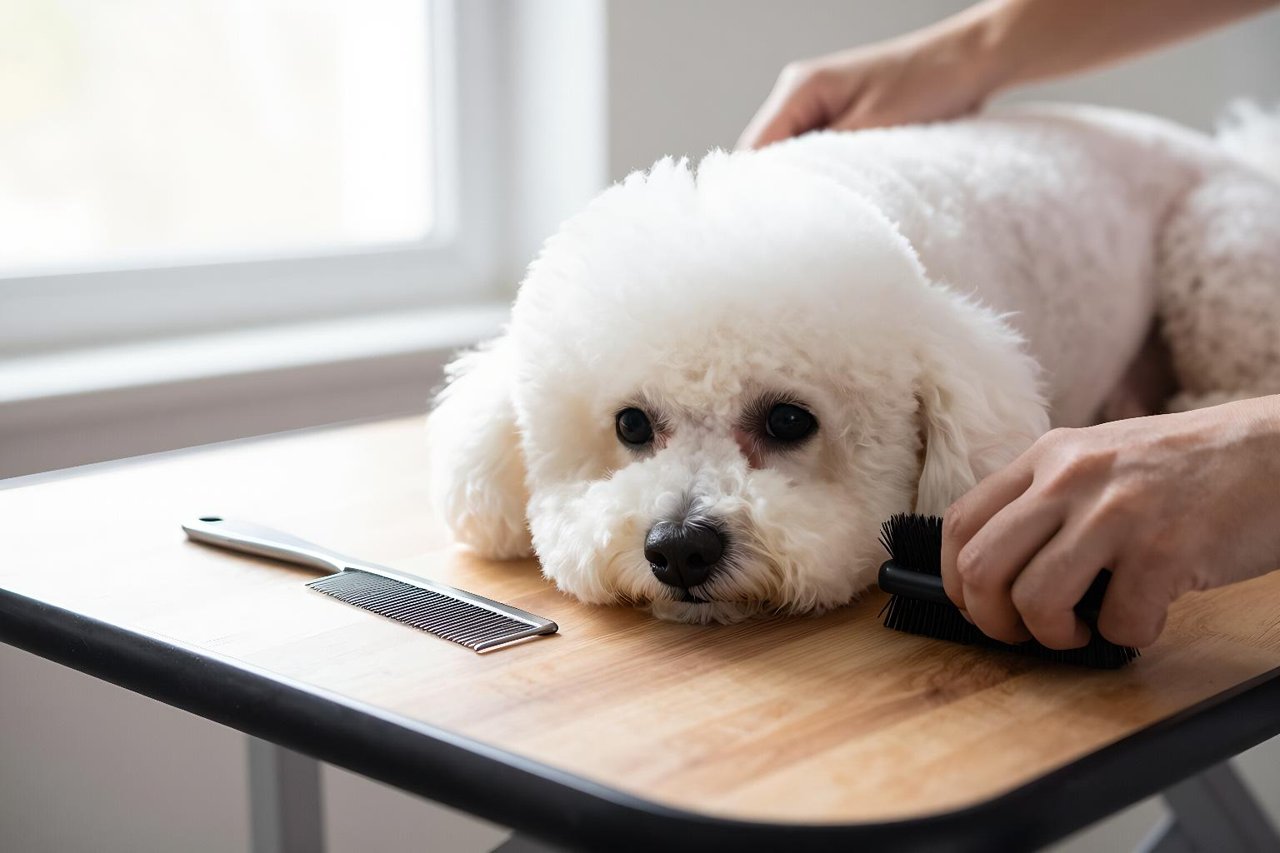
Budget properly, because this is the part most breed lists skip. Six to eight grooming appointments a year at $60–120 each puts a small breed at $400–800 annually; a Standard Poodle or a Wheaten can easily pass $1,200. Add a slicker brush, a metal greyhound comb, detangling spray and 20–30 minutes of your week. Skip the brushing and the coat mats against the skin, which hurts, and a matted dog has to be shaved right down — often at emergency-groomer prices.
The shedding doesn’t disappear either. It concentrates in the brush, on the groomer’s floor and in the corners where your dog sleeps.
Matching the Dog to Your Actual Week
Be honest about the time you have. A Wheaten needs a solid walk plus training every day; a Maltese is fine with two short strolls and a sniff around the block. If space is tight, look at small dog breeds for apartments that genuinely thrive in small spaces — size and coat type tend to travel together in this group anyway.
If you’re choosing for an older owner, calm, manageable companions for seniors covers temperament and exercise needs in more depth, and it’s a better starting point than coat alone. And if you want the whole package — easy coat, easy temperament, no four-hour daily commitment — this roundup of low-maintenance dog breeds for people with real lives is worth twenty minutes of your evening.
A Grooming Routine That Keeps Hair Out of Your Life
The low-shedding breeds only work if you hold up your end. A routine that fits into an ordinary week looks like this:
Brush before the bath, never after. Wet mats tighten as they dry, so a tangled coat that goes into the tub comes out closer to felt. Ten minutes with a comb on a dry coat first saves an hour later.
Work in sections. Part the coat down the spine and brush a section at a time from the skin outward, not just over the top. The top inch of a Bichon or Poodle can look perfect while a solid mat is forming underneath at the armpits, behind the ears and along the belly.
Use the bath for loosening. A rubber curry brush worked through conditioner lifts a surprising amount of dead coat out of a curly or double coat, and it all goes down the drain rather than onto your rug.
Book the next appointment before you leave the current one. Groomers fill up, and a six-week cycle that slips to ten is how coats get shaved off. Keep a washable throw on the dog’s spot on the sofa and a lint roller in the car, and the rest of your house stays more or less hair-free.


