
Table of Contents
The first dinner I ate alone abroad was in a six-table tasca in Lisbon, where a football match played on a television nobody was watching. I pointed at the menu, got grilled sardines and a glass of vinho verde, and spent forty minutes listening to two men argue about a goalkeeper. Nobody stared. Nobody asked where my friends were. It turned out to be one of the best evenings of the trip.
That is roughly the whole test of a solo destination. It isn’t about how many sights there are. It’s about whether a city gives you somewhere to sit down and be alone without feeling lonely. Some places absorb a single traveler without a second thought. Others make you feel like an administrative problem.
The seven below get it right for different reasons, and between them they cover most of what people actually want from a trip on their own. If your shortlist is still wide open, it’s worth cross-checking these against a wider view of the destinations worth planning around in 2026 before you commit.
What Actually Makes a Place Work for One Person
Three things do most of the heavy lifting. The first is a walkable core, ideally with transit you can figure out in under an hour. The second is a food culture that doesn’t punish you for taking a table by yourself — counter seating, market stalls, ramen bars, tapas counters where a solo diner is the norm rather than an oddity.

The third is price, and specifically the single supplement. A city where a decent private room costs €40 a night forgives a lot of small frustrations. A city where it costs €180 makes every rainy afternoon feel like wasted money. That math is why so many first solo trips end up in places where the daily budget stays under €70.
Kyoto, Japan
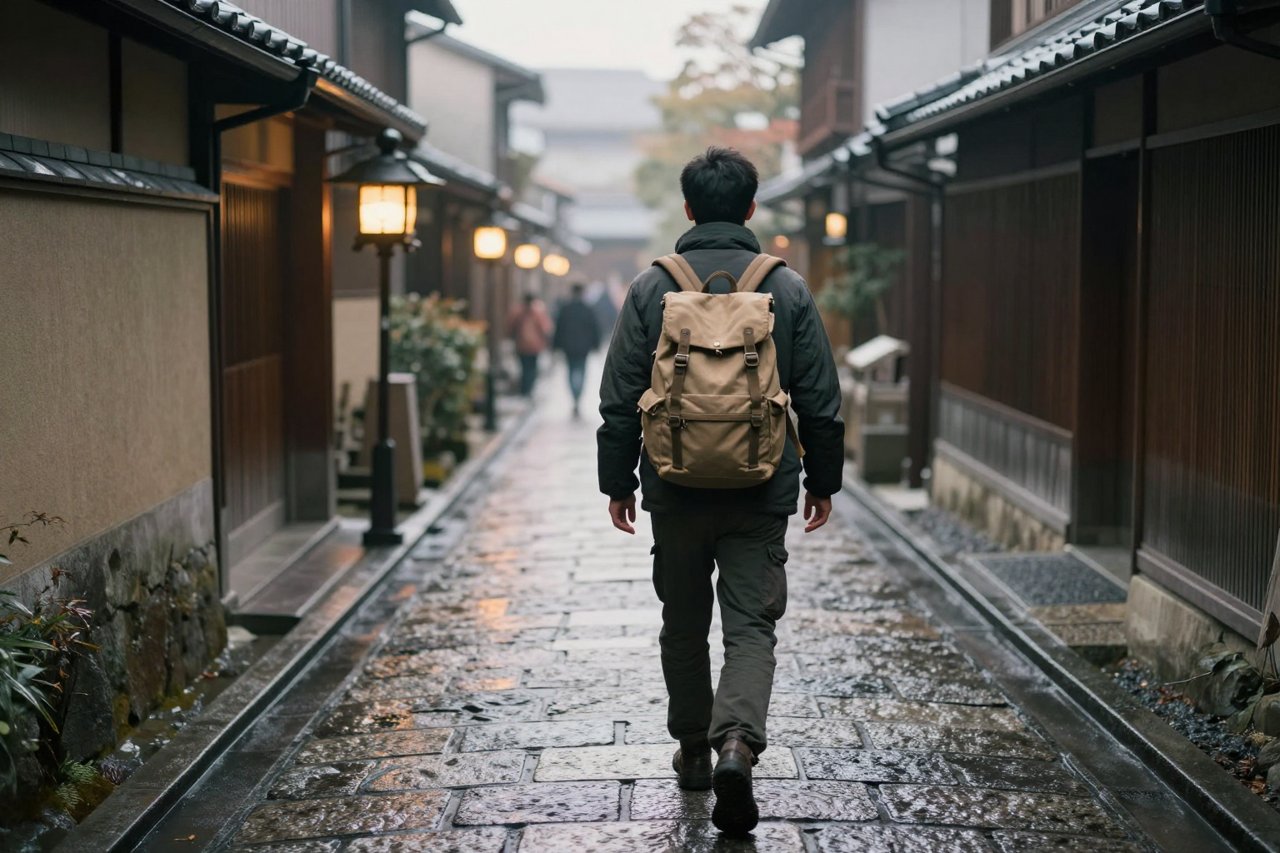
Kyoto rewards the solo traveler in the early morning, which is exactly when most people are still asleep. Fushimi Inari is genuinely quiet before 7am — you can walk the lower gates without dodging selfie sticks. The philosopher’s path, the moss gardens at Saihō-ji, the tiny kissaten coffee shops that seat eight people: all of it works beautifully alone.
Eating is easier than first-timers expect. Ramen counters, standing sushi bars, and the basement food hall of a department store at 7pm are all built for one. A bed in a good guesthouse near Gion runs about ¥4,000–6,000 (roughly $27–40), and the buses and subway are straightforward once you have an IC card.
There’s a quieter reason Kyoto suits people traveling solo. It’s a city that rewards stillness more than checklist-ticking, which is why it keeps coming up for anyone interested in finding a genuine sense of calm on the road. Give yourself one unplanned afternoon with no destination and see what happens.
Ljubljana, Slovenia
Ljubljana is small enough to walk end to end in forty minutes, and the whole center is car-free. That combination removes about 80% of the low-level stress of arriving somewhere new on your own. You step off the bus, you walk along the river, and within an hour you know where you are.
The hostel scene here is unusually good — small, social, with group dinners that are easy to join and easy to skip. Climb to the castle for the view, browse the antique stalls along the river on a Sunday, and take the 80-minute bus to Lake Bled for a day. Metelkova, the old military barracks turned squat-cum-club district, is worth an evening even if you’re not much of a drinker.
Taipei, Taiwan
Taipei might be the most underrated solo city in Asia. It’s safe enough that walking home at midnight feels unremarkable, the MRT is bilingual and cheap (around NT$20–30, or less than a dollar, for most central trips), and eating alone is practically the default setting at the night markets.
You can spend a morning at Beitou’s hot springs, an afternoon on the Elephant Mountain trail looking back at Taipei 101, and an evening grazing your way through Raohe Night Market for under $15. Hostels cluster around Taipei Main Station for $25–35 a night. If budget is the deciding factor in your planning, it’s worth reading up on how to travel well on a genuinely tight daily budget — Taipei fits that brief better than almost anywhere in East Asia.
Reykjavik, Iceland
Iceland is expensive, and pretending otherwise is unhelpful. But it is also one of the safest, most solo-friendly countries on earth, and a hostel bed in Reykjavik in shoulder season can be found for around $45–65. The city itself is tiny, walkable, and full of day tours that pick you up from the doorstep — which solves the biggest problem of traveling alone in a country with terrible public transport to the places you actually want to see.
The other option, if you want the coastline without renting a car, is a small-ship expedition, where solo travelers tend to blend into a group quickly and shore landings are built into the schedule. Our guide to how expedition cruises work in practice covers what that actually costs and what a day looks like.
Porto, Portugal
Porto does the thing that matters most: it gives you a reason to be out of your accommodation all day. The Ribeira waterfront, the port cellars across the river in Gaia, the cluttered bookshops, the tiled churches, the Foz promenade at sunset. Everything is within walking distance or a short tram ride, and the entire city seems to run on a relaxed schedule that suits a slow traveler.
Hostels here run €20–30 for a dorm in spring, and the Douro Valley is a 90-minute train ride for a day of vineyards. Skip Livraria Lello unless you enjoy queuing — the city has better bookshops with no line.
Medellín, Colombia
Medellín gets called the spring city for a reason: the temperature barely moves all year. Laureles and El Poblado are full of cafés where working alone with a laptop is completely normal, Spanish schools are cheap and plentiful, and the metrocable up to Santo Domingo is one of the best hours you can spend in South America for the price of a metro ticket.
Day trips to Guatapé, Santa Fe de Antioquia, and the coffee region are easy to arrange. It’s also a place where people stay for weeks rather than days, which changes the whole rhythm of a solo trip — you stop being a visitor and start having a routine.
Chiang Mai, Thailand
Chiang Mai has spent a decade building infrastructure for people traveling on their own. Cooking classes, ethical elephant sanctuaries, temple walks up Doi Suthep, and a café culture that fills the gap between activities. A comfortable guesthouse room is $15–25, a month of co-working is less than a single night in Reykjavik, and the old city is flat enough to cycle.
The social side is the real draw. Between the Sunday Walking Street market and the various meetups that run most nights, it’s genuinely hard to be lonely unless you want to be.
The Small Decisions That Make or Break a Solo Trip
Destination is maybe 40% of the outcome. The rest is logistics you can plan in an afternoon.
- Book two nights, not seven. Arriving with an exit option means you can move on if a place doesn’t click.
- Land in daylight. A 6am arrival in an unfamiliar city is manageable. A midnight one is not.
- Buy the local SIM at the airport. Paying $10 more to have maps working immediately is money well spent.
- Learn ten words of the language. Please, thank you, sorry, how much, the bill. It changes how people treat you.
- Plan one structured thing per day, maximum. The rest of the day fills itself.
- Build in a 4pm reset. Coffee, a shower, a lie-down. Solo travel is more tiring than traveling with company.
- Sit at the counter. Bars, ramen shops, market stalls. It’s where conversation happens.
Match the Destination to Your Own Company
If you want anonymity — the pleasure of being a stranger nobody bothers — Taipei, Tokyo, and Kyoto deliver it. If you want to meet people, hostels in Ljubljana and Porto will do more for your social life than any app. If you want landscape and silence, Iceland. If you want to plant yourself somewhere for a month and feel like a local, Chiang Mai and Medellín are built for exactly that.
First solo trips work best at five to seven days in one city you can mostly walk, with a hostel or guesthouse for the first stretch so you’re not entirely alone in a rented apartment. Save the three-week multi-country version for the second trip. And if none of the seven above quite fits, this roundup of unforgettable places to visit next is a good place to find something that does.
One last piece of practical advice. Pick a city where the main attraction is a street rather than a ticket booth. Streets can be wandered at 7am or 10pm, alone, for free, with no booking and no schedule — and that is usually the part of a solo trip people remember: not the museum they queued for, but the hour they spent walking back to their room the long way round.


