
Table of Contents
Choosing a pet is an emotional decision, but it’s also a scheduling one. A hamster gives you two years. A dog might give you 15. Then there are animals that treat decades like a warm afternoon. The top 7 longest living pets on this list have maximum lifespans that dwarf the average cat, rabbit, or dog. They ask for something more than food and water. They demand planning, patience, and a clear-eyed view of who will take over when your own life changes.
Here’s a quick look at seven species that routinely outlive the typical shelter pet:
- African Spurred Tortoise (Sulcata): 70 to 100+ years
- Umbrella Cockatoo: 40 to 70 years
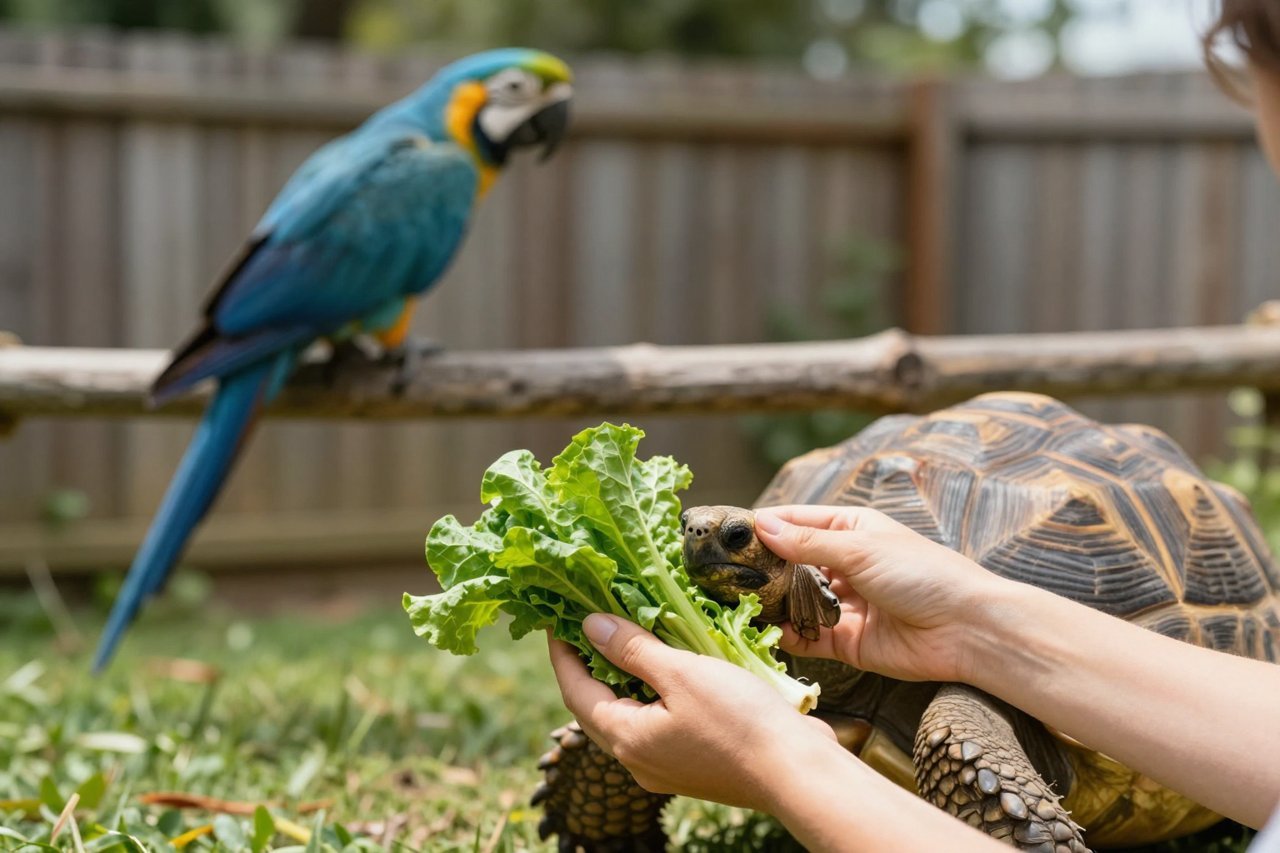
- Blue-and-Gold Macaw: 30 to 70 years
- African Grey Parrot: 40 to 60 years
- Amazon Parrot: 40 to 60 years
- Koi Fish: 25 to 50 years, with exceptional individuals past 100
- Red-Eared Slider Turtle: 25 to 40 years
1. African Spurred Tortoise: A Friend for the Century
Reptile keepers know the African spurred tortoise by its common name, the sulcata. Hatchlings can fit in your palm, but adults become muscular, 100-pound bulldozers that dig burrows, plow through fences, and outlive almost everyone who owns them. Healthy sulcatas routinely reach 80 years, with some passing 100. Even the way we understand long-lived animals changes over time; Indigenous rock art in Australia suggests Tasmanian tigers lived much longer than once assumed. A sulcata doesn’t need a rock painting to prove its sheer staying power. It just needs the right keeper to match that lifespan.
The Cost of Caring for a Century
This is not an apartment pet. An adult sulcata needs a large, secure outdoor space: at least 20 by 20 feet, plus a heated shed for cold nights. They are grazers that need grass, hay, and leafy greens, not fruit-heavy commercial tortoise food. They also need a calcium supply that matches their shell growth. Many sulcatas wind up in rescue because the original owner outlived their willingness to maintain the burrow. Plan as if this animal will be with you through every future career change.

2. Umbrella Cockatoo: Emotional Velcro with Feathers
Umbrella cockatoos are snow-white, with a crest that opens like an umbrella when they get excited. Captive birds have been recorded living into their 70s, and unverified stories put some past 100. The personality is the bigger story. They bond to one person with an almost obsessive intensity. Leave for a three-day trip and you might come home to a bird that screams, plucks its chest feathers, or develops a sour crop from stress. They are brilliant, loud, and messy. They are also one of the most loving animals you can share a house with.
3. Blue-and-Gold Macaw: A Rainbow That Never Leaves
Blue-and-gold macaws are the showy parrots you see in zoo exhibitions. Given the right diet and mental stimulation, they can live 30 to 70 years. A large macaw is basically a flying toddler with a nutcracker attached to its face. It can learn to open drawers, unscrew bolts, and mimic your phone’s ringtone until you go outside to check the mailbox every 10 minutes. They need regular time out of the cage, plenty of shredded paper and wooden toys, and an owner who understands why a bird might shred an entire chair arm in one afternoon.
4. African Grey Parrot: The Einstein Who Remembers You
African greys live 40 to 60 years, and they are widely considered the most intelligent parrots. Alex, the grey studied by Irene Pepperberg, learned labels for colors, shapes, and quantities. In a home, an African grey needs more than a full dish and a mirror. It needs foraging toys, one-on-one training, and a routine that doesn’t change unexpectedly. Give it that, and it might reward you by copying the sound of your coffeemaker every single morning.
For real-life proof of what an African grey can do, look up videos of them carrying on full conversations. Their longevity makes them a fine companion, but their intelligence makes them a project. They are not the best choice if you prefer a quiet, low-maintenance house.
5. Amazon Parrot: The Talker Who Starts the Conversation
Amazon parrots are stocky green birds from the Americas, with bright yellow or red shoulder patches. They are strong talkers, sometimes developing a vocabulary that would make your aunts blush. They routinely live to 50 or 60 years, and some have pushed past 70 in captivity. Unlike the clingy cockatoo, many Amazons are more independent, making them easier for people with jobs and social lives. They still need a huge cage, fresh produce, and a space where their flock calls won’t be mistaken for a fire alarm.
6. Koi Fish: The Pond That Ages Gracefully
Koi are not the kind of pet you keep in a bowl. With a properly built pond, they can live 25 to 50 years, and some Japanese koi have legendary histories of reaching 100 or more. Hanako, a female koi in Japan, reportedly lived to 226. What do these fish need? Water volume, shade, filtration, and oxygen. A couple of adult koi needs at least 1,000 gallons of water. They also need shelter from predators like herons and raccoons. But because they recognize their handlers and eat from open palms, they offer a quiet, rewarding version of longevity.
Building a Pond That Lasts
Skip the tiny preformed plastic shell. You want a deep pond, at least 3 feet in the coldest climates, with a bottom drain, a skimmer, and a biological filter that cycles year-round. A well-built pond is as significant as a patio renovation. The fish themselves may see cars and fashions come and go, but the water should stay steady.
7. Red-Eared Slider: The Turtle You Forgot Could Outlive You
Red-eared sliders are the classic pet-store turtle: bright green hatchlings sold in small plastic tubs with a plastic palm tree. The truth is they grow to 10 or 12 inches and can live 25 to 40 years if cared for properly. They need real plumbing, not a small island. UVB light, a basking bulb, clean water, and a varied diet of turtle pellets, leafy greens, and insects all make a huge difference.
The Trap of the Starter Kit
Most red-eared sliders don’t die of old age. They die from shell rot and respiratory infections caused by dirty water and no heat. If you can keep the filter clean and give them a solid basking platform, they’ll outlive your phone, your car, and possibly your first marriage.
The Long Game: Planning for a Pet That Outlasts You
Before you bring one of these animals home, do the unglamorous work. Set up a future-care arrangement. Name a caretaker in your will or write a detailed care notebook that someone else could follow. Decide ahead of time whether the pet moves with you if you relocate. If you are not ready for that level of planning, the kinder choice may be a dog or cat with a more compact timeline.
For a practical comparison, our guide to the top 7 dog breeds in the world highlights how energy levels, shedding, and temperament fit into different homes. Dogs may not live as long as a macaw or a tortoise, but they offer a dense span of connection that works for plenty of people.
A long-lived pet will be there for the normal stuff: bad haircuts, late nights, moving boxes and, eventually, your own grey hair. It will also be there when you’re not, which is exactly why the top 7 longest living pets deserve an estate plan as much as a food bowl. They test your patience, rearrange your home, and shape your weekends. But they also sit beside you for the long, slow loop of your life. That kind of loyalty carries a different weight.


