
Table of Contents
A grocery basket can do more for your health than a shelf of supplements. The most useful foods are not the ones with the loudest packaging. They are the ones you can cook on a Tuesday, eat without boredom, and feel good about. That is the spirit behind this list of the top 7 nutrient-rich foods for everyday meals: practical ingredients that deliver protein, fiber, vitamins, minerals, and healthy fats without turning dinner into a project.
You do not need all seven at every meal. Aim for a mix across the week. A few will become habits, and the rest can fill gaps.
What Counts as Nutrient-Rich?
Nutrient-rich foods give you a meaningful amount of nutrition for the calories they carry. Think protein, fiber, iron, calcium, vitamin B12, vitamin D, potassium, and omega-3 fats. A pastry has calories; a bowl of lentils has calories plus fiber and plant protein. That difference matters over months, not just days.
If you want a fuller definition, this guide to nutrient-dense foods and why they matter covers the basics well. For this list, the test is simpler: can you use it often, and does it bring something useful to the plate? All seven below pass.

Top 7 Nutrient-Rich Foods for Everyday Meals
1. Eggs
An egg costs little and brings about 6 grams of complete protein, choline for brain and liver function, vitamin B12, selenium, and lutein and zeaxanthin for eye health. The yolk holds most of the choline and carotenoids, so eating whole eggs makes sense for most people.
Use them beyond breakfast. Scramble two into fried rice at the end of cooking. Boil a batch for lunches. Whisk one into hot broth for a quick egg-drop soup. A frittata with leftover vegetables covers dinner when the fridge looks bare.
2. Leafy Greens
Spinach, kale, Swiss chard, and collards are high in vitamin K, vitamin A, vitamin C, folate, and fiber. Spinach adds iron and calcium, though the oxalates reduce absorption somewhat. Cooking greens with a little fat helps you absorb their fat-soluble vitamins.
The trick is keeping greens visible and ready. Wash and dry a bag, then add a handful to eggs, soups, pasta, or a sandwich. Two cups of spinach wilt to almost nothing in a hot pan, which makes them easy to hide in a meal. Kale holds up in a massaged salad with lemon and olive oil; chard stems are good sliced and sautéed first.
3. Salmon
Salmon provides omega-3 fats, complete protein, vitamin D, B12, and selenium. Canned salmon works just as well as fillets for many meals and usually costs less. Keep a couple of cans in the cupboard for days when fresh fish is not happening.
Roast a fillet at 200°C (400°F) for about 12 minutes. Flake canned salmon into fish cakes, pasta, or a grain bowl. Salmon also makes a strong topping for toast with cucumber and yogurt. Two servings of fatty fish a week is a practical target for most adults.
4. Beans and Lentils
Half a cup of cooked beans gives roughly 7 grams of protein and 6 grams of fiber, plus folate, iron, and potassium. Lentils cook in about 20 minutes without soaking, which makes them a better weeknight option than many people expect. Canned beans are fine; rinse them to cut sodium.
Add lentils to tomato sauce for a Bolognese-style dish. Toss chickpeas with cumin and roast until crisp. Use black beans in tacos, white beans in soup, and lentils in salads with feta and herbs. These foods are cheap, shelf-stable, and filling.
5. Plain Greek Yogurt
A cup of plain Greek yogurt can carry 15 to 20 grams of protein, along with calcium, B12, and live cultures. Flavored tubs often add more sugar than you need. Buy plain and sweeten it yourself with fruit, cinnamon, or a spoon of jam.
Use it where sour cream would go: on chili, baked potatoes, or tacos. Stir it into marinades with lemon and garlic. Mix with mustard and herbs for a quick dressing. It also makes a thick base for smoothies without the chalky texture of some protein powders.
6. Oats
Oats are known for beta-glucan, a soluble fiber that supports heart health and helps with fullness. A 40-gram serving of rolled oats delivers about 4 grams of fiber and 5 grams of protein, plus magnesium and manganese. Steel-cut oats take longer; rolled oats are the everyday workhorse.
Overnight oats take two minutes before bed. Savory oats with broth, spinach, and a poached egg make a fast dinner. You can also blend oats into pancakes or use them as a binder for meatballs. Skip the sugary instant packets and flavor your own.
7. Sweet Potatoes
One medium sweet potato provides beta-carotene, vitamin C, potassium, and fiber. The orange flesh is a reliable source of vitamin A, and the skin adds extra fiber. They are filling without being heavy.
Roast cubes at 220°C (425°F) for 25 minutes with olive oil and paprika. Microwave a whole one for 5 to 7 minutes when you need speed. Mash it with black pepper and a little butter, or dice it into a breakfast hash with onions and eggs. Sweet potato also works in soups and curries.
Seven Foods at a Glance
- Eggs: complete protein, choline, B12; boil or scramble for quick meals.
- Leafy greens: vitamin K, folate, fiber; wilt into pasta, soups, and eggs.
- Salmon: omega-3s, vitamin D, protein; roast, flake into bowls, or use canned.
- Beans and lentils: fiber, plant protein, iron; add to tacos, sauces, and salads.
- Greek yogurt: protein, calcium, cultures; use plain in dips, marinades, and breakfasts.
- Oats: beta-glucan fiber, magnesium; make overnight oats or savory porridge.
- Sweet potatoes: beta-carotene, potassium, fiber; roast, mash, or microwave.
How to Put These Seven to Work This Week
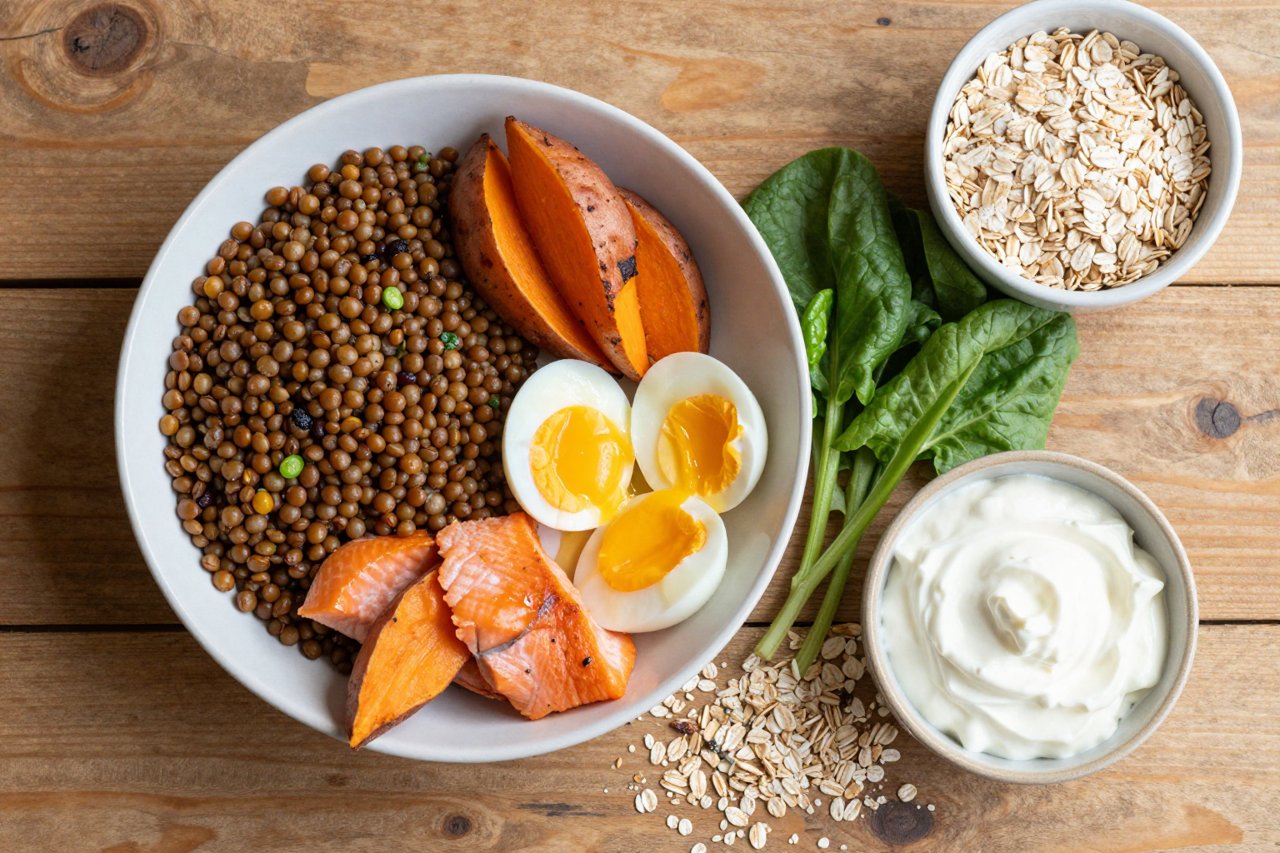
Start with one meal where two of these foods meet. Eggs with spinach. Salmon with roasted sweet potato. Lentils with Greek yogurt and herbs. Oats with yogurt and berries. That simple pairing rule gives you protein, fiber, and color without a recipe.
For shopping, buy a bag of oats, a carton of plain yogurt, a few cans of beans, a bag of lentils, eggs, frozen spinach, sweet potatoes, and canned salmon. Fresh kale and a salmon fillet can wait for the weekend. Frozen spinach is just as useful in cooked dishes and saves you from watching a bag turn to slime.
On Sunday, cook a pot of lentils and roast a tray of sweet potato cubes. Boil six eggs. Wash the greens. You have the start of three or four meals. Dinner becomes assembly, not a scramble.


