
Table of Contents
The postcard version of a famous landmark is a heavily edited thing. Every phone camera and stock photo conspires to serve you the one angle that works, at golden hour, with the crowds cropped out. Then you show up in person and something is off. The stones are held together with concrete. The rock is smaller than a coffee table. The castle has no throne in it.
That gap between the photo and the truth is where the good stuff lives. These seven tourist attractions are stranger than they look, and every one of them gets more interesting the moment you find out what you are actually standing in front of.
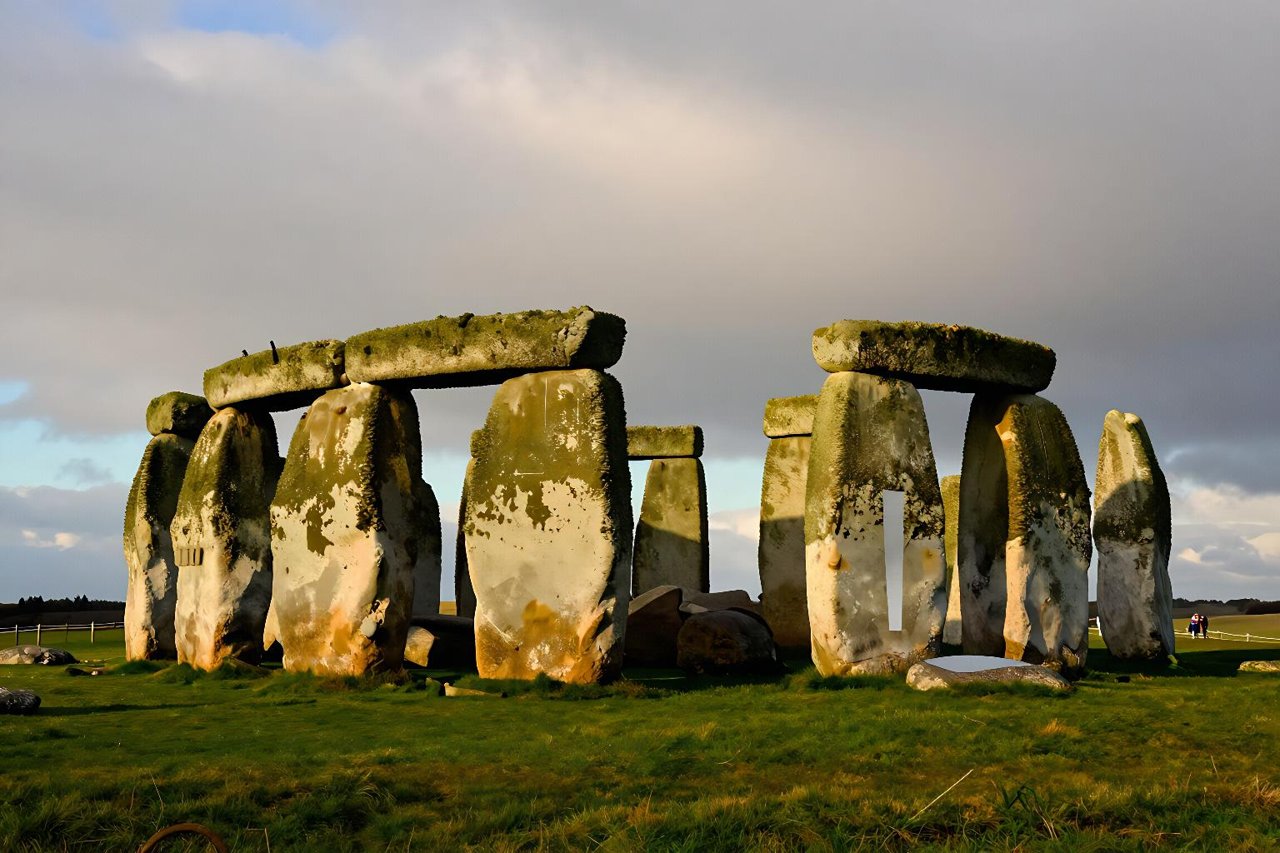
Stonehenge Was Quietly Rebuilt With a Crane
From the road, Stonehenge is a tidy ring of grey megaliths on a green plain, the very picture of unchanging antiquity. The archive disagrees. Photographs from the early 1900s show several stones leaning at drunken angles or lying flat in the grass, and the neat circle you walk around today has been straightened, lifted and anchored more than once.
A sarsen fell in 1901 and triggered a decades-long programme of work. William Hawley excavated and re-erected stones through the 1920s. The big intervention arrived in 1958, when a crane was hauled onto Salisbury Plain to lift fallen trilithons back into place, with uprights set into concrete footings so they would stop wandering. Some of what you photograph on a solstice morning is prehistoric stone repositioned by men in overalls.

None of that makes Stonehenge a fake. It makes it a rescue job, and a fairly dramatic one. It does mean the untouched-ancient-mystery framing is doing a lot of work, and that the version in your head was assembled by engineers. You also cannot wander among the stones on a normal ticket. Walk the roped path and you are looking at a reconstruction from the outside.
Plymouth Rock Is a Boulder With a Repair Seam
The most oversold rock in America sits at the waterfront under a granite canopy, roughly the size of a large coffee table, with 1620 carved into it and a visible scar running down the middle. That scar is the whole story.
In 1774 a team tried to move the thing, estimated at around 10 tons, and it cracked in two. The halves were displayed separately for years, reunited with a cement seam in 1880, and moved around Plymouth at least five times, including a spell locked in an iron cage. A chunk was chiselled off by a local law firm (they gave it back eventually). It now sits below street level, which is why so many photos feature a puddle.
Here is the genuinely odd bit: nobody wrote about Plymouth Rock as a landing site until 1741, when a 94-year-old named Thomas Faunce pointed it out, 121 years after the Pilgrims arrived. The monument predates its own evidence. It is a 15-minute stop in downtown Plymouth, so it slots easily into a New England loop, and if you are sketching out a bigger trip these 22 best places to visit in the USA in September are a useful starting point.
The Eiffel Tower Was Supposed to Be Scrapped in 1909
Paris hated it first. A 1887 petition against the tower collected around 300 signatures from writers and artists, and Guy de Maupassant reportedly ate lunch in its restaurant most days so he would not have to look at it. The structure was a temporary exhibit for the 1889 World’s Fair, built on a 20-year permit and scheduled for demolition in 1909.
It survived because of the antenna. Radio experiments gave the tower a military and communications use that made pulling it down impractical, and the aerials are still up there now. The rest of it is stranger than the silhouette suggests. Eighteen thousand iron pieces, 2.5 million rivets, and 72 names of French scientists engraved around the first floor in letters you can barely read from the ground.
It changes size and gets repainted by hand
The tower sways a few centimetres in strong wind and shrinks by up to 15cm in cold weather as the iron contracts. Every seven years or so it is stripped and repainted with roughly 60 tonnes of paint, applied by hand with brushes by workers on ropes. No spray guns, no shortcuts. If you want to understand how a temporary fairground stunt became the most recognisable object in France, that maintenance bill is a decent part of the answer.
Mount Rushmore Is Dynamite Sculpture With a Sealed Room Inside
Nothing about Mount Rushmore is natural, which is precisely the point people miss. Four hundred workers spent 14 years, from 1927 to 1941, blasting a granite mountain into a postcard. Dynamite did about 90% of the work, removing some 450,000 tons of rock. The sculptors only picked up chisels for the last few centimetres of detail.
Gutzon Borglum, the man behind it, died in March 1941 before the job was finished. The original plan was far grander: heads plus upper torsos, with the figures meant to hold items and text carved into a huge entablature beside them. Money and the war put a stop to all of it.
Behind Abraham Lincoln’s head there is a 21-metre chamber called the Hall of Records, carved into the rock and sealed in 1998 with 16 porcelain enamel panels holding the Declaration of Independence, the Constitution and a history of the monument. Nobody visits it. It exists for whoever finds it in a few thousand years. Considering the granite erodes about 2.5cm every 10,000 years, the faces will still be there when they do.
The Leaning Tower of Pisa Was Never Designed to Lean
A landmark whose entire brand is a construction error. Work started in 1173 on soft clay and sand, and the tower began to sink almost immediately. Building stopped repeatedly because of wars, and those long pauses let the soil settle underneath, which is probably the only reason it is still standing.
By 1990 it was leaning at about 5.5 degrees and engineers were openly worried it might come down. The tower closed to the public for 11 years while a team drilled soil out from beneath the high side, extracting around 70 tonnes and pulling the structure back roughly 40 centimetres, to just under 4 degrees. It is still moving, just far more slowly. Two hundred and ninety-four steps, 56 metres, eight storeys, and a legend about Galileo dropping weights off the top that nobody has ever verified.
Neuschwanstein Has 14 Finished Rooms and No Throne
The castle that taught Disney what a castle should look like is largely an empty shell. Ludwig II of Bavaria started it in 1869 as a private fantasy rather than a fortress, and of roughly 200 planned rooms, 14 were finished before he ran out of money and time.
There is no throne room. The plans called for one, a Byzantine dome with a huge chandelier, and the space was built, but the throne was never installed and the room is bare. The king did insist on hot-air heating, running water and flush toilets, which is a strange set of priorities for a medieval fantasy. In 1886 he was declared insane and found dead in Lake Starnberg the next day. Seven weeks later his castle opened to paying visitors and has been pulling in around 1.3 million a year ever since.
The Colosseum’s Missing Half Was Stolen Over Centuries
The ragged silhouette looks like romantic decay. It is actually a record of organised quarrying. Earthquakes, including a serious one in 1349, brought sections down, and then centuries of locals and popes carted off the fallen travertine for palaces and churches. A fair amount of the missing stone ended up in St Peter’s Basilica.
What survives is more sophisticated than a big bowl of sand:
- Around 50,000 spectators, seated by rank and social class
- 80 numbered entrances that could empty the building in minutes
- A retractable fabric awning, the velarium, operated by sailors seconded from the imperial fleet
- A basement of shafts and lifts beneath the arena floor, used to hoist animals and scenery up through trapdoors
- An early period when the arena could be flooded for mock naval battles
The version you see in films, with gladiators on flat sand, hides all the machinery. Head underground on a tour and you are standing in a Roman backstage.
How to See These Places Without the Postcard Blinders
Brochure photography is a skill and the travel industry is very good at it. If you have ever booked a boat trip off a single glossy image, you know how that ends, and comparing a cabin charter vs a private gulet before paying a deposit is a useful warm-up exercise in asking better questions.
A few habits will change what you get out of all seven of these sites:
- Book the special access slot. Stonehenge runs evening Stone Circle Access visits; the Colosseum hypogeum tours sell out weeks ahead.
- Look for the repairs. Concrete footings, cement seams, replaced stone, filled-in holes. They are the story, not a flaw.
- Go at opening time. Neuschwanstein takes 1.3 million visitors a year and the middle of the day is a scrum.
- Ask about the unfinished bits. The empty throne room, the abandoned torsos, the council that scrapped the plans. Guides love that question.
- Climb early in Pisa. Nearly 300 steps in an enclosed spiral staircase is unpleasant at 2pm in July.
Every one of these places rewards a second look at the detail you were never meant to notice: the crane-lifted stones, the seam in the rock, the room where a throne should be. That is where the best story lives, and it never appears on the postcard.


