
Table of Contents
A bottle of sunscreen that lives in your beach bag does almost nothing for you on a Tuesday morning commute. The damage that eventually shows up as brown patches, broken capillaries and crepey texture in your fifties is usually accumulated in unremarkable moments. Walking to the car. Sitting near an office window. Eating lunch outside for twenty minutes because the weather finally turned.
The numbers are blunt. Around 90 percent of visible skin ageing is driven by UV exposure rather than birthdays. Which means the top 7 ways to protect your skin from sun exposure aren’t really about holidays at all. They’re about small, repeatable habits that compound over decades.
1. Make sunscreen a morning habit, not a holiday ritual
Broad-spectrum sunscreen with SPF 30 or higher belongs in the same slot as brushing your teeth. Apply it before you leave the house, in every season, including the grey ones. As much as 80 percent of UVA passes straight through cloud cover, and standard window glass blocks UVB while letting a good chunk of UVA through. That’s the wavelength that reaches the deeper dermis and chews through your collagen.
To understand how much that matters over time, it helps to know how collagen changes with age and what speeds the process up. UV activates enzymes called matrix metalloproteinases that break collagen down faster than your body can rebuild it. Sunscreen is, quite literally, the cheapest collagen protection you can buy.

One practical note. If you use a retinoid, an AHA or a high-strength vitamin C serum, your skin is more photosensitive. That isn’t a reason to stop. It’s a reason to be stricter about the SPF step, and if your routine has quietly grown out of control, this guide to building a skincare routine for mature skin without a 12-step shelf is a sensible place to start cutting back.
2. Use the dose the lab actually tested
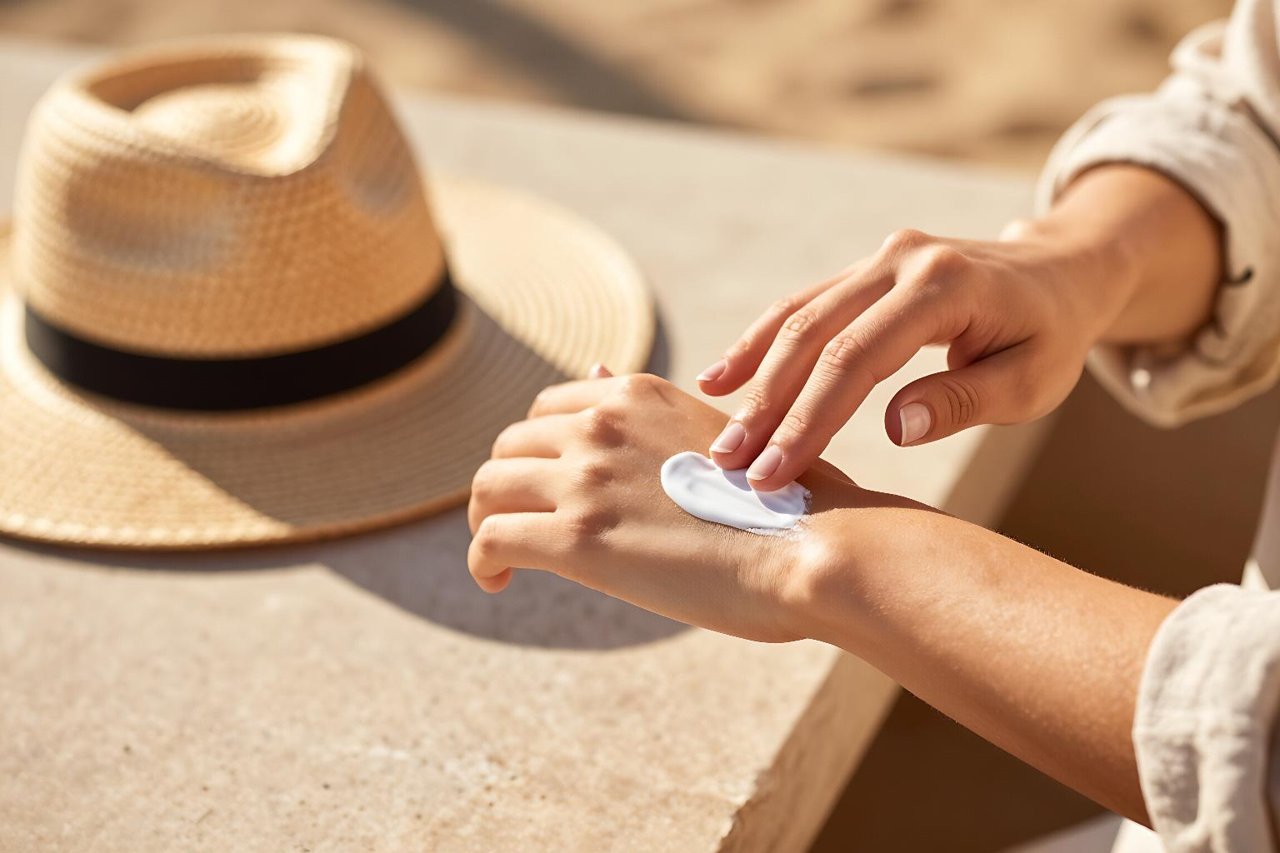
SPF numbers are measured at 2 milligrams per square centimetre. Most people apply somewhere between a quarter and a half of that, which turns a 50 into something closer to a 15 in real-world conditions.
- Face and neck: roughly half a teaspoon, or the length of two fingers.
- Full body: about 30ml, or a shot glass worth.
- Ears, hairline and nape: assume you’ve underdone them and add more.
Chasing SPF 100 is far less useful than nailing your dose of SPF 30. Applied properly, SPF 30 blocks around 97 percent of UVB and SPF 50 gets you to 98. The jump from a stingy teaspoon to a generous one is worth more than the extra 30 printed on the label.
3. Reapply on a clock, not a feeling
No sunscreen survives a full day. Filters degrade, and sweat, sebum and the friction of a towel or a face mask all shift product around. Outdoors, every two hours is the standard. Indoors near a window, every three to four hours is reasonable.
If you wear makeup, a tinted setting powder or a sunscreen stick glides over foundation without turning it into a mess. Set a phone alarm for lunchtime. It sounds fussy until it becomes automatic, which usually takes about two weeks.
4. Let timing and shade do the heavy lifting
Sunscreen is the backup plan, not the front line. UVB peaks between 10am and 4pm, and the UV Index gives you a shortcut: at 3 or above, protection isn’t optional. Above 8, consider moving the run indoors.
The old shadow rule still holds. If your shadow is shorter than you are, the sun is high and the burn risk is genuine. Shade from a tree, an awning or an umbrella cuts direct exposure considerably, though not entirely, because UV bounces off sand, water, concrete and even grass. You still need sunscreen in the shade.
5. Wear fabric that earns its place
A white cotton t-shirt has an effective UPF of about 5. Wet it and that drops to roughly 3. Purpose-built sun clothing, dense weaves and darker dyes perform far better, and a UPF 50 fabric blocks around 98 percent of UV radiation.
The three pieces worth owning
A wide-brimmed hat with a brim of at least 7cm shades the ears, neck and part line, where skin cancers turn up disproportionately often. Wrap-around sunglasses rated UV400 protect the eyes and the thin skin around them. And a light long-sleeved layer you can pull on for the walk home covers more skin than most people realise.
6. Cover the spots everyone forgets
Dermatologists can often guess where someone spends their weekends just by looking at their sun damage. The left side of the face and the back of the left hand in countries that drive on the right. The ears of anyone who shaves carefully around them. The V of the chest in summer.
Run through this list before you walk out the door: ears front and back, hairline and part line, eyelids, lips with an SPF 30 balm, neck, chest, backs of hands, tops of feet, and any thinning or bald patch on the scalp.
Acne-prone skin deserves its own mention. Plenty of people skip sunscreen during a flare because rich formulas feel occlusive and heavy. That’s a formula problem, not a sunscreen problem. Gel and fluid textures labelled non-comedogenic solve it, and it’s worth reading up on how to care for skin after a breakout so that post-inflammatory pigmentation doesn’t get darker than it needs to be. UV is very good at making brown marks permanent.
7. Support your skin after the exposure it can’t avoid
You will not get it perfect. A wedding weekend, a long drive with the sun on one arm, a swim where you forgot to reapply. What you do in the 24 hours afterwards matters more than most people expect.
Cool, calm, then rebuild
Rinse with cool water. Skip anything tingling, exfoliating or resurfacing for a few days. Lean on ceramides, glycerin and panthenol to shore up the barrier, because sun-exposed skin loses water faster and feels tight before it looks damaged.
A broad-spectrum antioxidant in the morning adds a real second layer of defence against the free radicals UV generates. If you’re unsure where it fits, this breakdown of where vitamin C belongs in your anti-aging routine sorts out the sequencing without the guesswork. Niacinamide is a solid companion for anyone prone to sun-triggered pigmentation, and a weekly check of your moles takes about three minutes in good light.
Anything new, changing, itching or bleeding goes to a doctor rather than a mirror. Annual skin checks are worth the appointment, especially if you had blistering sunburns as a child. And if you’re working with skin that has already logged a few decades of exposure, there’s a broader set of habits covered in ways to care for mature skin that actually make a difference.
The unglamorous part is that consistency beats intensity every time. One properly dosed SPF 30 on an ordinary Wednesday will do more for your skin over ten years than a bottle of expensive serum applied after a burn.


