
Table of Contents
Why the Same Spice Can Feel Like Four Different Supplements
Turmeric benefits get talked about as if the spice were one thing. It isn’t. The bright yellow powder in your pantry, a standardized curcumin capsule, a knuckle of fresh root, and a frothy golden latte all come from the same plant, but they deliver very different amounts of curcumin and absorb it at very different rates. A teaspoon of ground turmeric contains roughly 2–5% curcumin by weight, which works out to about 100–200 mg of curcuminoids. A capsule might contain 500 mg of 95% curcuminoids. Fresh root has even less. That gap explains why two people can both say they “take turmeric” and have completely different experiences.
If you want the broad research picture, this breakdown of what science actually says about turmeric is a good starting point. What follows is a practical comparison of the main forms, with the pros, cons, and trade-offs that matter.
Ground Turmeric Powder: Cheap, Versatile, and Easy to Underdose
Ground turmeric is the default. It costs a few dollars for a jar that lasts months, and you can add it to soups, rice, eggs, smoothies, and stews without changing your routine. For general cooking and mild anti-inflammatory support, it’s a sensible entry point.
Pros
- Very low cost per serving.
- Easy to add to everyday meals.
- Contains other turmeric compounds, not just curcumin.
- No pill-swallowing or supplement label guesswork.
Cons
The dose is the weak spot. Getting 1,000 mg of curcumin from powder would mean eating about 5–10 teaspoons of turmeric, which is far more than most people want in one day. Powder also varies wildly in quality. Cheap jars can be old, irradiated, or cut with fillers, and curcumin degrades with light and heat. If you want a therapeutic dose, powder alone usually won’t get you there.

Curcumin Capsules and Extracts: High Dose, High Cost, Real Trade-Offs
Curcumin supplements solve the dose problem. A typical capsule gives 500 mg of curcuminoids standardized to 95%, often with black pepper extract (piperine) or a lipid formulation to improve absorption. That’s the form used in many clinical trials, especially for joint pain and inflammation research.
Pros
- Concentrated, consistent dose.
- No taste, no cooking required.
- Often paired with piperine or phytosomes for better bioavailability.
- Easier to track if you’re following a study protocol.
Cons
You pay for convenience. Good curcumin extracts can cost $20–$40 a month. They can also cause digestive upset in some people, and piperine isn’t ideal for everyone because it changes how the liver processes certain drugs. If you take prescription medication, especially blood thinners, check with a clinician first. Curcumin can also interfere with iron absorption and may be a problem for people with gallstones or bile duct issues.
What to check on a label
Look for “standardized to 95% curcuminoids,” not just “turmeric root powder” in a capsule. A dose of 500 mg curcuminoids twice daily is common in studies. If the label lists 20 mg piperine per serving, that’s a meaningful absorption boost. If it lists “proprietary blend” without amounts, skip it.
Fresh Turmeric Root: Bright Flavor, Low Curcumin, Great for Cooking
Fresh turmeric looks like a smaller, orange-fleshed ginger root. It has a peppery, earthy bite and works beautifully in curries, soups, and juices. The trade-off is curcumin content. Fresh root is about 70–80% water, so the curcumin concentration is lower than dried powder by weight. You’d need a lot of it to match a capsule.
Where fresh root wins is flavor and versatility. You can grate it into coconut milk, blend it into dressings, or steep it in hot water with lemon and honey. It also stains everything, including your fingers and cutting board, so use a dedicated board or clean immediately. If you like the taste and want turmeric as part of a whole-food diet, fresh root is a good choice. If you’re chasing a specific curcumin dose, it’s not the most efficient route.
Golden Milk and Turmeric Drinks: Comforting, but Often Weak on Curcumin
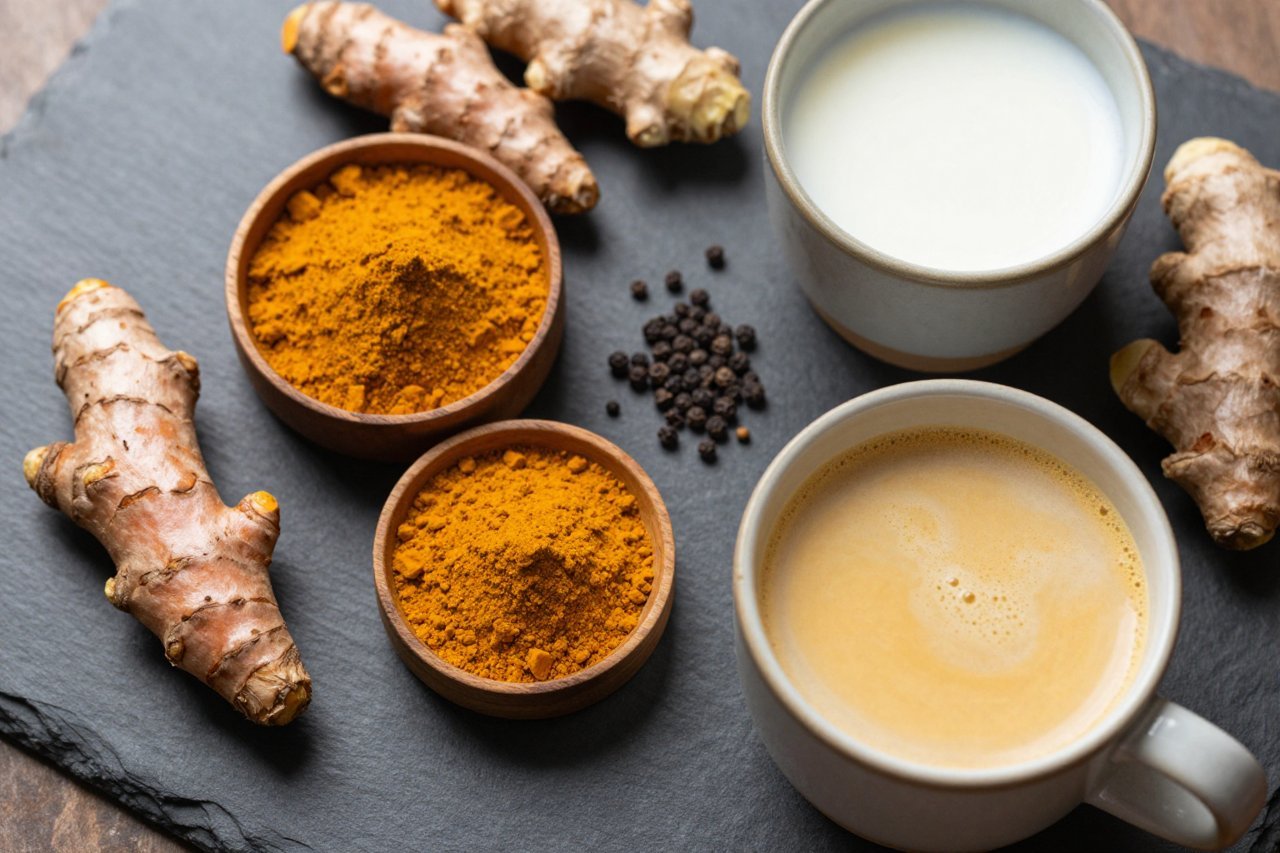
Golden milk, sometimes called turmeric latte, is usually made with ground turmeric, black pepper, fat (coconut milk or ghee), and a sweetener. It’s a pleasant ritual and a easy way to get a small daily dose. A typical recipe uses 1 teaspoon of turmeric, which gives roughly 100–200 mg of curcuminoids. That’s not nothing, but it’s well below the 500–1,000 mg used in many studies.
The fat and pepper matter more than the turmeric amount. Curcumin is fat-soluble and poorly absorbed on its own. Coconut milk provides fat, and a pinch of black pepper can increase bioavailability dramatically. If you want a fun, kid-friendly version, these turmeric mango popsicles with coconut milk use the same absorption logic in frozen form. Just don’t expect a single mug to replace a concentrated extract.
The Absorption Multipliers: Fat, Piperine, and Heat
No matter which form you choose, absorption is the bottleneck. Curcumin is poorly absorbed in the gut, and the liver quickly metabolizes it. Three practical tricks help:
- Add fat: coconut milk, olive oil, ghee, or full-fat yogurt.
- Add piperine: a quarter-teaspoon of black pepper can boost curcumin absorption by up to 2,000% in some studies.
- Use heat: cooking turmeric into a curry or soup helps release it from the plant matrix.
If you want a structured way to build these habits, this 7-day guide to absorbing more curcumin walks through meals and timing without turning your kitchen into a lab.
Turmeric vs. Ginger: Which Root Should You Reach For?
Turmeric and ginger are cousins, and people often treat them as interchangeable anti-inflammatory roots. They aren’t. Turmeric’s headline compound is curcumin, which is studied for joint pain, inflammation, and oxidative stress. Ginger’s main actives are gingerols and shogaols, which are better studied for nausea, digestion, and menstrual cramps. Ginger is also easier to absorb from food, so a cup of ginger tea can feel effective quickly.
If your goal is nausea or an upset stomach, ginger is usually the better first choice. This practical ginger guide covers how to use it without guessing doses. For joint discomfort and general inflammation, turmeric has more research behind it, but you need the right form and absorption strategy. Some people use both, especially in cooking, and that’s fine. They complement each other in curries, broths, and teas.
Kalonji and Other Spice Alternatives: When Turmeric Isn’t the Only Option
Turmeric isn’t the only spice with a research file. Kalonji, also called black seed or nigella sativa, has been studied for immune support, blood sugar, and inflammation. It has a peppery, onion-like flavor and works in breads, pickles, and yogurt. If you’re comparing anti-inflammatory spices, it’s worth knowing what kalonji seeds offer, especially if turmeric upsets your stomach or interacts with your medication.
Other options include boswellia for joints, ginger for digestion, and omega-3s for systemic inflammation. None of them are direct substitutes for a high-dose curcumin extract, but they can be part of a broader approach. The mistake is assuming more spices always equals more benefit. Dose, absorption, and your own health context matter more than the number of jars in your cabinet.
A Practical Way to Choose
Here’s how I’d sort it out:
- You want a cheap daily habit: use ground turmeric in cooking, with black pepper and fat. Expect modest curcumin intake.
- You want a therapeutic dose for joints or inflammation: choose a standardized curcumin extract with piperine or phytosome, and talk to your doctor about interactions.
- You love cooking and whole foods: use fresh root for flavor, but don’t rely on it alone for a high curcumin dose.
- You want a comforting ritual: make golden milk with full-fat coconut milk and a pinch of pepper. Enjoy it, but treat it as a low-dose option.
- You have nausea or digestion issues: try ginger first, then consider turmeric if inflammation is the main concern.
Pick the form that matches your goal, not the one with the loudest label. A $12 jar of powder and a $30 bottle of capsules can both be “turmeric,” but they’re doing different jobs. If you start with powder and add pepper and fat, you’ll get some benefit. If you need a specific dose, capsules are more reliable. And if you’re on medication or pregnant, run it by a professional before making turmeric a daily fixture. The spice is powerful, but it’s still a concentrated plant compound, not a free pass.


