
[ad_1]
Key Points
- Textron Systems has begun production of 65 Mobile Strike Force Vehicles for Ukraine at its Slidell, Louisiana facility under a $163.4 million USAI-funded contract.
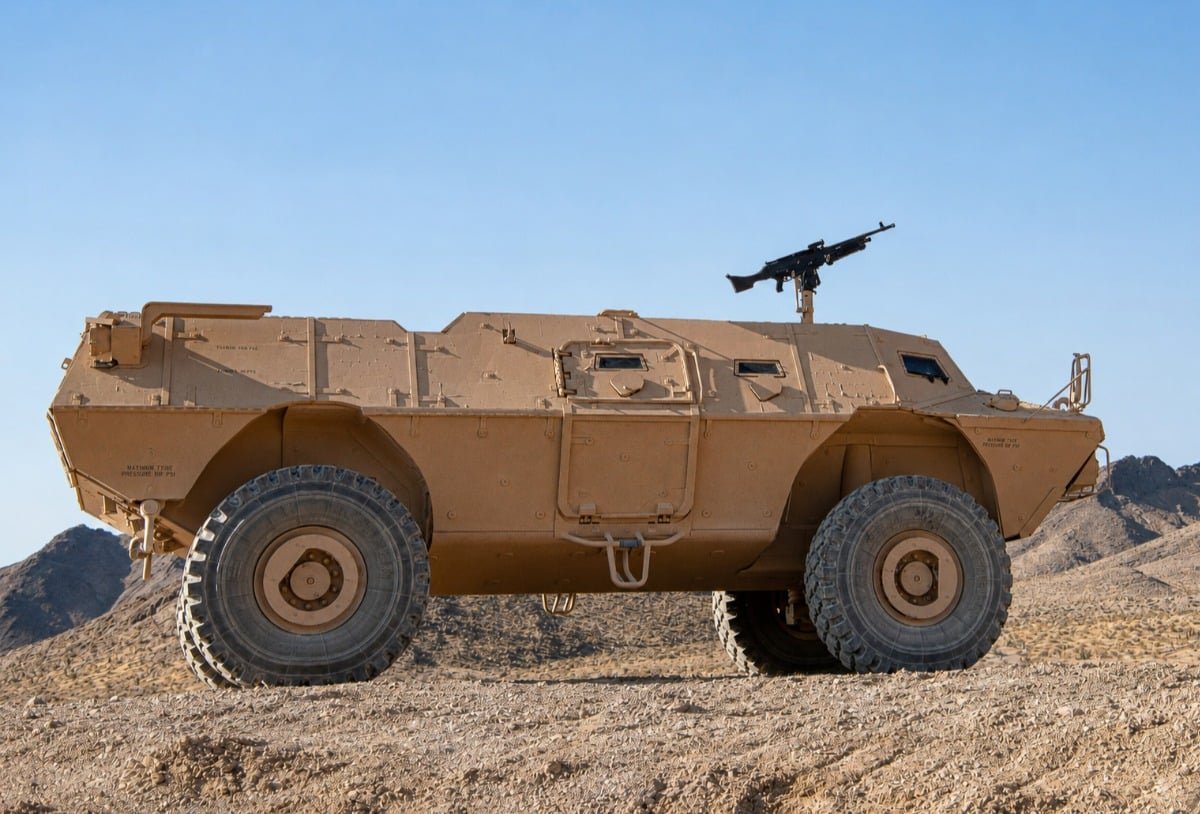
- The MSFV is an enhanced M1117 Guardian variant with a lengthened hull, additional armor, and improved underbody mine protection, with delivery expected by November 30, 2028.
A factory in Louisiana is producing armored vehicles for Ukraine for the first time, as Textron Systems announced that full vehicle builds of the Mobile Strike Force Vehicle have begun at its Slidell manufacturing facility.
The $163.4 million contract is funded through the Ukraine Security Assistance Initiative via the Foreign Military Sales mechanism, covering 65 MSFVs along with one year of spare parts support, with work expected to complete by November 30, 2028. The MSFV is a vehicle with an unusual history: it was originally designed for the Afghan National Army and last rolled off a production line around 2019, and its restart for Ukraine represents a direct second act for a platform that outlasted the military it was built to equip.
The MSFV is an enhanced variant of the M1117 Guardian, a four-wheeled armored security vehicle that Textron’s predecessor company Cadillac Gage developed in the late 1990s for the U.S. Army Military Police Corps. The baseline M1117 weighs approximately 13,410 kg (29,560 lb), carries a crew of three and can carry two additional passengers, and can reach a top speed of around 101 km/h (63 mph), armed with a 40 mm Mk19 automatic grenade launcher and a .50 caliber M2HB heavy machine gun in its one-person turret. The M1117 was one of the first American military vehicles built specifically around a mine-resistant hull, a design priority that proved prescient when improvised explosive devices became the defining threat of the Iraq and Afghanistan wars, driving demand for the vehicle far beyond its original military police role.
– ADVERTISEMENT – CONTINUE READING BELOW –
The MSFV takes the M1117’s survivability baseline and improves it in several ways that matter directly on Ukraine’s battlefields. The hull was lengthened, additional armor installed, and enhanced underbody landmine protection included, addressing the threat from mines and booby-trapped roads that have made mobility across eastern Ukraine’s front-line areas extremely dangerous. The vehicle employs a Cummins QSL 365 diesel engine coupled to a six-speed Allison 3500SP automatic transmission, with all-wheel drive and a central tire inflation system, and has a maximum length of 6.7 m (22 ft), making it somewhat larger than the baseline Guardian while retaining the platform’s core wheeled mobility and speed characteristics. The larger frame can carry up to 10 personnel in certain variants, giving Ukrainian commanders more flexibility in how they configure and deploy the vehicle than the tighter baseline M1117 allows.
Ukraine already operates M1117 Guardians transferred from U.S. Army stocks, with the first vehicles appearing in Ukrainian service in March 2024 with the 425th Skala Independent Assault Battalion. Those vehicles have since been fitted with improvised anti-drone protective cages and additional armor panels by their crews, adapting the platform to a threat environment that the original designers never envisioned. The same modifications are widely expected to be applied to the incoming MSFVs, as first-person-view drones, the small, cheap, operator-guided explosive drones that have become a constant hazard for armored vehicles on Ukraine’s front lines, represent a threat category that no amount of conventional armor can address without supplemental protection.
The Slidell, Louisiana facility where the MSFVs are being built has a long history with armored vehicle production, and Textron describes a workforce with deep institutional knowledge of the Commando platform family. Many members of the manufacturing team contributed to previous generations of Commando vehicles, bringing decades of hands-on experience to a production restart that required months of preparation and facility readiness work before the first vehicle build could begin. The manufacturing process runs from fabrication and welding through full system integration and testing at the same site, meaning the vehicles that leave Slidell are fully assembled and validated before delivery begins.
The contract structure, sole-source and awarded directly to Textron as the only entity capable of producing the MSFV, reflects the specialized nature of the platform. No competing manufacturer can produce this specific vehicle, and the U.S. government determined that restarting production with Textron was the fastest and most reliable way to get 65 units into Ukrainian hands within the contract’s performance window. Ukraine Security Assistance Initiative funding, the mechanism used to pay for the contract, is specifically designed to procure new equipment for Ukraine rather than drawing down existing U.S. military stocks, which is why this contract results in factory-fresh vehicles rather than refurbished transfers.
The MSFV’s improved mine protection, larger tires, extended hull, and additional troop capacity make it better suited to mine-heavy conditions than the baseline M1117, a judgment that reflects the specific operational conditions Ukrainian forces face. Eastern Ukraine’s front-line areas contain some of the densest mine concentrations recorded in any modern conflict, with both Russian and Ukrainian forces having laid millions of mines across contested terrain. A vehicle designed from the outset with enhanced underbody blast protection is meaningfully better suited to those conditions than a standard armored vehicle converted after the fact.
[ad_2]
Source link


