
Table of Contents
You cut the sugar. You bought the turmeric. You swapped your morning toast for a green smoothie that costs more than your lunch. Eight weeks later your knees still ache, your skin still flares, and you’re quietly wondering whether this whole anti-inflammatory diet thing is just expensive wishful thinking.
Usually it isn’t. What fails people isn’t the concept, it’s the execution. The same handful of mistakes turn up again and again in people who are genuinely trying, and most of them are easy to avoid once you know where the traps are.
Mistake 1: Treating It Like a 30-Day Cleanse
Chronic low-grade inflammation builds up over years. Your CRP isn’t going to fall because you drank celery juice for a month and then went back to Friday night takeaways. In trials of Mediterranean-style eating, markers like CRP and IL-6 shift modestly at 8 to 12 weeks and more noticeably by six months.
People quit at week four, decide it “didn’t work”, and return to exactly what they were doing before. Think in seasons, not sprints. Knowing what to eat and what to skip on an anti-inflammatory diet is the starting point, but the plan only pays off if you’re still using it in autumn.

Mistake 2: Cutting Everything at Once
The classic weekend overhaul: no gluten, no dairy, no sugar, no alcohol, no nightshades, no coffee, starting Monday. By day nine you’re miserable, you eat an entire pizza, and you conclude you have no willpower.
You don’t have a willpower problem. You have a plan problem. Pick two or three changes and hold them for a fortnight before adding anything else. “Fish twice a week instead of chicken” and “berries instead of a cereal bar” are boring and achievable, which is exactly why they stick. A step-by-step reset plan built around real meals will beat a list of forbidden foods almost every time.
The “Anti-Inflammatory” Label Trap
A turmeric latte, an inflammation-branded granola bar, a $60 berry powder. Read the ingredient list and you’ll often find cane sugar, sunflower oil, maltodextrin and natural flavourings. Inflammation has become a marketing category, and the markup is enormous.
Turmeric is the perfect example. Curcumin absorbs poorly on its own, so you need fat and a pinch of black pepper to get much from it, and even then it’s a supporting player rather than the main act. Anchoring your plate around real anti-inflammatory foods does far more than any powder you can stir into a drink.
Mistake 3: Getting the Fats Wrong
Most people hear “anti-inflammatory” and add olive oil to everything, which is a decent start but misses the bigger lever. The balance of omega-6 to omega-3 fats in your diet matters more than any single oil.
What that looks like in practice
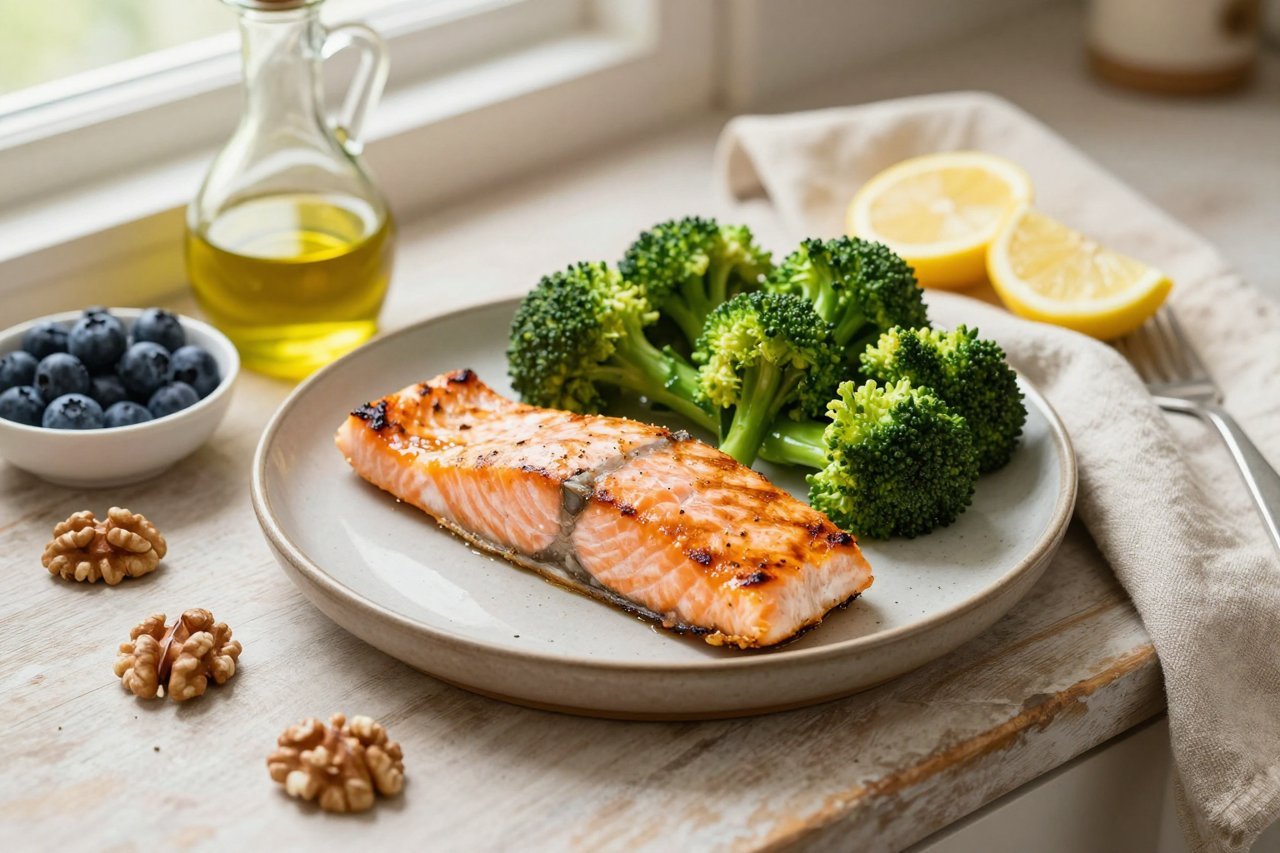
- Two servings of oily fish a week (salmon, sardines, mackerel, herring), roughly 100-150g each
- Walnuts, chia and flax for plant omega-3s, though only about 5-10% converts to the EPA and DHA your body actually uses
- Fewer industrial seed oils in packaged snacks, which is mostly a side effect of eating fewer packaged snacks
- If you don’t eat fish, a daily 1-2g EPA/DHA supplement is a reasonable substitute
Typical Western diets run somewhere around 15:1 omega-6 to omega-3. Getting closer to 4:1 is realistic, and it’s one of the few dietary changes with decent evidence behind it for joint pain and morning stiffness.
Mistake 4: Assuming Food Is the Only Lever
You can eat salmon and kale every single day and still be inflamed. Sleep debt, chronic stress, four drinks on a Friday and eight hours in a chair all push in the opposite direction. A single night of five hours’ sleep measurably raises CRP the following day, and people who consistently sleep under six hours tend to run higher inflammatory markers.
If you eat well but sleep badly and drink most nights, you’re fighting with one hand behind your back. Fixing your sleep is often faster, cheaper and more effective than optimising your grocery list.
Mistake 5: Demonising Gluten and Dairy by Default
Unless you have coeliac disease, a confirmed non-coeliac gluten sensitivity, or a genuine lactose intolerance, cutting gluten and dairy wholesale is usually a net loss. You drop fibre, B vitamins, calcium, and fermented foods like yoghurt and kefir that appear to do genuinely useful things for gut bacteria and inflammation.
If you suspect a problem, test one at a time. Remove dairy completely for three weeks, then reintroduce a decent portion and watch for two or three days. That’s how you get an answer. Guessing and staying off it forever tells you nothing and permanently removes foods you may have been fine with.
Mistake 6: Quitting Before Anything Moves
Feeling “no different” at three weeks doesn’t mean nothing is happening. Some changes come quickly, like digestion, bloating and that 3pm energy dip. Others are slow. Joint stiffness on waking, skin clarity and blood markers move over months, not days.
Track a handful of concrete things rather than relying on how you feel that morning:
- Morning joint stiffness, rated 1-10, same day each week
- Energy at 3pm, rated 1-10
- Digestion: bloating and regularity
- Skin: how often it flares, not how it looks today
- hs-CRP, if your doctor will order it before and after
Numbers you wrote down beat a vague sense that something feels slightly off.
Mistake 7: Arguing About Which Plan Is Best
There’s no single correct version of this way of eating, and the bickering between camps wastes more time than it saves. Mediterranean, DASH and low-GI approaches all reduce inflammation, and the best one is simply the one that fits your cooking skills, budget and family. It’s worth comparing Mediterranean, DASH and low-GI eating patterns side by side before you commit, because the differences matter more for adherence than for biology.
Start Smaller Than You Think You Should
One change. That’s it. Fish twice a week, or berries and nuts instead of a cereal bar, or a bedtime you actually keep. Hold it for three weeks until it stops requiring thought, then add the next one. If you like having a template, you can build your own Mediterranean-style meal plan around dishes you already cook rather than starting from a stranger’s spreadsheet.
The people who do this end up eating a broadly anti-inflammatory diet eighteen months later without ever having “gone on” one. The people who try to change everything on Monday morning are usually back to their old habits by the second weekend. This one goes to the tortoise, and it isn’t close.


